Trunk or Submit

Writers are a neurotic bunch, and like many I have a trunk where I lock my most embarrassing failures lest they break free and expose me for a fraud. On top of that chest of despair rest the manuscripts that aren’t quite so bad. Some of them, in fact, are kind of decent but they’re still inferior to what I write now, and so they languished in uncertainty.

I had something of a breakthrough recently. I’ve drafted forty flash and short stories over the past four years and had nothing in submission. Seven stories were simply trunked and five stories had sold, leaving twenty-eight stories in need of revision or submission.

The more we write, the better we get. Distance, experience, and reading a lot of slush has improved my ability to judge whether a story belongs in the trunk or if it has some potential. Weeding through my inventory, I had a few stories that were perfectly fine stories as they were but I hadn’t been submitting. Therein lies the bone of contention.

I’ve seen the argument made that submitting older stories may color an editor’s opinion of your current work. If it’s not representative of your current writing then don’t submit. I understand the sentiment. I’ve felt it myself before. I’ve had stories written years ago receive personal rejections, only to receive form rejections from the same market on newer pieces and that stung. I wondered if I was doing something wrong or if my writing had gotten worse.

I wish I could remember the exact moment of revelation. What I realized — internalized — was that editors are rejecting the work, not the author. I was prejecting myself and by doing so I was suffocating stories that I loved. My prose is more evolved, my storytelling far improved, but some of these were perfectly fine stories that deserved an opportunity to be read.

Take it or leave it, that’s my argument. Even though a story may not be as good as it could be if you were to rewrite it right now, it still deserves a chance to live and breath on it’s own. The trick, of course, is in identifying if a story is broken but fixable or hopelessly beyond repair. Trunk as necessary, but revise and submit the rest. Give your efforts a chance to be rewarded. Then move on to the next story.

Continue reading

Novel Revisions: Sharing the Pain

I’m no expert on producing novels, but I’m finding ways to survive it, including sharing my pain as therapy for myself, as well as hoping it will help ease the pain for others.

This is only the second novel I’ve worked on, but I’ve made it all the way to a fifth draft. I did two drafts before anyone laid eyes on it, then took a few chapters of it to my writing workshop and shared chapters of it with my writing pals. (thanks, Richard and Leanne!) I did another full draft and sent the entire thing out to a round of beta readers, received their input, did a fourth draft. Once that draft was done, I sent it off to yet another set of beta readers and now find myself on the fifth draft.

The fifth draft. It seemed overwhelming. Now how do I fix it, to take it an even higher level? How do I work in the scenes I need to add? How do I round out that character, give this character more stage time and work that brand new character in? All this with the knowledge of how much time I’d already put into this novel weighing down on me and here I was, about to commit more time to it?

Days went by. I’d get out my novel document, my notes, and stare at the screen. Nothing got fixed.

Just as things looked bleakest, like I might never win my battle to polish a fabulous manuscript, I found hope. When we’re ready and willing, the teacher will come, as they say and I found my teacher in the form of a blog post on The League of Extraordinary Writers called, “Revising: How To Avoid Staring Into the Black Abyss.” Written by Elana Johnson, the blog post opens with these words:

Okay, so imagine you’ve finished the fifth draft of your amazing NYT bestseller. You’ve let some time go by. And now you’re ready to edit the manuscript. Again. (*Note: for the purposes of this post, editing and revising are synonymous.)

You sit down, open the document, and…proceed to stare into the great black abyss like somehow your MS will edit itself.

This was it! It was as though this blog was written especially for me in my desperate time of authorly need. (I’m pretty sure I heard hallelujah book angels singing). Elana gives ten tips on how to edit, polish and get your manuscript out the door.

Her advice was to print out your entire manuscript and read it from the beginning, marking the pages with line edits, notes on insertions of scenes etc. Then, transfer it from paper to the computer. I’d heard this before, I’d done it for my other novel, but for some reason, I needed to be told it again.

Plus, Elana had a slightly different approach. Tackling the entire novel at once can be a daunting task, so she suggests chunking your manuscript. (note: not chucking your manuscript) She says “It’s much easier to wrap your mind around 100 pages rather than 350. So chunk your MS into manageable sections.” She split hers up into three parts.

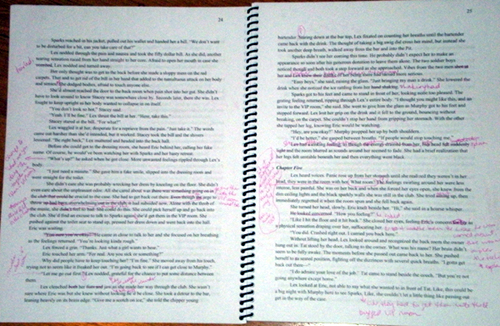
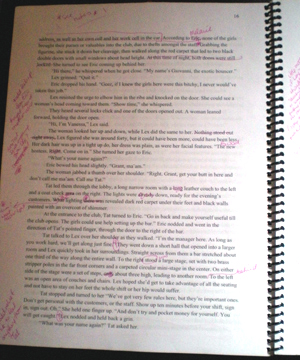
With a jubilant heart, I rushed off to Staples and had my manuscript not only printed, but bound so it would be easier to handle and I could edit on the go. I joyfully read through, marking up the pages with a pink pen (it’s friendlier than red!) correcting everything I could find, leaving notes for new scenes and changes. I reached the one third point and was ready to switch to the transfer stage.

Ugh. Enter the pain. Making all those changes to the actual document proved to be not as much fun as scribbling all over the hard copy. I would describe it as tedious, at best. I kept telling myself with every page I transferred over, my novel was getting better and better.

As I write this blog I am now on the second chunk of reading and am back to happily scribbling all over my work. Am I looking forward to transferring this second chunk? Noooooo. But I’ll do it. And I’ll do the same process to the third chunk of the novel, because I know it’s going to mean a better finished product.

For all of you in various stages of revising your novel, I feel your pain and I wish you all the best. Don’t give up! Your hard work and effort WILL all pay off in the end, in the form of a polished manuscript you can be proud of.


Continue reading

Awards Season, or Reader’s Guilt

It’s that season again. The season where I need to read all the things becomes I have to read all the things, or I am not worthy to nominate!!!!!. The season where I, once again, face up to the frankly over-developed Reader’s Guilt monster and try to reassess my obligation as a reader.

If you’re even remotely plugged into the speculative-fiction community, you’ve heard it tje last few months: Nominate for the Nebulas by this date! Hugo nominations close on March 26! Locus Recommended Reading List! Stoker Nominations! World Fantasy Award! Best-of Collections! Nominate, nominate, nominate; vote, vote, vote.

As an editor, this season makes me very, very happy. I love seeing people I know on the nomination lists, and I particularly like seeing new folks up there. I aspire to be on those lists someday.

As a reader, I loathe awards season. Why? Because I can’t read everything, and I feel like I should have. I struggle enough with figuring out and following my obligations as an editor and sometimes-writer, and reader’s guilt is just another leg on that monster.

It’s a familiar conundrum for the speculative reader: while the writers and fans mourn the closing of another magazine, readers struggle with the need to prioritize and choose favorites; sometimes by the sheer default of a publication being more readily available, prettier, there at the right time, available in hardcopy softcopy ecopy downloadtoyourbraincopy.

Er, right.

Anyways, this is something I’m particularly struggling with this year. For the first time, I’m reading books and magazines that are eligible, and I’m even reading them reasonably close to their publication. I feel like I should be able to voice opinions on stories I’d like to see win Hugos and Nebulas and Stokers, even if I’m not able to nominate for all of them. (This time of year is also when I remember that I’m eligible for most of these organizations–as an editor–and that I’ve simply…forgotten.)

Where do I start? I loved The King’s Last Song so much I need to reread it. Charles Yu’s Standard Loneliness Package is one of the most haunting short stories I’ve ever read. I’ve read a dozen short stories that I want to nominate, but I can’t remember where they were. I haven’t read some books that I know are going to be awesome, and I’ve slogged through a couple that left a bad taste in my mouth.

My biggest problem, however, is that most of the novels I read last year were either published in 2009, aren’t eligible for the award, or, uh, were ARCs. Yes, I started to nominate an ARC before I realized that I was trying to live in the future. Calendars and I are uneasy allies.

And I did start to nominate some favorite works, and then I started seeing the recommended lists…and deleted my nominations, ashamed and frustrated, because I haven’t read enough to choose the right things.

The problem is: I’ll never be able to read enough. I already follow Fantasy, Lightspeed, Apex, Realms of Fantasy, Clarkesworld, Beneath Ceaseless Skies, Shock Totem, Weird Tales, BullSpec, Electric Velocipede, and Black Static. I’m planning to subscribe to Black Gate and Fantasy and Science Fiction this year. There are several dozen more magazines equally worthy of attention and love, these just happen to be the ones that appeal to my tastes to some degree or another.

I can’t read every story in there, not while also being fair to my own slush piles and the help I give to other independent magazines, reading books, working, editing, living.

Books are their own problem. Hundreds are published every year, and the reader has the terrible, wonderful obligation to pick which ones to commit to. Even just friends and favorite authors could fill up that shelf for me. I generally manage to finish about 1 book a week. Even with rounding up, that means I can only read between 60-70 books in a year. Not all of those will be new books, because I came to the genre fairly recently, and need to catch up. And yes, my reading speed is unusually high.

But maybe that’s ok. I don’t have to Read All the Things. I need to read what I can, to make notes when a story particularly influences or moves me. I need to seek out stories from favorite authors and new authors; to read things that make me smile and even more things that make me cringe; to find a balance between stories I want to read vs. what other people want me to read; to vary my reading between the many wonderful magazines and publishers; to refrain from nominating a book ‘because everyone says it’s great’ and nominate it because it got under my skin and left a bit of itself.

I need to be honest with myself about the level to which other people’s opinions affect my own choices: social media, reviews, interviews, political or religious affiliation; personal interactions; even third-party anecdotes.

I can’t read all the things that are worthy of being read, not in this lifetime, let alone everything that is published. I can’t nominate all the ‘right’ things for an award. I can’t give in to the impulse to take every eligible story and run it through elaborate comparisons and algorithms to make sure it’s actually better than all of the other eligible stories.

At the end of the day, my obligation as a reader is the same as my obligation as an editor: to find the stories that make me laugh or hurt or get angry, and say ‘hey, this story changed my life a little. I think it should get an award.’

Continue reading

, ,

Apprentice Word Smiths

In the time before Walmart and department stores, when people needed metal goods, they went to see a smith. A gold or silver smith for jewelry. A coppersmith for a pan. A blacksmith for iron goods.  When the pan got a hole in it, folks would set it aside and wait for a tinker–a traveling tinsmith–to stop by and make a repair.  In the pre-Industrial world, the foibles of different kinds of metals took many kinds of specialists.

There are also many, many ways to work with language, to be a word smith. Many of us begin our apprenticeship into the word pounding business with our eyes set on the most visible of writing crafts: fiction novelist. It’s a great job, right? But it’s not the only way to wield words, be a part of the writing community, and make money. You have an almost dizzying array of options.

Ready to be dizzied? Look to your right, at the Inkpunks Roll Call. These 8 folks hold down a pretty reasonable variety of writing jobs. Adam is a slush reader and Creative Director  for a genre magazine. Christie is writing 2 novels, creates short stories, and serves as the Assistant Editor of a science fiction magazine. Erika reads slush for a magazine and edits anthologies with Jaym, who is also the Editor of a magazine, and both write fiction when they can. John Remy writes short fiction and graphic novels. Morgan (that crazy graduate student!) is a slush reader for the same magazine as Erika, when she’s not cranking out novels and short fiction. Sandra is primarily a novelist, but you can buy her fitness manuals on Amazon.

Then you have me. I decided at some point that I didn’t really know what I wanted to do with words, I just really, really liked them. So I decided to test-drive a bunch of different things. I’ve sold a poem, a novel, an article about parasites, and short stories. I’ve been an anthologist’s editorial assistant and now I’m the assistant editor of a genre magazine. That’s like six different writing jobs and I’m still not sure what or how or if I want to specialize. I just know that by trying lots of different writing activities, I’ve opened more and more doors and seen just how wide the net of word-smithery can spread.

That’s the wonderful thing about our field. All of us Inkpunks are nutty spec fic folk. It’s a small genre, really, compared to the rest of the writing industry. But within just our little corner of the writing world, we’ve found dozens of fascinating and fulfilling writing-related activities. It happened by volunteering and asking questions. It happened by saying “yes, I am willing to be an apprentice to this craft.” It happened by being willing to set aside what we though we knew about writing–and just opening up to the field.

Some day, we’ll have found that we’ve become specialists. Goldsmiths, coopersmiths, tinkers. Someone will be an expert editor. Someone will be a full-time novelist. But after our time as Apprentice General Word Smiths, I think we’ll never lose our appreciation for all the other writing jobs. There’s no one best job in writing. Being an editor isn’t better than being a novelist. Being a poet isn’t superior to being a journalist. Words, no matter how they are shaped, can not stand alone.

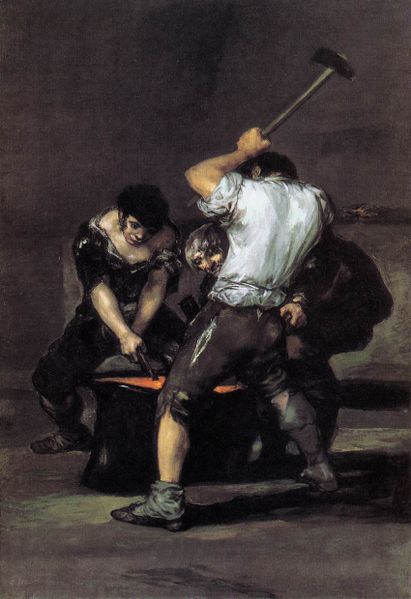
There’s a picture at the top of this post. It’s Goya’s painting, The Forge, and you can see three workers standing around that anvil. One’s probably a novelist, ready to hammer out the hot inspiration. The serious older guy is probably an editor, seeing the shape of the story and urging the novelist to make careful choices. And the big strong kid with the huge eyes? He’s the apprentice, soaking up every word with wonder in his heart.


Continue reading

Aspiring vs. Achieving:Claiming the Title of “Writer”

A while back I participated in a discussion on Twitter about when (or if) writers should refer to themselves as “aspiring.” We weren’t talking about people who haven’t started writing yet, but will unleash the next great bestseller on the world immediately upon their retirements (seems everyone is an aspiring writer by this definition), but rather people who’ve written at least a story or two; committed creative words to a page. The discussion was about when it’s okay to proclaim oneself a “writer,” or an “author,” without qualification. Where is the threshold between trying and becoming? Or, is there even a threshold? Does anyone who has put pen to paper, no matter how fleetingly or poorly, deserve to be called a “writer?”

Defining what makes a writer is a tricky business. It’s not like other jobs where the role is clear-cut. You’re either are a florist or you aren’t. A police officer, a janitor, or not. Getting hired, and successfully completing the necessary educational or training requirements, determines your vocation. Writing, on the other hand, involves a lot of trying and failing. Lonely hours spent perched before a computer, teasing reluctant words from your brain; countless drafts left unfinished, consigned to the metaphorical trunk, or burned; dozens of form PFO letters from faceless editors.

Yet if you were to ask an average person what it means to be a writer, nine out of ten would say having a novel published by a major publishing house, and available for sale in large bookstores.  I’d be willing to bet most writers have had a conversation along the following lines:*

Random person: Oh! You’re a writer?! How interesting! Have you written a novel? Where can I buy it?

Writer: Yes, I have written a novel…

Random person: [wide eyes]

Writer:  …but it’s not good enough, so I put it in a drawer and have started on the next one. [pause] Stephen King wrote a number of drafts before getting his first novel published, you know.

Random person: [puzzled, slightly pitying nod] 

Writer: I’ve sold a couple of short stories, though.

Random person: Oh! To Reader’s Digest?

Writer: No. [proceeds to describe some obscure short story market, appearing on some obscure website]

Random person: Hm. Well, do you at least get a cut of the profits?

Writer: Um…no. I got paid $5.00. But that’s pretty good, because it’s a reprint, and reprints are hard to sell.

Random person: How many stories can you write per day?

(Left out of this conversation is Random Person’s reaction when Writer confesses to writing geeky stuff like fantasy or science fiction, instead of high literature, suspense, or chick-lit, because that’s a whole ‘nother topic.)

Demonstrating sufficient writerly cred to the lay-person requires either tangible proof (a novel on bookstore shelves) and/or pocketfuls of money (ha ha), otherwise what you’re doing is seen as little more than an interesting hobby. No matter that you revise your drafts seventeen times, have mastered the use of objective correlative, or that your status could change overnight, on the whim of a friendly editor or agent—it’s still just a hobby; we stopped getting paid for trying in kindergarten, or something like that.

Yes, being a #1 New York Times Bestselling Author would be nice, but surely we can call ourselves writers at some point well short of this high water mark, can’t we? I can think of a number of other milestones that might qualify one as a full-fledged writer: completing your first story/poem; sharing your work with someone who’s not related to you; your first submission (and rejection); first sale; first review—bonus points for a good review; first professional sale (i.e. five cents per word plus); becoming a member of a professional writing organization such as SFWA; getting an agent; winning a contest or an award; getting your novel published by an independent publisher, etc.

But, with the exception of simply finishing a story, all of these things depend on outside validation. They imply we’re not writers unless we’re paid, praised, published, or recognized in some way.

That’s certainly one way to look at things, and many of us do hope to get our work out there and (gasp) make a living from it, however meagre, but are we not officially “writers” until this happens?

Truth is, the vast majority of us won’t reach bestseller status (or anywhere close) and will remain in a state of striving. When we reach a lesser milestone, we’ll immediately become impatient to achieve the next. Success will always be around the next corner, and of only momentary satisfaction when caught. It seems the true joy is in the act of writing; the act of transforming blank pages into touching, or disturbing, or funny tales, where there were none before.

So maybe it’s more about how we think of ourselves. If you write, and consider yourself a writer, maybe it’s okay to just say it, without any proof or caveats. Maybe trying is the essence of thing. Maybe kindergartners are on to something.

Or…maybe not. What do you think?

* This may or may not be an aggregation of a number of real life conversations, and there may or may not be residual bitterness.

Continue reading

Using Music to Find Your Story’s Voice

As comfortable as I am with the other elements of a story, voice is mysterious and magical to me (but Christie says that a strong voice is one of three things found in great stories). It’s not something I can pull out of my writer’s toolbox–I feel like it’s something I have to discover when I’m not directly looking for it, if that makes sense. Finding a story’s voice for me is like meeting a new best friend at a party, or discovering a new favorite food on a menu I can barely read. This is one reason I rely heavily on music to help me find voice.

As a writer, I think it’s easy for me to get bogged down in my head, on the black font on the screen or on the page, and to forget the power our words have when they are vocalized. When I listen to music, I remember that language has texture and rhythm and density. I’m going to link to a few songs and artists who change the way I think about prose. Whether or not you listen to them, I hope you will consider and respond to the following:

What techniques or tricks do you use to help you discover your narrative and your characters’ voices?

What do you think are some of the most distinctive voices in music, film, history, or fiction? How do they inspire or influence your writing?

The first singer that comes to mind when I think of distinctive voices is Tom Waits. Love him or hate him, Tom Waits is a powerful storyteller, and he is his gravely, smoke and whiskey-stained voice. Imagine how our experiences of “And The Earth Died Screaming” would change if it were voiced by Paul Simon? Or Regina Spektor? Or how Waits might transform Tori Amos’ “Crucify” or “Cornflake Girl”?

Amanda Palmer has a range of storytelling voices, but one that she does really well is someone who is struggling with her sanity. I’ve used “Runs in the Family” to inspire a frenetic narrative voice:

The vocalist I’m most fascinated with right now is System of a Down’s Serge Tankian. In “Chop Suey” you can listen to him jump from a whisper to a yell, from syncopation to ballad-like segments. Someday, I’d like to experiment with the texture and rhythm of prose in similar ways.

For the last example, I’m going to link to three performances/covers of Nine Inch Nails’ “Hurt.” It’s the same song, note how the three distinct voices completely transform it:

Trent Reznor:

Johnny Cash:

Sad Kermit (warning graphic and disturbing NSFW muppet imagery!):

Continue reading

Why I Like YA SFF

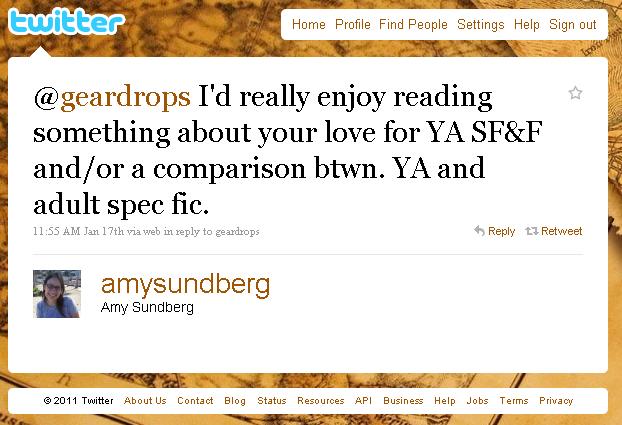
Last time I was up to write a post, I struggled with a topic. I got a few good suggestions, one of which I saved to do this week. So, thanks, Amy!

I’ve thought about this for the month since she initially posted the question, and I think I’ve come to a clear answer.

There are a few things I read for. I like a really well-crafted, rich world. I like stories that are dark, but not self-indulgently so. I like tense, emotional stakes. And I really, really, really like strong characters, tropes or not. More than anything, if you give me a character that I can latch on to and love and root for, I will suffer a lot of bad writing to see what happens to them.

But an interesting character alone won’t do it for me. I need the character to struggle, and to come out of the story transformed somehow. This happens in growed-up books, but not always. Sometimes (a lot of times) the characters fight their way through a great deal of high adventure, and come out on the other side no different. Maybe a few changes here and there, but nothing significant. And I’m not saying these books are somehow bad for being like this. They just don’t scratch my itch.

But while significant character transformation sometimes happens in growed-up lit, it’s a mainstay of YA, and that’s why I like it.

I wish I could say something smarter about it. Maybe discuss the power to reach out and change lives using the power of literature. But I’m just not that clever, I guess. I’m sorry if you, the reader, expected something better, grander, loftier, smarter. Maybe something snarky and full of rage. But it’s really a simple answer. I go nuts for intense character transformation. I like watching a character go through the kiln and waiting to see if they will shatter or if they will be porcelain. And it doesn’t have to be something as crazy as facing down a dragon or averting the end of the universe. It can be as small as experiencing friendship for the first time.

So, to wrap this, I’m going to list five YA titles which I love, and a little bit as to why (though maybe that’s silly of me, considering the subject of this post).

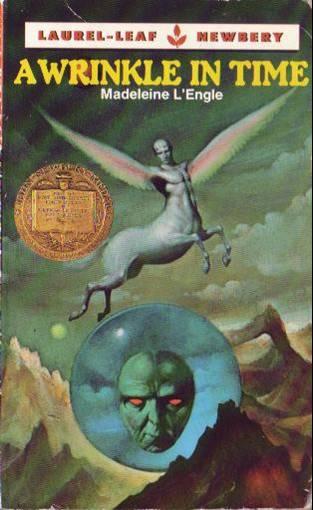
A Wrinkle in Time

A Wrinkle In Time by Madeline L’Engle
Say what you will about the ending (no spoilers here) but I loved this book as a kid. I think I got it when I was ten or so, and it rocked my face. The pictures with the string and the ant, explaining folding space, the Happy Medium, the two-dimensional world, the image of all the children playing in the street and all their motions were in perfect synch… I loved all of this. And I loved reading about Meg, the shy, bookish girl who took on this adventure so she could find and save her brother, and finds her own strength and self-confidence.

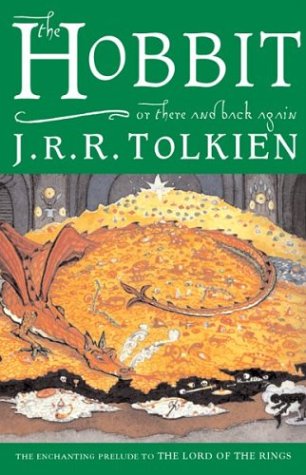
The Hobbit

The Hobbit by J R R Tolkien
Do I even need to say it? Just in case I do, Bilbo Baggins, happy little hobbit, and when it came down to it, Bilbo outwitted Golem GOLLUM (ETA: HEY THANKS SHWETA, GUESS WHO’S BEEN READING A LOT OF EASTERN EUROPEAN FOLKLORE?) and some nasty mean trolls, and he was the one who found Smaug’s weak spot. Clever, quick, and brave, and still a hobbit. I was lucky enough to get this as assigned reading when I was nine, and I blasted through it. I’ve re-read it a few times since and still love it, every time.

The Giver

The Giver by Lois Lowry
I think I’m sticking mainly to award-winners here. I guess I’m okay with that. The Giver was once again assigned reading (hooray!) when I was eleven. I loved the question posed to Jonas in the novel: Knowing now what he knows, does he stay where he is, in the stale sameness, with his family, or does he venture out, risking something greater or something far worse? I loved reading his growing internal struggle throughout this, and then what he went through after making his decision.

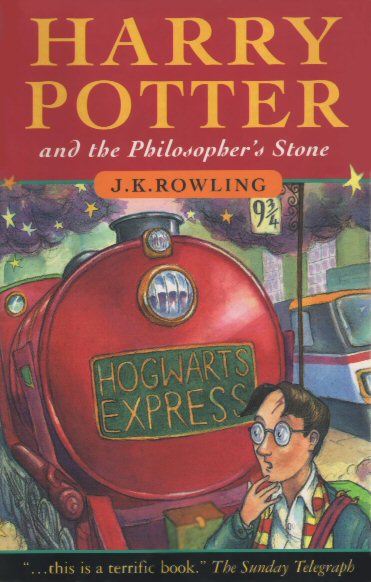
Harry Potter

Harry Potter by J K Rowling
No, I’m not going to bother going into this. There’s no need. I’m a huge Potter nerd. I’ve resisted bringing my “Slytherin Uniform” Halloween costume to WFC for two years now. … Moving on.

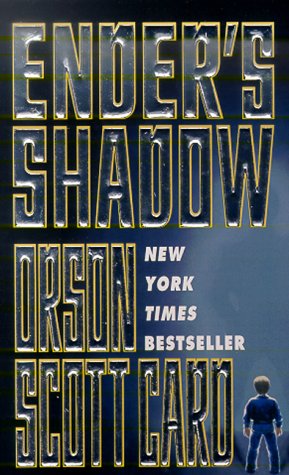
Ender's Shadow

Ender’s Shadow by Orson Scott Card
I love Bean. I love Bean. This is what I’m talking about when I say the stakes have to be particular to the character. I liked Ender, don’t get me wrong. But Bean’s struggle to reach out to others and ask for help, his struggle to trust, his difficulty dealing with feelings of caring for other people, just… melts my cold, black heart.

So, er, yeah. That’s it. Hope that sufficiently addressed things. If you have comments or your own reasons for liking YA more/less than adult lit — or perhaps you’re indifferent, or even more fun, ambivalent — please share! I’d love to hear other perspectives.

Continue reading

Lessons From the Slush Pile: Your Cover Letter and You

The following is a slightly modified repost from my personal blog, http://inkhaven.net.


Submitting to short fiction markets can be very scary for newcomers, and there is a whole lot of confusing advice out there. I’m here to help.

First, though: you guys with the long lists of publications, who have your editors on your Christmas card lists and are now submitting reprints and selling rights I’ve never even heard of, you can wait over there in the bar. And you too, you newly-minted pros who have been doing the submission/rejection slog for a few years now–you should go buy those other guys drinks and network a little. We’ll come join you in a minute.

The rest of you, huddle up.

We’re going to talk about our cover letters today: those things that we agonize over, that First Impression that we are all SO WORRIED about. Do I sound like a real writer? Did I rank high enough in that contest entry? Do my college credits count as professional credits? What about my work as an astrophysicist, that surely qualifies me to write SF, doesn’t it?

Stop worrying.

I will tell you a secret: when submitting fiction to SFF markets, your cover letter is meant to do THE EXACT OPPOSITE of what it’s supposed to do in the rest of the world.

I’ll explain.

Out There–in the job market, academia, whatever–your cover letter is meant to impress. You are expected to drop names. You are supposed to include the most tangentially related accomplishments you can think of. You are meant to inflate it with every credit you can muster. Out There, cover letters become masterful works of fiction: spells cast to cloud the reader’s perception, to convince them to trust us and believe that we are the right person for the task. It is absolutely natural to assume that the same holds true when writing a cover letter for an SFF market.

Natural, but wrong.

The information on the internet reinforces the myth of the Inflated Cover Letter. You’ll see this perfectly reasonable-sounding advice given to writers on a regular basis. Sometimes it’s even in the submission guidelines of your favorite publication:

– Include your publication credits

This is terrifying to a new writer who doesn’t have any. We want to do it right, so we wrack our brains, thinking we have to put something there. Do I include my high school newspaper experience? What about that essay I published in our local Arts & Entertainment paper? I placed 15th in that one fiction contest–that means I was better than the other contestants who placed lower, right?

I know! It’s a horrible mental knot that we tie ourselves into, but the answer is really very simple: Leave it out.

If you do not have semi-pro or pro publication credits, anything less is not a substitute for them. This includes college courses, workshops, contests, university publications, and anything else that did not pay you Actual Money of at least 3 cents/word. Those other things are not examples of professional quality work, and including them can actually hurt you if the reader has a low opinion of any of them.

There are exceptions: there are fanzines with immaculate reputations; a contest that comes to mind that is considered very credible in the field; workshops that most of us would give our eyeteeth to get into. You know which ones those are, if you’ve published in them, placed in it, or attended them. If not, don’t list lesser ones.

And then there’s the advice that sends us all into sweating fits of anxiety:

– Explain why you’re the best person to write this story

No. Stop. Just…NO.

I’d seen this advice treated on the internet as general wisdom for years, but it never made any sense to me, not for what I was writing. What comes of this ABSOLUTELY TERRIBLE advice are sorrowful, worry-filled cover letters that say things like “I’m a stay-at-home mother, but I’ve been reading SFF for as long as I could read, and have taken several creative writing classes at Local Community College.”

When an agent at a conference offered it up again to the workshop I was in, I seized the opportunity to clarify. I said approximately the following:

“WTF. I’m writing about DRAGONS/WIZARDS/ZOMBIES/VAMPIRES/SPACESHIPS/ALIENS. I do not have direct experience with any of those things. I’m the best person to write this story because…I have an active imagination?”

He changed the subject. It was almost as if he himself didn’t know why he was advising it. Or it might have been my demeanor, which was admittedly exasperated. Either way, my class didn’t get an answer.

What I’ve since learned is that it’s advice that came from non-fiction publishing, where yeah, your experience with your subject matter counts. It does not scale to SFF short fiction. Ignore it. STOP WORRYING. NOW.

One more thing you want to leave out of your cover letter is what rights you’re offering. If you read the guidelines (and you DID read the guidelines, and followed them TO THE LETTER, didn’t you?) you know which rights they’re buying. They are not going to negotiate with you on that. Including it tells the reader that a) you didn’t read the guidelines, and b) you are concerned that the publisher is going to steal your rights from you. They’re not. It’s okay. They’re professionals.

That’s what not to include in your cover letter. Let’s talk about what you should include. You’ll be shocked. Seriously. This is the easiest, most worry-free thing you have ever done. It never needs to take up another cycle in your brain that would be better spent making art. Ready?

Dear Sue Doe, [Editor’s actual name. Many editors are INCREDIBLY PICKY about this. My boss is not, but many are. If there are many editors and sub-editors, use the name of the highest-ranking editor.]

Please find attached my short story “Epic Tale You Totally Want To Buy” (2500 words, Fantasy) for your consideration. [Title. Word count. Genre if market accepts more than one. If they only accept one genre, do not submit a different genre to them. Natch.]

My work has previously appeared in Realms of Fantasy and Fantasy & Science Fiction. [THIS IS OPTIONAL.] I am a graduate of the Odyssey Fantasy Writing workshop. [ALSO OPTIONAL.]

Thank you for your time and attention.

Regards,

Jane Smith
123 Main Street
Smalltown, PA 12345
jane.smith@somewhere.com
123.456.7890

THAT’S IT. That’s all. Do not inflate. Do not be clever. Do not include a bio unless the guidelines specifically ask for one.

So here’s the point: in the rest of the world, cover letters are meant to impress. In the SFF world, they just need to not bias the reader against you.

Look, we’re already up against how the reader’s day job went, how much sleep they got, whether their kids are driving them crazy, the state of their general health, their financial troubles, and whether or not their relationship is working. We’ve got a LOT working against us. As new writers and budding professionals we do not want to add to that.

I’m going to keep hammering these numbers home: 400-600 submissions PER MONTH. 2-5 available slots PER MONTH. They are not looking for reasons to love your words; they’re looking for reasons to cull them from an overwhelming pile. Do not give them a reason to doubt your ability before they’ve even seen your story. Let the work speak for itself.

So tell them what they need to know and tell them nothing that they don’t. Click Send, and update your submissions spreadsheet.

Now go take your rightful place over there in the bar with the rest of the writers. It’s where you belong. You earned it.

(And then get to work on your next story.)

Continue reading

Writer’s Toolkit: Tarot Cards

This post started a couple weeks ago when I twittered that I was pulling tarot cards for a flash fiction story I was working on. It sparked a discussion and several people wanted to know more how about how I was using tarot cards in my writing process.
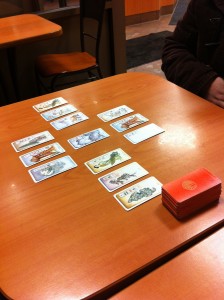
The most interesting characters are flawed. They have needs, wants, and pains that, may not be directly relevant to the story, are to who they are and how they behave. Discovering those traits about my characters is part of my process.

I’ve watched my wife pull cards for people before, and I have a deck of my own that I bought because it suited me (har har). In my headstrong, obstinate way, I thought, I can do that, too, but I never did. I didn’t have a reason to until I was working on a story recently and felt a bit stuck. I dug my Druid Animal Oracle Deck out of the box they’d been hibernating in and asked her for help.

There are four things to pull cards for:

  1. How does the character feel about themselves?
  2. How do others feel about the character?
  3. Recent/current events
  4. Possible outcome

I had rough idea of what the story wanted to be and who the two main characters were. The main character is a young mother with some rather special talents, and honey does she have some man troubles. I already knew both character’s backstory but not their current one. With that in mind, I considered the woman and began.

After shuffling the deck, I took a fifth or so of the cards and inverted them and shuffled again. I drew four pair of cards, two for each of the above, and laid them out on the table.

The first pair revealed the inverted Swan and Cow, which tells of pending separation, coming to terms with the end of a relationship, and motherhood and the protection of a child from harmful influences.

The second pair was the Hare, indicating the potential for change, rebirth, and balance, and Ram, representing sacrifice and inner strength.

The penultimate cards were the Wren and the Frog. The Wren speaks of cunning and humility; she sees beauty in all things. She’s gentle, subtle, and well-intentioned.

Finally, possible outcomes, and I turn over the Earth and Water Dragons. The Earth card represents coming face to face with potential, previously denied by the subconscious. Unlocking the secrets of the heart will uncover the power and beauty within. The Water Dragon is revelations and overwhelming emotions that lead to a greater sense of connection to life.

Now, all of this is wildly open to interpretation. Viewed through the lens of artistic vision, my own subconscious interpreted the cards and rushed to fill in the blanks. I ended up with all the pieces I needed to write a story that I’m pretty damn happy with.

I suppose the same thing could have been accomplished with dice and a look-up table of traits and attributes. Regardless of the trick used, this was an exercise in poking the muse. It worked well for me and I’ve continued to use it for other stories and characters.

I should note that decks aren’t terribly expensive. The Druid Animal cards I use can be had for less than $11 on Amazon. I chose that deck because I like the artwork on the cards, I like animals, and Druids rock. You can find thousands of different decks to be had. Find one that works for you and give it a try.

Continue reading

How To Network at Conventions – Guest Blog

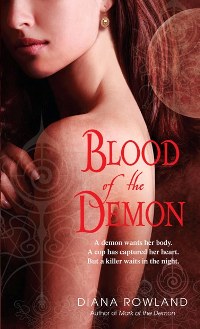
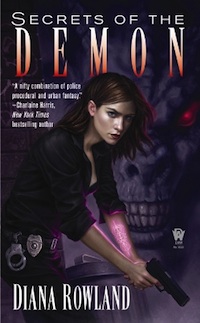
With 2011 now in full swing, many people are looking ahead to which conventions they’d like to attend this year. Or perhaps you’ve never been to one and are considering it. I thought this would be great timing to ask Diana Rowland (Mark of the Demon, Blood of the Demon, Secrets of the Demon) to share her words of wisdom about how to properly conduct yourself at conferences and conventions. Thanks to Diana for loaning her words to the Inkpunks. For more on Diana, I’ve inlcuded information at the end of her post.

How to network at a convention

So here it is. You’re a fairly “new” writer, or at least new to the convention scene, and you desperately want to make some industry contacts in the hopes that it will make it easier to get an agent/sell your work/quit your day job and hire a cabana boy/any of the above. You decide to go to a convention, perhaps picking one of the “big” ones such as WorldCon, or World Fantasy, because you’ve heard that editors and agents are absolutely spilling out the doors.

Here are some guidelines/rules/suggestions to go by:

#1 ) Don’t go to a convention for the sole purpose of networking. It shows, and you will have the unpleasant reek of desperation clinging to you. Go to a convention because they’re fun and there are a lot of really really cool people to meet, only a small fraction of whom are actually agents and editors. Go to the panels. Listen to what is said. Form your opinions, and keep an open mind. Wander through the dealer’s room and talk to the vendors. Smile and be polite and nice.

#2) Have fun and make friends.† Making friends is the absolute best way you can possibly network, because these will be the people who will remember your name, might be willing to trade critiques, and who might later on kindly offer to introduce you to their agent/editor. Emphasis on offer to. Do not ask for the introduction. If you have progressed to a “friendly” status with someone, they will probably be well aware that you are at a stage in your career where you are looking for an agent/editor. DO NOT ask this person to give his/her agent chapters of your novel. If they want to read it, great. If they offer to show it to their agent, fantastic.

#3) Don’t bug the crap out of the pro or semi-pro who has been kind enough to take you under his/her wing for the con to introduce you to agents/editors at the con. Really now, these agents/editors probably meet several hundred shiny-eyed newbies at every con they go to, and dutifully and kindly pass along their business cards, and as soon as they’ve extracted themselves from the encounter will likely forget your name. Yes, even if you’ve pressed your business card into their hand.

#4) Again, if you’ve been fortunate enough to have a pro/semi-pro take you in hand, don’t stick with that person for the entire con. Dare to break away, especially if you find yourself waiting for them outside the bathroom. Trust me, they don’t really need to pee that much. They just need a break from you. Take the hint. Go to some panels. Go to the dealers room. Go wander around the con suite.

#5) Leave a person/group, before they get sick of you. Ideally you would leave the person/group at a point when they are sorry to see you leave. You definitely don’t want to leave at a point when they are relieved/glad/thanking the gods that you are leaving. This is not to say you can’t hook up with said person/group later on, but you need to give people breathing room.

#6) If you are invited to eat with a group of people, make SURE that you have contributed your share of the bill, INCLUDING a worthy tip. Play it safe and factor in a 20% tip at minimum. (You’ll never make a bad impression by overtipping slightly.) You definitely don’t want others to resent you because they had to pay more so that the server wasn’t stiffed.

#7) Never assume that someone is a nobody, so be nice to everyone.

#8) DO NOT PITCH YOUR WORK AT THE CON UNLESS ASKED TO DO SO. If an agent/editor does ask what your work is about, be ready with a one or two line teaser description, e.g. “My book is about a homicide detective who can summon demons, and she’s after a serial killer who can also summon demons.” If it interests them, they’ll ask for more details which you can then provide.

#9) DO NOT HAND ANYONE YOUR MANUSCRIPT UNLESS THEY ARE ABSOLUTELY BEGGING FOR IT. Everyone has heard the editor/agent nightmare of having the manuscript shoved under the stall door in the bathroom, right? Don’t come anywhere close to being that person. In fact, I really can’t think of any reason to bring your manuscript to the con at all, unless you were asked to bring it.

#10) Have fun. Make friends†. Go to the parties.

#11) Don’t get drunk. It’s okay to have a drink or three, but know your own limitations! And, there are enough non-drinkers at cons that no one is going to sneer at you for ordering the diet coke sans rum.

#12) Keep track of who you meet and who introduced you. Yes, keep notes if necessary. If you later query an agent that you met or were introduced to at a con, you can then mention, “I enjoyed meeting you last year at World Fantasy, and found the conversation about desiccated corpses quite interesting.” Or, “Jay Pond was kind enough to introduce me to you at last year’s convention.” That sort of thing.

#13) If you were fortunate enough to have a particularly nice conversation/meeting/drinking game with an industry professional, don’t be afraid to send a thank-you note as a follow-up after the con is over. Personally, I think that such missives should be handwritten on nice stationary and sent via snail mail.

#14) Have fun. Make friends†. Stay in touch with those friends after the con is over.

This should probably go at the beginning and be #0.5) Wardrobe and appearance: Mileage definitely varies on this, but my personal opinion is that if you’re trying to be taken seriously, don’t dress like a grunge ball. After you’ve sold a few books/stories and have made a name for yourself with your writing you can pretty much dress however you want, but until that time comes, dress in an industry-appropriate professional manner and style. (I don’t want to go into detail on this since opinions vary wildly, but I think a default of “Friday business casual” is probably a safe bet for most.) Use proper hygiene. Brush your teeth. If you have any doubt about your breath, utilize mints.

† How to make friends: Yes, it seems silly to have to include a section on this, but I think it’s needed. Many writers are introverts, and are a little shaky on the dynamics of social interaction. I won’t claim to be an expert at it by any stretch, and god knows I’ve made an ass out of myself before, but I think I can at least touch on the basics.

1) To be liked, you need to be likeable. Seriously. Be friendly. Smile at people.
2) Don’t monopolize conversation.
2a) Until you get to know someone a bit, limit talking about yourself except in brief introductory generalities unless asked or unless it would really add to the current conversation.
3) Ask the other person all of the questions you wish they would ask you. Don’t try to “top” what they say.
4) Smile, be polite, be nice.

______________________________________________________________________________________

Diana Rowland has worked as a bartender, a blackjack dealer, a pit boss, a street cop, a detective, a computer forensics specialist, a crime scene investigator, and a morgue assistant, which means that she’s seen more than her share of what humans can do to each other and to themselves. She won the marksmanship award in her Police Academy class, has a black belt in Hapkido, has handled numerous dead bodies in various states of decomposition, and can’t rollerblade to save her life.

She presently lives in south Louisiana with her husband and her daughter where she is deeply grateful for the existence of air conditioning.

You can visit her website here: www.dianarowland.com

Continue reading

prev posts prev posts