Bring the Bibliophile Stalker to WFC with the World SF Travel Fund

Today we saw the launch of a cause that’s near and dear to the heart of all Inkpunks: the World SF Travel Fund, a peer-backed fund that will allow international members of the SF community to come to where the cons are. From the website:

A combination of genre professionals and fans from the international scene and the United States have gathered together to create the World SF Travel Fund. The fund has been set up to enable one international person involved in science fiction, fantasy or horror to travel to a major genre event.

The first recipient of the fund is genre blogger and activist Charles Tan, from the Philippines.

Charles is a friend of the Inkpunks and we are stoked out of our collective gourd at the prospect of seeing him in October. Charles works tirelessly to promote World SF, and especially Philippine SF.

We hope that you’ll join us in the effort to bring him to the U.S. this year. Every little bit helps.

Continue reading

Fuel

Rusty Gas Can

What’s your writing fuel?

Whenever I hear that question, I think of a big mug of black coffee perched precariously by the keyboard or an IV drip of tea plugged right into a vein. Some writers might suggest a good bar of dark chocolate (with sea-salt on top) or a ginormous hunk of pie.

In short, when discussing what makes good writing fuel, most of us think of the good old standbys — caffeine and sugar.

(A not so good standby is alcohol. While I clearly don’t have a problem with imbibing, I caution any writers against thinking of booze as fuel. But that’s a whole other blog post in itself.)

Well, my tank’s been a little dry of late. I’ve been cranking on my first novel and working on various bits of short fiction at the same time. (Focus problems? No I don’t have them, why?) I’m passionate about all these projects or I wouldn’t be working on them, but they each demand a certain amount of energy. I have to be careful not to deplete myself or every project suffers.

So I have Five Re-Fueling Tips. Your mileage may vary, but these techniques work for me.

1) Reading

This one’s kind of a no-brainer, I realize. If you want to write, read, right? Reading a thrilling novel or gripping short story is a great way to get you fired up about writing your own stuff. “I love what he’s done with his characters here! Her worldbuilding is awesome! I can do this, too!”

It’s easy to be so caught up in telling your own stories that you don’t make time for reading. I’ve been through a couple of periods of that in the last year or so, I’m ashamed to admit. My attention span was frayed, life was distracting and I was so impatient to launch my own writing career that I didn’t have “time to waste” merely reading. Obviously, this is a bunch of crap. But that doesn’t mean your sense of urgency won’t make you think things like this sometimes.

By the way, don’t just read in-genre. Don’t just read fiction, either. Read everything you can get your hands on. You never know what will percolate to the surface later.

2) Artist Dates

A long time ago, I read The Artist’s Way by Julia Cameron. One of the main things that really stuck with me about the book was her concept of “Artist’s Dates.” This is taking yourself to a museum an art gallery, a park, or a performance as a deliberate attempt to open yourself up to your own creativity.

Find a local gallery or museum and see what’s on exhibition there. Sit in a park for an hour or two. I find the results are best when you

A) Go solo. Having a companion can be fun, but you won’t be listening to your own responses to what you experience.

B) Make notes, sketches even, but don’t try to write. It’s really better if you don’t try to create at all. Absorb. Reflect. Relax.

C) Don’t expect immediate results. This stuff slumbers in your psyche for years sometimes.

3) Conversation with Other Writers

Writers Groups aren’t for everyone, but I think it’s absolutely essential to have regular interactions with other writers, especially those who work in your genre. We have it lucky in the spec-fic community. We’re all plugged into Twitter, Facebook, Livejounal, Google+, not to mention various blogs. We’re generally a welcoming, conversational community, eager to share triumphs and struggles freely.

Take advantage of this. Find the folks you get and who get you and engage. Your writer friends can be a wonderful support network and keep you going when you think you are out of gas.

4) Exercise

I’d heard other writers tout the benefits of exercise, but I could never bring myself to believe it. I’m a fairly sedentary guy, and my interests have mainly been of that stripe. Writing, reading, watching TV, video- and role-playing games. That’s on top of the 8-10 hours I spend sitting at a desk at my day job.

Not too long ago, I decided to take a serious stab at changing my slothful ways. I got on a bike for the first time since I was 15, and now I’m biking to work 2-3 times a week. I love it. I completed Sandra Wickham’s “Virtual Boot Camp” (Thanks, Sandra!), and while I didn’t lose tons of weight, I started some habits that are sticking. Exercise has become a part of my day in a way that it wasn’t before.

Besides the obvious health benefits, I’ve found the exercise critical to my writing. If I’m stuck on a story problem or need to think a character through, there’s nothing like getting the blood pumping to work it out. Exercise clears the mind.

5) Writing

Finally, paradoxically, writing more can help you recharge from all that writing. Momentum is an amazing thing, and excitement over a good 500 words written can help you write the next 500 words when you didn’t know you had anything else rattling around in that gas tank.

What fuels your writing?

Continue reading

The Great Con

The Big One

We’re in the thick of con season now! ReaderCon, Comic-Con, WorldCon, Dragon*Con, World Fantasy. All big, all very expensive (It’s hard to do any of these for less than $600). So many choices, so little time/money/endurance.

Have you been debating which cons to go to? Wondering what you are missing? Here’s a bit about the Big 5.

(Note: There are a lot of major cons I haven’t listed here: Wiscon, Norwescon, etc. This is due to either lack of personal experience, or a narrower focus on the part of the con, not anything personal. If you want to recommend a specific con in the comments, I’d love to hear about your experiences.)

ReaderCon: THE con to go to if you love the celebration of beautiful literature, expanding science and some of the best authors in the genre. The Shirley Jackson Awards are handed out here, acknowledging the best dark fiction of the year. Held in Boston in July.

Tip: Cars are nice to have here, or a group of friends (one of which has a car). Cambridge is surprisingly lacking in things within walking distance. Make sure you’re going to have a new pad of paper: you’ll need to take notes.

Comic-Con: Do I really need to explain this one? Comics, games, movies, TV. Directors, comics artists, authors, SF artists, actors…the list goes on. You could run into George R.R. Martin, My Little Pony or Guillermo del Toro. But it is a LOT of fans. Also held in July, in San Diego.

Tip: Good walking shoes; protein bars; HYDRATION; and, possibly, riot gear. And a book for while you’re in line. Keep your schedule flexible, and be ready to miss out on something you really, really wanted to do.

WorldCon: It’s held in a different location each year, sometimes in the United States and sometimes abroad. If it’s held abroad, we North Americans get NasFic. Held in August, WorldCon is a few thousand professionals in one place. Lots of panels, lots of people to talk to. The Hugos are awarded here. Members of WorldCon are eligible to vote in the Hugos (if registered by July 31), and receive all the Hugo-nominated material in digital form.

Tip: Lots and lots of business cards. And a tolerance for alcohol and late nights. (But hey, you’re a writer. Those last two things basically go without saying, right?)

Dragon*Con: A strange bastardization of Comic-Con and literary con and bazaar. D*C is smaller than ComicCon, but significantly bigger than any of the literary cons. However, they attract a lot of good authors and still maintain a fairly steady literary track.
This is a good convention for newer writers who haven’t hit the ‘pro’ level yet, and still want to participate in workshops and panels aimed specifically for them. Michael Stackpole runs an excellent writer’s workshop that runs the duration of the weekend.
If you do plan to go, plans need to be made well in advance: the rooms set aside for D*C sell out within an hour of becoming available.

Tip: Exactly the same things as for Comic*Con: the con is held in 5 separate hotels (another was added last year), the lines are long, and the heat is wicked. Don’t drink the booze. Take allergy meds: even native Atlanteans will bitch about the pollen.

World Fantasy: As Morgan would say: Srs Bzns. Or something like that. Anyways, World Fantasy is a very small convention aimed for the business end of things. Capped at 800-ish people, it sells out fairly early. Best if you’ve already been writing for a while and are now focusing on agents, publishers or connections. WFC is held at the end of October.

Tip: Listen, learn. If you have a novel, practice your elevator pitch. If you’re a short story author, be ready to talk about that. Know what you write.

Continue reading

Control the spice of your universe


Let’s talk about sandworms.

Whoah. Those are some pretty amazing monsters. They grow to the size of mountains; they live in an inhospitable desert where barely anything else can survive; they hunt via vibrations; they secrete mind- and body-altering drugs that change the shape of an entire universe. Whoah. Nice monster, Frank Herbert!

There’s a reason why Dune is one of the most beloved science fiction novels ever written. It’s a novel of incredible scope. It’s huge! Everything in that story is larger than life–the worldbuilding, the societies, the backstory. It’s intense. For example, the Bene Gesserit society in Dune has manipulated families for not just a few generations, but thousands of years, changing the politics of entire generations just to suit their breeding purposes. And then there are the Fremen, who have spend hundreds of years subjugating their instincts just to fight a battle against their ultimate enemy: the planet Dune. Think about it! These guys drink their own (ok, filtered) pee and poop moisture, render their dead for water, and find and drown baby sandworms just to green up their planet. Most folks would just move.

All of that grandeur is amazing. It’s good work, and if that was all Herbert offered, his buddies would have patted him on the back and told him he’d created the best RPG setting of all time. That’s right: all the scheming, all the weird creatures, all the nastiness of the evil Baron Harkonnen, all of that stuff did not lift Dune up into the word-heaven where it lives. The epic awesomeness only works because it’s contrasted against the small-scale life of Paul Atreides.

Paul’s not a normal guy, but he’d like to be. His dream is to be just like his dad, a decent, if really rich, dude. But everything goes wrong for Paul. He’s been bred to be a super-man. His dad is killed. He keeps stumbling into traps that will turn him into the Fremen’s prophesied hero. And all he wants to do is grow up and figure out who he is.

(There’s a moment from the movie where we see Paul doing his darnedest to keep his self in the face of all this, but I can’t get it to embed. Paul’s been dreaming for months about being renamed for the Little Mouse shadow on the moon, and in a last attempt to control his destiny, he fudges his new Fremen name at his naming ceremony. You can catch it at: http://youtu.be/bfligs2SLBw.)

So, to summarize, what makes Dune great is its judicious balance between the overpowering flavor vast worldbuilding and the hint of individual struggle. The small scale is the spice in this text.

I can hear you jokers in the back complaining right now–it’s easy for Frank Herbert to pull of a balance of scales because the man was writing a 490-page novel! But balance of scope can rock a short story, too. A great example of a short story that uses scope in its favor is “The Taste of Starlight,” from the October 2010 issue of Lightspeed. Fully 97% of this story unfolds within the claustrophobic confines of a tiny spaceship, with one active character. It’s hard to get much more small scale than that. But what makes the story work is that the main character is the only person awake on the ship who has the knowledge that can save thousands of colonists on a distant space colony. Their plight hums along in the background of the piece, a connection to the larger world of humanity and morality. Without those colonists, while we read that story, we’d feel like we were locked in mad man’s mind, and we’d probably turn off the computer and go watch Glee or something.

Balance of scope. It’s like cooking: salty and sweet playing off each other. Any time you’re working on a project and it feels a little flat, check out the size of the problems. Is everything gigantic? Is everything small scale? Is there any way to make your small scale problems connect with the larger world? Or put a small story alongside your world-changing issues?

Continue reading

If writing fantasy means I’m “weird,” so be it

I am weird.

Or so I’m frequently told by family, friends, acquaintances, and former co-workers, sometimes directly: “you are weird” or, if they’re feeling exuberant, “you are super weird,” and sometimes by implication through widened eyes, raised eyebrows, nervous giggles, and/or quickly suppressed, incredulous smirks.

So, what makes me weird, you wonder? Well, I (gasp) write and edit speculative fiction, of course! Like, with magic, and creatures, and blood, and make-believe places, and strange things happening to people who might not even be people at all, etc. etc. I also go to conventions to hang out with other folks who like and write this stuff, and some of them even dress up in costumes. And I’m part of a strong spec fic community on Twitter and Google+, which aren’t Facebook, and are therefore weird.

Mostly I’m not bothered by these accusations, though I don’t necessarily agree that all of the above adds up to “weird.” I know that those closest to me accept my “quirks” and only tease me in the most well-meaning, affectionate way. They don’t get it, and I understand and accept that. I don’t get shopaholic books or hotrod magazines, but I also don’t care if people want to read them. If they ask why I choose to write what I write, I often respond with Stephen King’s supposed answer to this question: “What makes you think I have a choice?”

If they still seem curious, they’ll get a more long-winded explanation, starting with…

I’ve always been “weird.” As a kid, my room was decorated with fairy plates; a gold colored, unicorn mobile; assorted fantastical figurines; and a large collection of sentient stuffed animals of whom I was very protective (not to mention imaginary friends and pets, including a spider monkey who sat on my shoulder at all times). I once sculpted a pyramid in my backyard sandbox, which I then became convinced was exerting evil powers over the neighborhood. I couldn’t destroy it, lest some terrible curse befall me, but thankfully the bratty kid down the street ran it over with a toy dump truck when we weren’t home. I’m not sure what the consequences were for him. I once told my dad the Green Goblin was after me and was hiding in our garage—I’d seen him peeking through the window. My dad handled the situation, or so he told me. During long summer days I played “cloud people” with my one and only girl friend, and Battlestar Galactica and Buck Rogers with the boys. My favorite movies were The Last Unicorn, The Secret of NIMH, The Dark Crystal, and Labyrinth, and my favorite books were Watership Down and The Chronicles of Prydain. I spent a lot of time drawing maps, world building, and writing the beginnings of epic fantasy stories. What seems in retrospect quite sad, I purchased an Advanced Dungeons and Dragons book which I flipped through frequently but never used because no one was interested in playing with me. (Side note: fellow Inkpunk Morgan Dempsey has kindly agreed to organize a D&D game for me—my first ever—at an upcoming convention. Who said childhood dreams don’t come true?)

As a teen I began to get my first inkling that liking fantasy wasn’t necessarily cool, and began to read stuff like Sweet Valley High to better fit in. But in the private confines of my bedroom I still devoured the offerings of David Eddings, Piers Anthony, Stephen R. Donaldson, Margaret Weis, Tracy Hickman etc., and I swear I saw Willow in the theater five or six times.

After reciting my mini-autobiography to establish that I really had no chance in life to become anything other than a fantasy author, I embark on the advocacy portion of my explanation: I may be weird, but so is everyone else. Evidence:

An astonishing 8 out of the top 10, and 37 out of the top 50 highest grossing films of all time, are science fiction or fantasy. And that’s excluding 9 animated films, most if not all of which could be considered fantasy. So…who’s going to see these films? Answer: practically everyone.

The situation is not as clear-cut with the best selling books of all time, but there are several spec fic books prominently represented, including Lord of the Rings (150 million), The Hobbit (100 million), Nineteen Eighty-Four (25 million), The Hitchhiker’s Guide to the Galaxy (14 million), and Dune (12 million), to name but a handful. And, of course, Harry Potter is the top selling series of all time, at about 450 million copies sold. Again, lots of people reading these books.

Being a music lover, I take special pleasure in noting that even the most mainstream, popular artists are incorporating fantasy and science fiction imagery into their videos. (I actually keep a list on this–I have no idea why.) Examples:

Superheroes:

Aliens:

Zombies:

Space:

Space opera:

Monsters:

High fantasy:

http://youtu.be/64coD-rx9sk

Perhaps the best example is the all-genre mashup in the video for “Knights of Cyndonia” by MUSE (which for some reason won’t embed, so I’ve just included a link).

And I could go on.

I’m not sure why I’m supposedly weird for liking this stuff when it seems so many other people do, too. Maybe it’s just the writing of it that makes me strange. Or maybe the aspiring to write. Perhaps if I were to become successful, “weird” would no longer apply.

For several years I abandoned fantasy and writing to focus on other things: school, a demanding job, reading works of great literature such as Anna Karenina (which I’m very glad I read) and Tropic of Cancer (ugh, not so much), but ultimately I came back. At first I was shy to admit what I writing; I was worried about being judged or laughed at, or disappointing people who expected me to write…something else. It was such a relief to join up with the folks in the Imaginative Fiction Writers Association, my local spec-fic writing group, and pure joy to meet my fellow Inkpunks and a whole community of other wonderful writers, editors, publishers etc. Finding others who share my interests makes me feel less alone in my supposed strangeness. I like being able to talk about zombie erotica without getting quizzical looks (okay, I still get those looks, but they’re mostly of the delighted or morbidly curious sort, rather than the ohmyGodyou’velostyourmind and Idon’twanttotalktoyou sort). Sometimes I still feel a bit out of place and out of my depth—my geek cred admittedly needs work (e.g. I only recently learned what a dirigible is, or that having a goatee could mean you’re somebody’s evil twin, such as was the case with Evil Spock, who of course I hadn’t heard of, either)—but I on the whole I feel comfortable, happy, and most at home around my fellow “weirdos.”

If writing fantasy means I’m weird, then so be it. I’m weird. I embrace my weirdness. I wouldn’t have it any other way.

Have you had a similar experience? Why do you write spec fic? How do people react when you tell them? I’d love to hear your stories.


Continue reading

Abuse Your Muse

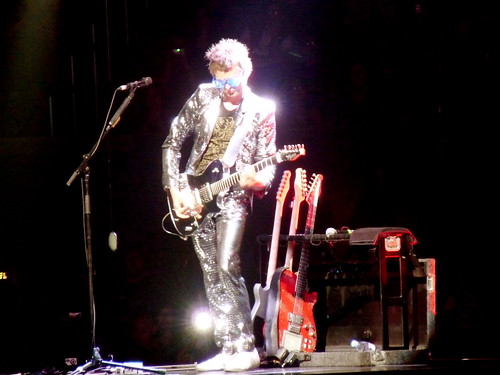
Muse - Staples Center - September 25, 2010

They will not force us…They will not control us…Rise up and take the power back!

How many of you have read Northern Lights? (that’s The Golden Compass to you northamericaners.) Remember those animal daemons that followed the characters around? They were human souls made manifest.

I sometimes picture our Muses in a similar fashion, except that we writers have a greater variety of sizes, types and numbers. Some folks may even claim to be absolutely museless, or polygamuse.

There’s something about the concept of the muse that evokes the image of something mysterious, numinous, of something akin to divine inspiration. Muses were goddesses, and why not? For me and many other writers, the process of creating can feel mystical, euphoric, religious. But I think it’s dangerous to think of the Muse as other, as something outside of ourselves.

For example, many have a relationship to their muse not unlike that of the Prophet Muhammad and the angel Gabriel. They channel their inspiration like it is the infallible word of God and their words are the lyrical sutra of the Qur’an. Writers often use their muse as an excuse to maintain their personal status quo–to ignore well-deserved critiques, to cling to worn-out tropes, to perpetuate harmful stereotypes.

I think this problem is exacerbated by successful authors who encourage us to write for ourselves, to tell our own stories, to follow our muses, as it were. Connie Willis once gave me the following advice (channeling one of her heroes, Dorothy Sayers): “The only you can possibly do is write what one wants and hope for the best.” I’ve heard advice like this from a number of the writers I all but stalk worship (I have a half-dozen pictures of Neil Gaiman posted in various places, including one by my bed), and since I have a bit of a rebellious streak, I’d like to challenge this writerly conventional wisdom, or at least examine it a bit.

Here’s my problem with this collective advice: editors are buried under slush pile avalanches (Daddy, what’s a paper manuscript?) of inspired stories that people wrote while following their muses, while telling their stories. I don’t want to write and hope for the best–I want to channel my muse in the best direction. And the problem isn’t just that writers need to improve their craft–even technically solid authors perpetuate the worst stereotypes and churn out banal tropes that editors have seen thousands of times before. Check out these examples from Strange HorizonsStories We’ve Seen Too Often:

  • 2e. Creative person meets a muse (either one of the nine classical Muses or a more individual muse) and interacts with them, usually by keeping them captive.
  • 14. White protagonist is given wise and mystical advice by Holy Simple Native Folk. [I admit to having written something like this before.]
  • 30. Brutal violence against women is depicted in loving detail, often in a story that’s ostensibly about violence against women being bad.
  • 32. Fatness is used as a signal of evil, dissolution, and/or moral decay, usually with the unspoken assumption that it’s completely obvious that fat people are immoral and disgusting.

I consider creativity to be my chief strength as a writer, but one of my story ideas was in there: “29c. The afterlife is a bureaucracy.”

So here’s my idea, which I wish someone had told me earlier in my writing career: We own our muses, not the other way around. They are not cats, or addictions, or sacrifice-demanding, dictating deities. Here are three ways you can abuse your muse:

1. Force-feed Your Muse: You control your Muse’s diet. Your muse devours what you do. If you read nothing but stories about Cthulhu and watch a bunch of low budget horror flicks, then your muse may inspire you to write Lovecraftian pastiches, as I did in high school. Fortunately, you can counter this by changing your diet. After fighting writer’s block for my Week Four Clarion West story, I binged on Banksy graffiti, non-American steampunk art, and octopod hentai woodblock prints. When the story got going, writing it was an ecstatic experience. It was enjoyed by most of my class and by instructor/author Ian McDonald, who praised it for being “very cinematic.”

2. Sleep-Deprive Your Muse: I tend to wait for bursts of creative inspiration. When I do this, it can be months between stories. Going to Clarion, I realized that I could make myself to write on demand. Right now, I’m forcing myself to get my ass out of bed and into the seat in front of my laptop each morning. If my technology has a problem, then I switch to writing on a cheap pad of paper or a 3×5 notecard. To paraphrase James Earl Jones in the Field of Dreams, if you write it, your Muse will come. If that fails, drag it kicking and screaming out of bed.

3. Dominate Your Muse: Your posterior is finally in that seat, and your writing is inspired. the words flow, and you feel great! You’ve created the next Hugo-Nebula-Campbell-winner for sure! But then you send it to your beta readers. They tell you that although the prose is strong, the story is riddled with noble savages, weak women in need of rescue, and evil obese amputees. Or they cite five other recent examples of “Surprise! The humans were the actual aliens”-type stories. Don’t discount the initial inspiration. But you’re not stuck with what your muse gave you. Interrogate your tropes and stereotypes (and your prose and voice, etc., if necessary). See if you can build on what your muse has gifted you, but don’t be afraid to dismantle and rebuild it on terms that work for you, for your audience, and for the editors whose eyes you’re trying to catch. Remember that you are the boss of your muse.

I’m not trying to discount all the well-intentioned advice that respected authors and teachers have given us. But I do hope I’ve added some nuance to something that is often presented to us in nebulous terms. We are not slaves to our muses. Our stories do not pour forth from some source completely separate from our personal experiences, our cultural context, our audiences. We can and do influence what we’re inspired to write.

I believe in my Muse, my goddess of inspiration and giver of delight, but we’ve struggled hard to come to an understanding, and we work together, she and I.

What is your relationship with your muse? Please share your hopes and fears, your wisdom and experience!

(Image of Muse performance by starbright31, used here under a Creative Commons Attribution-NonCommercial-NoDerivs 2.0 license)

Continue reading

Con Season Thoughts

As I’m preparing for SDCC and WorldCon and PAX and the eventual WFC, I see common themes emerging from each of these, with respect to my pretending-to-be-a-writer thing I gots going on. So, I decided to consolidate those things in a post here. This isn’t an all-encompassing list, but just a list of things I do.

Before I start in, however, I want to take a moment to recognize that these things I am suggesting cost money, and for some, money is a prohibitive issue. Some folks are going to cons when they are local, getting a spare badge in exchange for some time spent working at a table. I get that. This is not directed at you incredible powerhouses, still busting ass despite financial hardship. Keep doing what you do.

This is directed at the rest of us.

Business Cards. Keep it simple and clean, with easy-to-read information that isn’t very likely to change. Mine is incredibly simple: my name, my website, my email, my twitter, and my logo (yeah, I have a logo, who does that?). Other than that, it’s largely blank.

Maybe you think, who am I, I’m not published yet, why do I need a business card? I’d say you’re looking at it the wrong way. I had a business card before I was really submitting my work for publication. I just like getting to know rad people who do rad things. Cards help with that.

Also, I’ve found having one side of your card blank is incredibly useful, for two reasons. One, say you meet someone and you’re enjoying talking with them, but it’s Thursday, and by the time they get home on Monday and detox they’re not likely to remember who you are. However, if you write a salient detail about your conversation on the back of the card, bam, instant recall. And two, if you meet someone and you’re enjoying talking with them, and they don’t have a business card, you can get their info down easy-peasy.

Website. Do you have a website? Is it up-to-date? Is it clean and easy to navigate? Does it look professional? A significant number of SFF writers I’ve met cannot answer yes to any or all of these questions. Which, guys, it’s 2011. I’ve had a website since 1994 (which I hand-coded in Notepad because I’m that fucking hard).

Here is the list of things your website absolutely needs:

  • a simple URL
  • a page about you
  • a page listing your publications/art/whatever all it is you do for fun or profit
  • a way to contact you

This list should be really obvious (sadly it’s not) but I’ll dwell a moment on the “simple URL” part. This is something you want to be able to rattle off without having to say a single slash. No one else should own this domain. Not wordpress, not blogger, nobody but you. I live at geardrops.net. I have lived here for a few years. I will keep living here until it no longer suits my needs. (I have had a multitude of other homes in the past, all lost to the entropy of the Internet.) Why is this good? I will let Scalzi tell you why this is good.

And perhaps you believe you can’t afford your own domain. My hosting, which supports enough to get me a WordPress-powered site (though I’m looking at switching to a Joomla-powered site but that’s neither here nor there) costs $5 a month. Five bucks. Skip a latte, you’ve paid for your server for a month. And it’s not even technically challenging. Find some hosting that supports PHP and SQL (aka just about any hosting service), throw WordPress on there, and that’s the end of your tech demands. Barring that? Find some kid, offer cash, get a website. (Barring that, real talk, email me, and for a pittance I will make you a functioning, if basic, website.)

Pitch. I know there are piles upon piles of posts about pitching specific novels. I’m not talking about focusing on getting one work out the door. I’m talking about pitching yourself.

I know, how gauche. Let me explain.

What I’m saying is be as honest about who you are as you possibly can be. Think about your appearance and demeanor. Think about how you come across to others. Some people call this “personal branding.” Whatever. It’s about being true to yourself. Look at the Inkpunks. Every one of us is fairly identifiable. If I say “Fitness Fanatic” you know I mean Sandra. “Booze Nerd?” Andy. But none of us are faking an identity. We have our passions and our markers, and we wear them proudly.

Another part of “pitch” is knowing what it is you create. At my first WFC I was asked “What do you write?” to which I had no answer. Saying “scifi-slash-fantasy” is fine in a typical setting, but at WFC, everybody writes scifi-slash-fantasy. Having an answer to this is important, I think. I know it’s hard to describe an individual work, and it’s even harder to describe a whole body of work. But it helps to be able to answer that question.

One last part about “pitch” that I’ll go into, briefly, is your physical appearance. I’m not telling anyone reading this that they need to go out and subscribe to the narrow and unflinching western ideals of beauty. Speaking frankly as someone who has suffered under the pressure of those ideals, it’s damaging, it’s limiting, and most importantly, it’s not always going to be honest to you. Physical appearance is not about someone else’s ideal of beauty, it’s about your own identity, and it’s about showing people that they should care about you, because you care about you.

In all of this, I just stay true to myself. I keep myself watered and fed and rested, I pack clean outfits and shower daily and do my hair like I like. When you’re presenting yourself as your happiest and best and truest self, people respond to that.

So that’s what I do, but I’m curious… What do you do to prepare to be a writer at a convention? I’d love to hear more tips!

Continue reading

Guest Post: Surviving A Critique Without Killing Yourself, Or Even Other People, by Ferrett Steinmetz

In the past three years, Ferrett Steinmetz became bishopual, and became revitalized. In June of 2008, he went to the the Clarion Writers’ Workshop, and then Viable Paradise in 2009 – and they supercharged him, allowing him to publish seventeen stories since then. (It should be noted that in twenty years’ of effort before that, he’d only published three stories.) He’s proud to be in such markets as Asimov’s, Beneath Ceaseless Skies, Shimmer, GUD, and Andromeda Spaceways In-Flight Magazine, among others. You can see a full list of his stories at his profile page on WriterTopia.

He’s also participating in this year’s Clarion Blog-a-Thon – if you donate $5, you’ll be entered to win this nifty Neil Gaiman and Michael Zulli proof, and if you donate $10 you’ll get to see him live-blog the writing (with commentary!) of his YA novel in progress. He wants you to donate. You wants the Precious.


So you’re about to sit down for your first real-life critique. Actual people will be sitting around you, dissecting your story in the hopes of making it better – and here you are, feeling like a pinata about to be dropped into a swarm of sugar-addled, stick-wielding kids.

How do you make this critique worth your time? Well, I’ve done the critique thing at every level, from the Clarion Writers’ workshop (which I’m doing a blog-a-thon for right now!) to my local crit group, the Cajun Sushi Hamsters. And I’ve gotten some good advice over the years that I’d like to hand to you.

The #1 Key To Survival: Write Down The Good Stuff

A critique will startle you with how terrible you are. All those clever traps you thought you avoided? You fell into them. The character motivations you thought so hard about? People don’t understand why the hell anyone’s doing anything. And let us not talk about that godawful fudge of an ending.

And here’s what you do if you’re stupid: you immortalize all of these flaws in your notes.

Why not, you ask? Don’t these flaws exist to be fixed? And they do. You should write them down. But it’s a truism in the writing biz that one piece of hate mail is worth ten ass-kissing missives of fluffery, and if you’re not careful you’ll concentrate on all the terrible, awful things in your story… And forget about all the nice things that people said.

The nice things are key. A surgeon doesn’t open up a cancer patient and start ripping indiscriminately, organs and tumors alike; he tries to remove the bad bits while bolstering the functionality of the working items. Likewise, when revising your story you have to remember what works so that you don’t start cutting the backbone out and throwing it on the fishpile.

So you need to write down all the nice things people said. They will be small, particularly towards the end of a live critique session when everyone’s saying, “Yeah, I adored the characters and loved the plot BUT” and then go on for their requested two minutes about everything that sucked. But write it down diligently: LOVED PLOT, ADORED CHARACTERS. Otherwise, when you go to revise a few weeks later, you’ll see the one note from that crank who said that he thought the characters were weak, and take that dork’s word as God.

Plus, when you go through your notes later, it won’t be nearly as much like chewing tin foil. There will be little bits of chocolate in with the tin, happy moments where you’ll look forward to revising because hey, you’ll hear the good and the bad. You’ll look at a grade that’s the healthy B-minus that it is, as opposed a steady stream of commentary on the F-worthy partss of your manuscript.

The #2 Key of Survival: Know Which People To Dampen

You almost never want to blow off someone’s critique entirely – that’s your ticket to exclusivity central, where you ignore anyone who doesn’t agree everything you do is a staggering work of genius. But after a couple of critiques, you’ll know who gets what you want to do and enjoys it, and who’s writing a kind of fiction that’s interminably at odds with your style.

The thing is, you never want to shut anyone out entirely. You always want to pay attention to the things that confused them, their notes on inconsistencies, their appraisal of your plot. But there are people who even if you got it 100% perfect, would not like it simply because you’re not doing what they enjoy.

This is not a fault. Someone who adores Heinlein is probably not going to be overly thrilled by a Catherynne Valente short story. Tastes differ, and you can get valuable feedback from someone whose tastes are the polar opposite of your own – in some cases, more valuable, since they’ll point out flaws that the authors you love also commit. But the truth remains: you could absolutely nail this tale in every way that you want to, and they’d still be hemming, I dunno. It just didn’t work for me.

So you learn to pick favorites in every workshop. You go, Okay, if Brent and Greta love this story, it’s pretty close to good. And conversely, If Jerry is irritated by it, well, he usually doesn’t go for what I’m trying to do anyway. A good workshop experience eventually becomes you realizing that if Brent and Greta don’t like it, then the story is way off, but if Jerry’s against it again, well, that’s just Jerry.

In time, you may even come to see a rave review from Jerry as an actual danger sign. Yes, this happens.

The #3 Key To Survival: The Provider Of The Problem Does Not Always Provide The Solution

There’s a saying in workshops: “If three people tell you that your story has a problem, it’s a problem. If three people give you advice on how to fix the story, they’re probably wrong.”

This is true because stories are deeply personal things, and bad fixes can fall into a lot of categories: Not My Kink (an acceptable solution, but not one that hits the things that excite you personally), Rewrites The Story To An Unacceptable Degree, They Don’t Understand What You’re Trying to Do With The Characters, Just Plain Silly. Or even the more-damning-than-you’d-think Good Enough, But Not Really You.

One of my most popular stories is As Below, So Above, the story of religious squids in a mad scientist’s moat, which was published in Beneath Ceaseless Skies (and later turned into an
audio drama by PodCastle
). When I first submitted it, the editor said he loved the story, but felt the mad scientist at the end lacked motivation (a problem previous crit-groups had noted – and sadly, one that I’d thought I had solved when I submitted it).

He suggested having the mad scientist be a little madder, getting into the political details of why he’d been hounded. And I looked at his suggestion and went, “No, that doesn’t feel right at all.”

Now, I was looking down the barrel of my third professional sale – the gateway to a full SFWA membership, something I deeply desired – and I really wanted to do what he said. Just follow the blueprint, and wham! A story sale! But I looked at it, and decided that his suggestion wasn’t right for this story. It’d probably work, but it wouldn’t feel like mine.

And I thought about the problem, and gave the mad scientist a literal God complex, playing up the reasons why he’d created these monsters. The editor responded positively, and a rewrite or two later, wham. I got it published.

The lesson here is that even professional editors are not always right – and you’ll hear this time and time again from writers who’ve stared a sale in the eye and said, “No, lemme fix it my way.” (And professional editors will suggest, often well, but are smart enough to get out of their ego’s way when
they see another solution.) Your way is usually better, because it’s your muse.

If people are saying they don’t feel like the mad scientist is a real character, well, then you’d damn well better buckle down and make him real. But there are a thousand approaches to creating that realness, and what your crit group is giving you is merely their solution to a problem. What you’re
looking for is your solution to a problem – because frankly, the uniqueness of you is the single thing you can add to a story that nobody else can mimic.

Take their suggestions to heart – but not to paper until you’re absolutely sure. And if you’re lucky enough to have that ventricle reaction of, Oh, yes, that’s perfect! Then by all means, steal their idea. (File off the serial numbers first.) But if not, ponder the problem seriously, but use your own smarts to get out of it. Even the best writers don’t know what’s best for you.

The #4 Key To Survival: Wait A Few Weeks

I’m a Protestant Kingist, which means that my writing Bible is largely Stephen King’s “On Writing,” with a couple of dissenting notes I’ve acquired over the years. And Unca Steve has one very valuable piece of advice:

When you’re critiqued, wait a while before revising.

Seriously. If you walk out of a critique and start chopping, there’s a good chance you’ll be all like, “I’ll fix everything they said!” and wind up turning a coherent story into a junk shop of other people’s opinions. Everyone’s process varies, but I’d say more often than not, you don’t want to have the critiques lodged too firmly in mind when you start to revise.

Think of it as a Darwinian process. The critiques that matter are going to survive long enough to stick in your head when you re-read the story. The ones that don’t will slide away, dying a proper death.

Now, I’m a completionist, so I read everyone’s notes before revising – but I also read the story first. You’d be surprised how your own words will appear once you’ve shoved them in a drawer for a couple of weeks – there will be parts that are way better than you remember, and parts that were saggier than you thought. Getting some distance timewise will give you some perspective, and you’ll most likely remember the extremely relevant crits as you read it over.

Take some time. You don’t have to do this right away, because a good writer is going to have a couple of balls in the air – if this is your only story, well, start another one. Get to work on a new process, because there’s always the chance that this won’t sell, and what then? Charge up your creative juices by switching around, and you’ll find you wind up being a better writer overall than if you just relentlessly sandpaper away at this same story until it’s a pile of sawdust.

Continue reading

Aspiration to Perspiration: Making Time to Write

One of the most common complaints from aspiring writers is that they “don’t have time to write.” It’s true that life has a way of filling up your time with things both mundane and important. Your job is stressful and you’re working lots of OT. Kids. Family obligations. Opportunities to see friends you haven’t seen in ages. Tests to take, classes to pass. The playoffs are on TV. You’re almost done beating Red Dead Redemption.

Some of this might sound familiar to you…

Really, though, what we mean when we say “I don’t have the time to write” is “I’m unwilling to make the time.”

There are lots of good arguments, justifications, and explanations for not meeting a word count on a given day. For not spending that hour with your nose pressed against the blue-green glow of the monitor, fingers flying at the keys. I know very well what some of these excuses are because I’ve made (and still make) many of them.

But of course, the only way to be a writer is to write. You can’t get around it. I realize that’s no big secret, but like most things, it’s easier said than done. So let me tell you how I overcame inertia and a million other valid (and invalid) excuses and got myself back on track.

Routine

My day job is a fairly demanding one. While I’m lucky enough to work in a creative place in a creative industry, I still come home tired every day from working my brain so much. My focus is shot, my eyes are tired from staring at a screen for 8-10 hours, and I just don’t want to sit at a desk.

I’m a night owl. When the world is silent and still, I love to stay up and work. It would seem an ideal time to write except that my brain is fried. It’s generally a better time to read, recharge my batteries, and (sometimes) goof off.

As I got more and more serious about a writing career, I realized I was going to have to carve out some time somewhere else. Make a routine. That left me with the unlikely option of getting up early to write—and I’m not a morning person.  But I’d heard good things from people who wrote in the morning: the world is still silent and still, and sometimes your brain is asleep so the internal editor shuts the hell up and you can just write.

Those first few weeks were terribly difficult, and I admit more than once, I hit the snooze alarm and chose an extra 20 minutes in a warm bed over the cold, intimidating glare of an empty document. But gradually, I grew accustomed to the early rising, and now I often wake before the alarm. Even on the weekends. Now my feet don’t always hit the floor in a frenzy of enthusiasm (apologies to Mr. Bradbury) but they do carry me from bed to office.

Discipline

That’s when I let my butt take over. I sit in the chair and write for 45 minutes to an hour most every morning. Even if the ideas are bad, even if the sentence structure is crap, even if the characters are cardboard standups and the adverbs cavort with reckless abandon across the screen, I write.

Now I’m not a writer who believes in writing every day necessarily. I need to give my brain a break sometimes, so I mostly write during the week. But I try to spend that time working on some aspect of my writing career even if I’m not cranking out words. Revisions. Submissions. Blog entries…

A big part of discipline for me is focus. Even sitting quietly at my desk, there are a million distractions. Twitter. Facebook. Email. Wikipedia. The Internet. There’s a lot of awesome out there waiting to distract you from writing. Turn it all off. Not only do I close all these programs so I can’t be lured into checking them, but I turn off the wireless, too. If I really need help, I’ll unplug the router. Many writing programs have a “full screen” mode that hides your desktop from view while you work. Just you and the page. No clock. No word count. No Angry Birds icon waiting to be clicked…

My goal each morning is to write 500-1000 words. I don’t always make that count. I give myself some slack as long as I’m making progress on the overall goals I’ve set for myself that week. I call it a win. Sometimes I’ll even jump on Twitter and crow about it.

Sacrifice

So ask yourself as you embark upon this long and winding road paved with words: are you ready to leave your bed an hour early when the house is cold and the cats are pressing close?

Sleep may be the least thing you’ll have to give up. Time with friends and family often cuts into prime writing time. Hopefully you have understanding families. If you’re writing early or late after they’ve all gone to bed, that may ease things. But it’s still time away from the people you care about, so it’s no small sacrifice.

Television and video games can be inspirational and prime the pump for your own storytelling, but how many hours a week are you spending on them? What if you spent some of that time writing? All of it? Could you ditch that premium digital subscription service? Quit that MMO that entices you back day after day?

When I got back from Clarion West, I pulled the plug on TV. After a summer of not watching, I realized I didn’t miss it much. I got rid of the satellite subscription and spent the evenings instead on ideation, blog posts, and reading. I’ve since allowed a little TV back into my life, mostly through Netflix, but I easily gained five to eight hours a week back that I can now use for writing.

Perspiration

I’m a better writer for all these things, and whatever successes I’ve had I credit largely to sticking with the plan, even on bad days. But it’s hard work, and some days are a struggle. So you have to push yourself everyday to do more than the bare minimum. I have games I play with myself. One Hundred More Words. Five More Minutes. Unplug the Router. All three require intense focus and concentration. I like to leave my writing sessions the way I leave the gym–a little sore, out of breath, wobbly-legged from exhaustion and excitement.

So all these things turned me from an aspiring writer with no publications to an aspiring writer with several. I’ve got a long way to go, I know. And I suspect that even after years of doing this (and hopefully some more successes) I’ll still be aspiring to do better. What about you?

What’s your routine? What are you willing to sacrifice to find the time to write? How hard do you push yourself?


Continue reading

Famously Rejected

As writers we spend a lot of time doubting ourselves. Are we talented enough? Is this idea terrible? Will everyone hate it? Would a publisher ever want it? That’s before we even send it out. Then the question becomes, how many rejections can I take?

I thought my background of competing* and getting up on a stage to be judged by official judges, audience members and fans around the world, would prepare me to take rejection when it came to my writing. My assumption proved both wrong and right.

I haven’t put a lot of short stories out there, not as many as I should. I haven’t queried many agents for my novel, but I have received rejections on both and they sting, there’s no doubt about that. I’ve found a rejection on your novel stings a lot worse than on a short story, based on the relative amount of time, blood, sweat and tears suffered in producing the piece rejected. Yes, it’s going to hurt. Do I think it gets easier? Perhaps it will, but I’m not experienced enough yet to know that.

Bear with me, there is an upside to all this! What I had been right about, is my experience of being judged by others while on stage for eleven years taught me to bounce back fast. Every time I didn’t win an event, or do as well as I thought I should have, it was a rejection and it stung. But by the time I was on the plane on the way home, I’d have bounced back. With stubborn, “I’ll show them” determination I’d be making a plan to make my next performance better, by working to improve my physique and my routine, putting to use judges feedback and everything I’d learned from the contest.

Luckily, the ability to bounce back quickly transfered over to receiving writing rejections and my wish is to pass that on to you. Feel the pain, feel the loss at each rejection, but then dust yourself off and head straight back to the drawing board, to quote two motivational clichés in a row. They’re well known clichés for a reason because that’s what it takes to succeed. Learn from your rejections, get fired up and make a plan to do better next time. Never give up. Try sending it to someone else. Try making it better, or try something entirely new. Just don’t stop trying. I made it to the top of my sport exactly that way and the same stubborn determination can pay off for you in your writing career.

Celebrate your rejections. Some of the Inkpunks have rejection jars, where they “tip” themselves every time they receive a rejection. Patrick Rothfuss told a roomful of writers at VCon in 2008 that when we get our first rejection we should celebrate. It means you’re writing and submitting. I say, celebrate every rejection as a milestone along your journey.

I’ve made a collection of stories of rejection turned success, to make myself feel better in preparation for those down times. I thought you might like them as well and I know there are lots more stories like this out there, so feel free to add more!

James Patterson’s first novel was turned down by 31 publishers, then the novel went on to win an Edgar as the best first mystery of the year. His first best seller came 16 years later.

John Grisham’s first novel “A Time to Kill” was rejected by 16 agents and a dozen publishers. He became the best-selling author of “The Firm and “The Pelican Brief.” “A Time to Kill” was republished in 1992 and made into a movie in 1996.

Earlene Fowler wrote 150 short stories that were rejected before having her first novel published. (now has 6 books published)

The Tale of Peter Rabbit was turned down so many times, Beatrix Potter initially self-published it.

Stephen King’s
first novel Carrie received dozens of rejections.

William Golding’s Lord of the Flies was rejected by 20 publishers.

J.K. Rowling’s first Harry Potter book was rejected by a dozen publishers, including Penguin and HarperCollins.

Feel better? Good. Keep writing, keep submitting and don’t let rejection stop you. 🙂

_______________________________________________________________________________________

*Most people won’t  know what I’m talking about when I refer to competing, but I also didn’t want to stick contest photos into this blog post. I was a fitness competitor, judged in physique and fitness routines rounds, competed for eleven years, four of those in the IFBB Professional ranks and competed around the world.

Continue reading

prev posts prev posts