Writing Groups

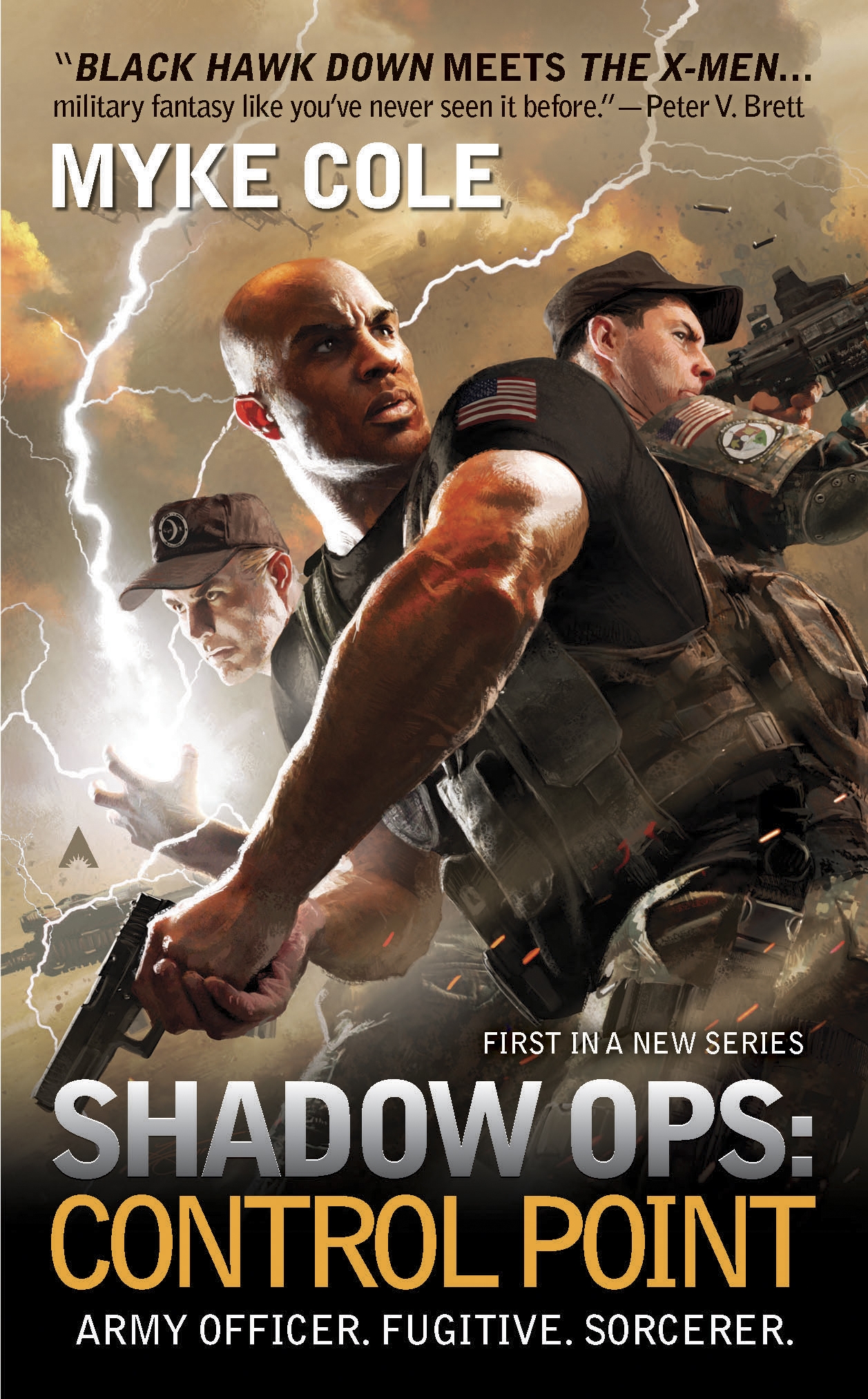
Myke Cole is the author of the military fantasy SHADOW OPS series. The first novel, CONTROL POINT, will be published by Ace (Penguin) at the end of this month.

As a secu­rity con­tractor, gov­ern­ment civilian and mil­i­tary officer, Myke Cole’s career has run the gamut from Coun­tert­er­rorism to Cyber War­fare to Fed­eral Law Enforce­ment. He’s done three tours in Iraq and was recalled to serve during the Deep­water Horizon oil spill. All that con­flict can wear a guy out. Thank good­ness for fan­tasy novels, comic books, late night games of Dun­geons and Dragons and lots of angst fueled writing.

Sandra and I are old buddies from fandom, running into one another at a minimum of two cons a year. When she asked me to do a guest post for her, I was really psyched.

Until she told me the topic: writing groups.

Ugh.

See, here’s the problem. I have some strong opinions on writing groups, and they’re not generally popular ones. Worse, I think they’re good enough opinions that I want to share them with others. In fact, I’d been secretly hoping for a chance to.

And Sandra, bless her, had just given me the excuse.

So, I sat down to write this and decided to just be as honest as possible, trusting in the goodwill of the Inkpunks readership to see me through.

So, ahem. Here goes.

Here’s what I think about writing groups: I don’t like them.

Wait, wait. Wait! Stop. Seriously. Put the rock down. Let me explain.

I know that writers groups have done wonderful things for scores of aspiring writers. I know there are major pros whose established careers eclipse my nascent one who swear by them. I know that everyone is different and not everyone’s methods apply to everyone else.

But.

Sandra asked me for my opinion, and this is it.

There are folks out there who write for the sheer joy of it. They don’t care if anyone else ever reads their work. They don’t care if they’re ever published. The sheer emotional satisfaction derived from channeling thoughts into words on a page is sufficient. When these people are brilliant, and incidentally discovered, you get the Emily Dickensons of the world.

But most of the writers I know aren’t like that. They are writing to communicate. They want to connect with others, know that their message has been consumed, digested and reflected back to them. They want to have impact.

Such people are attuned to the opinions of others. In seeking that reflection, that impact, they are open and receptive to feedback. They are insecure by nature, pushing their words (and a bit of their souls, right?) out into the void to be judged. And they want to be judged favorably.

I am such a person. I admit it. I am a people-pleasing, praise-hungry complimen-monster. I want people to read my writing. I want them to like it. And I want them to tell me why they like it.

So, you put me in a room full of people who are reading my work and giving me their opinions and an unsurpising thing happens: I waver. I bend.

When someone criticizes something, I ingest it, ponder it. I am denied my primary goal (to be told I am a great writer), and even when my instincts tell me the criticism is wrong, I still have to resist the strong impulse to “fix the problem” anyway. Because in my heart of hearts, I will do anything to make that criticism go away, to set that ship right.

And when I am praised? Even if I know I am being praised for something that is undeniably a flaw (“I just love your use of the word ‘caliginous’ in that sentence!”), the same impulses move me to accept it, and leave the manuscript unchanged.

To be frank, my voice, my authorial voice, the thing that makes my writing mine, is too easily battered into silence by my ego.

Now, maybe you’re one of those tough as nails type. You’re self-assured, confident. You don’t care what anyone thinks.

Outstanding. I mean that. I envy you. I’m not that way, and I never will be. Admitting that was my first step on the path to going pro.

Anyway, I am not saying that a writer doesn’t need opinions. I firmly believe that you do. But I also firmly believe that those opinions are better garnered from a very small number of people chosen carefully for their ability to provide criticism in a way that allows you to preserve your authorial voice.

I have three “beta-readers” who I have close personal friendships with. That familiarity has bred enough contempt to allow me to stand firm against their advice when I disagree with it. One is a major force in the field, a professional who will be an institution in fantasy long after his death. The second is a “neo-pro” with a few major short story sales to her name and interest from industry heavy-hitters. The third is a fan who has never written a word of fiction in his life but knows the genre inside and out. I send work to them individually on a schedule-permitting (theirs) basis and get inputs separately. They don’t know one another and likely never will.

And that’s it. No group. As my career progresses and I make friends with other pros and fans, I may find other beta-readers, but I will only use them when my core three are unavailable. It’s critical to keep the number small in order to preserve my voice.

Because that voice is what makes me unique, and if I don’t respect it (and respect the personal limitations I know will impact it), I will wind up writing vanilla drek that nobody will want to read.

Here’s another issue I have with writing groups: publishing is a brutal industry. The odds of “making it” in the business (which I define as making a full time living from writing) or even getting a book deal with a major publishing house that still fails to make any serious money are really, really long. You are pummeled daily by rejection, forced to question yourself, ask the soul-searching questions: How bad do you want it? Are you wasting your time? It’s one long, dark night of the soul after another.

And that sucks.

When things suck, we seek solace from others who are suffering in the same battlefield. We lean on one another. We offer support. We band together in our sorrow. It’s a beautiful thing.

And it’s totally counterproductive.

I’ve seen too many writing groups that had devolved into sessions that were 90% group therapy, 10% discussion of craft. Discussions revolved around market response times, or the artfully termed “rejectomancy” (trying to read into the form and text of rejection notes to determine what the editor really meant). Like most things in life, writing is most successful when minimal time is spent bemoaning failures and instead spent working on strategies for success, and by that, I mean CRAFT. Not knowledge of the market, not networking, not anything else. All that stuff is certainly important, but secondary to writing well.

Bottom line: when you’re struggling to be a professional artist, it’s just as easy to be influenced by a charismatic person as it is by a knowledgeable one. In a field as subjective as writing, helpful and unhelpful advice is really, really hard to tell apart. The temptation to seek solace from the storms of a field that can be (to put it mildly) unkind, can distract from the need to focus on developing your craft, the most pivotal aspect of successful writing.

Let me close with the general disclaimer: If writing groups work for you, if they enfranchise you, improve your craft and your ability to get work done, if they push you towards success in this nasty industry, then OUTSTANDING. More power to you, work with what works. Full speed ahead. I never judge what is working for someone and certainly won’t bash anyone for being in a writing group.

But it’s not the road for me, for the reasons I’ve just laid out. And if you’re an aspiring writer who is bending like a reed in a storm, or spending more time leaning on your buddies than learning from them, it might not be a road you want to walk either.

____________________________________________________________________________________________

  Visit Myke’s website at MykeCole.com


Continue reading

Home practice

A workshop is a wonderful thing–it’s the writing equivalent of the yoga class or even the yoga retreat. It’s a magnificent way to reinvigorate your commitment to the craft and to learn new skills. But you know, I find that when I’m in class, I don’t experience my deepest yogic moments. I’m too busy absorbing all the new information to tap into full relaxation and to integrate my new skills with older wisdom, which is what actually takes a practitioner to the next level. Personal practice with lots of repetition and self-reflection is what I need for real improvement.

Your personal practice as a writer sets the course of your journey in the craft. And it’s important to be very conscious of the way you’re practicing, observing if you’re stretching your skills or if you’re letting yourself become bogged down in a rut. It’s important to try new things and new styles. It’s also important to encourage healthful habits as you practice. Look at the way you get ready to write every day–do you grab a fatty snack or alcohol? Do you sit at a desk that’s physically unhealthy, with bad ergonomics? Or if you sit down all day, is your body complaining about sitting more? Remember that if you let it, writing will stay with you your entire life. It’s critical to create habits that are sustainable.

It’s easy to think of bad physical writing habits that we can change, but it’s just as important to examine our mental writing habits. Are there words and structures you over-use? Are there forms you’ve outgrown but resist stepping out of? It’s all-too easy to keep solving the same kinds of problems, keep creating the same kinds of characters. For example, I’m the kind of person who tends to enter a situation and stand back to take stock of it, blandly observing before I commit to a course of action. My very bad habit as a writer is to create mostly characters who are like me, observers. It’s not terrible to read a book with one character like that, but if the story’s entire world is populated by Wendy-ish watchers? Boy, is that a lame story!

Last year I made a short list of bad writing habits that I wanted to break. They included:

  • Over-using one-, two-, and three-sentence paragraphs.
  • Relying on reserved, observer-type characters.
  • Getting feedback on stories & never doing anything with the story ever again.

I feel like I made some progress on the first goal and learned to be more comfortable extending my ideas within a piece. My writing definitely feels more fluid because I worked on that goal. But sadly, I still need to work on the last two habits. I also want to add two more goals to the list:

  • Seeking feedback on every piece of writing (I just feel so guilty asking any of my very busy friends to look at my stuff!)
  • Lessening my reliance on the em-dash.

What are some habits you’ve got that you’d like to break? Can you think of any? I’d love to hear if you’ve got any plans to overcome those bad mental habits!


Continue reading

Writing Workshops for Everyone

So…workshops. As a writer, you hear a lot about them, especially the big, flashy ones: Clarion, Clarion West, Odyssey, Taos (see John Joseph Adam’s recent guest post for a complete listing). You start to wonder if they might be of some benefit to you; might take your writing to the next level, allow you to make important connections in the industry, and/or create a sense of community with fellow writers. Workshops do all of these things. They aren’t necessary for success certainly, and there are other ways to learn about writing, but there’s no doubt they can be useful.

But what if you apply to one of the biggies and don’t get accepted? I applied to both Clarion and Clarion West two years ago, got waitlisted for the latter, and didn’t make it in. It happens.

Or what if you can’t afford the high price, or the two to six week’s worth of time away from family and work? What if you’re just starting out and don’t feel like your writing is up to snuff? Or what if you’re skeptical about this whole workshop thing, and only want to dip your toe in?

Fortunately you’ll find a plethora of other opportunities, if you do a little digging. I’ve attended numerous workshops locally, and I’ll discuss these below.

How to Write the Breakout Novel

This was the first workshop I ever attended, and was taught by Donald Maass, genre literary agent extraordinaire, who has written a book by the same name. It was a one day affair which consisted mostly of a lecture and some writing exercises, which weren’t critiqued due to the large number of attendees (hundreds). I learned a lot but perhaps more importantly, came away energized to write.

I cannot recall the cost, but believe it was between $100 to $200.

How did I find out about this workshop? A friend saw it advertised at the public library and told me. Indeed, bulletin boards at your local library are an excellent resource for this sort of thing. In addition, this particular workshop was hosted by the Alberta Romance Writers, which I might have discovered with a quick Google search. Often local writing groups hold workshops, and sometimes these are open to non-members.

And while we’re on the topic of writing groups, these can also be a valuable (and ultra affordable!) resource for learning, in place of or in addition to workshops. See my previous post on this subject.

How to Plot a Novel

This was my second workshop; one I registered for through the Continuing Education program at one of the local universities. Again, it was just one day (a Saturday), and was mainly a lecture followed by a discussion of each student’s work-in-progress novel. I didn’t find it particularly helpful to be honest, but it was cheap (around $50) and might’ve been better with a better instructor.

Creative Writing 1 and 2

Maintaining faith in the Continuing Education program despite my first lackluster experience, I registered for an eight-week session simply titled: Creative Writing 1. I believe the cost was in the neighborhood of $300 to $400.

This once a week, three hour evening class included lectures, in-class writing exercises, take-home assignments, reading and analyzing published work, and, most importantly, a critique of my work by the instructor. In my opinion there is no better way to learn about writing than to have your work critiqued by someone better and more experienced than you. I learned a tremendous amount in this class, and quickly registered for level 2.

I should note that these classes had a literary, and not a genre focus, but were extremely helpful nonetheless. I felt no guilt or shame whatsoever about subjecting my instructor and class-mates to my fantastical stories about witches and monsters and wizards, and you know what? For the most part they enjoyed them!

Sound interesting? Explore the Continuing Education programs in your area.

Convention Workshops

Chances are good that there is some sort of annual writing convention in your area, or at least nearby. Chances are also good that there is a workshop associated with the convention, for which you could register. Do some investigating.

My local writing group, the Imaginative Fiction Writers Association (not open to those other, unimaginative fiction writer-types, hehe), goes a bit further. Each year we recommend a writing guest-of-honor to the convention committee, then contact the GOH to see if they’d be interested in holding a two day workshop for 12 members of our group, just prior to the start of the convention. Their airfare will likely be covered by the convention, so the group saves on that cost, and we then offer the GOH a $150 honorarium plus board at a member’s house, or to pay for the cost of a hotel room for two nights, whichever they prefer. We also cover their meals. The cost to register for the workshop is $125 per person, so our not-for-profit group actually makes money, which goes towards things like buying tables in the dealer rooms at conventions, and holding a short story contest.

I have attended three such workshops, taught by Robert J. Sawyer, David B. Coe, and Walter Jon Williams (who is, incidentally, an instructor at Taos). Each student submitted up to 8,000 words in advance, and critiqued everyone else’s work. We also received a written critique from the instructor. Each student’s piece was discussed in class, in addition to brief lectures and question-and-answer sessions.

Our instructor this year will be Penguin editor Adrienne Kerr, who will be critiquing our novel synopses and first couple of chapters. I’m excited.

Online Workshops

I have not participated in any of these myself, but am aware of several. For example, respected authors Jeremy C. Shipp and Cat Rambo offer online instruction for a reasonable price. If you prefer to learn in the comfort of your own home, or can’t find a workshop locally, these might be excellent options for you.


So there you have it: lots of other workshops besides those expensive and time- consuming behemoths. To find something in your area, browse library bulletin boards, Google local writing groups, look into Continuing Education programs, and/or investigate workshops associated with conventions. You’re sure to find something that works for your schedule, budget, and experience level. You can also register for online programs.

Any other suggestions? Please chime in!

Continue reading

Guest Post: I’ve finished writing my first novel. What the hell do I do next? By Steven James Scearce.

Steven James Scearce is the creator of the speculative science fiction web series Unknown Transmission. His printed work appears in a number of anthologies including Rigor Amortis, Cthulhurotica and In Situ. Mr. Scearce has just completed work on his first novel-length manuscript, a supernatural horror story called Cottonwood. He is a web marketing professional who lives in Kansas City. He takes his coffee black. You can follow him on Twitter @ShinkaiMaru5.

********

On March 1st of 2011, I began writing a novel-length supernatural horror story called Cottonwood. I’d spent two months in planning and preparation. I’d drafted a seven-thousand-word treatment in three-act structure and revised it until I thought it was water-tight. I created a chapter-by-chapter outline and a stack of 5×8 note card “call sheets” for each day’s writing. I made a map of the town where the story takes place. I wrote character profiles.

Going into the actual writing – a plan that netted me 192,000 words in 255 days – I felt confident. I had, for Christ’s sake, thought of everything.

I hadn’t.

At 9:30PM on October 17th, I watched in terror as the cursor stood blinking next to the last word and the final bit of punctuation. The room was dead silent. I’d been stabbing at the keyboard for 36 weeks straight. It was done. I wanted to celebrate but couldn’t.

I called fellow horror writer Jacob Ruby for advice. “I finished Cottonwood,” I said. “What the hell do I do next?”

At the time, Jacob was still working on his first novel. “Take a break,” he said.

It was too easy. “What?” My head felt like it was full of hot roofing nails. “But the story is fresh in my mind. I have all this momentum built up and…”

“Take a fucking break,” he said. “You’ve done enough. Jesus, you worked for eight days while in Hawaii for your brother’s wedding. Step away from the story. Read a fantasy novel. Go see a bad movie. Write some short stories. Anything else.”

I hung up.

So much shit to do. I wanted to get into editing the story right away. I wanted to reach out to beta readers, get some feedback. In short time, I could see myself pitching the story at conventions, as well as querying agents and publishers.

Take a break. Really?

Ten days later I was in San Diego for the World Fantasy Convention and surrounded by writers, editors and publishers. I grabbed a beer with Sandra Kasturi, Co-publisher at ChiZine Publications. She agreed to hear about the Cottonwood manuscript and talk to
me about next steps.

“Take a break,” she said. “At least two full months, more if you can stand it.”

I began to tear the label on a bottle of Beck’s with the edge of my thumbnail. I kept quiet.

She shook her head. “Right now, you’ve got this huge story deep in your headspace. You need time away, so that you can look at it with fresh eyes.”

It began to sink in.

When I returned home, I left the Cottonwood manuscript alone. I bought another whiteboard to create my outline for the post-novel-writing process. I, like Edgar Allan Poe, believe that writing is methodical and analytical. Editing should be no different.

I marked 60 days out on the calendar. Two months. I’d go back to Cottonwood on December 17th. Then, one of the Inkpunks asked me to write an article about my process. Great! Er… uh… shit. I really needed a plan. I started by sending out a few e-mails.

Robert Jackson Bennett is a helluva writer with three published novels under his belt. His first, Mr. Shivers, won a Shirley Jackson Award. His latest, The Troupe, is available from Orbit Books February 12th. I knew Bennett from the World Horror Convention in Austin, Texas last year. I reached out to him for some advice. He sent me a 900-word answer. It was good stuff.

“First, put it aside,” he wrote. “And I mean really, seriously, put it aside. Lock it in a goddamn safe if you have to, and give the key to a trusted loved one with instructions not to give you the key until such-and-such date, which should be far enough out for you to kinda-sorta forget the nature of the novel. Do not go back on your own and rewrite chapters independent of the work. Avoid having new ideas. Distract yourself – do not think about the novel. I would suggest drinking a lot, or getting lost in the Alaskan wilderness, or possibly being imprisoned for a minor felony.”

First Ruby, then Sandra, now Bennett. Understood. It went on the whiteboard.

1. Take a two-month break.

So far, so good. What next, then?

“Then, come back and read what you wrote,” Bennett wrote. “Now is when you hate yourself. And you will hate yourself. If you don’t – if you love what you read, and think, “Well, this is the best gosh darn stuff I’ve ever read!” – then you, my dear sir, have fucked up.”

2. Read what you have written. Prepare to hate it.

So far, it’s all solid advice. This I can do. I’ve been writing stories and making up tall tales since I was in elementary school. I’ve been through numerous re-writes for the smallest pieces. I have no illusion that my first draft will be anything but a draft. The best writers re-write and re-write. I read through the rest of Bennett’s e-mail and added to the list on the whiteboard.

3. Find what doesn’t work. Make changes.
4. Reduce. Boil down. Rewrite scenes, but with 40% less words.

Ah, 40% less. There’s a hot one. Boil it down. Reduce the oxen to a bouillon cube, as John le Carré once said. Noted.

5. Find beta readers. These are people who will read your manuscript for free.

Important note: Beta readers, in effect, will save you from yourself. Why is this? Because the human brain is programmed to skim. This is why we can’t see all of our own typographical errors, composition problems, wordiness and bullshit.

By the way, Jacob Ruby has also written a great piece on beta readers for the Inkpunks.

To make the most of the beta reading process, I made a plan to turn my manuscript over to readers in stages. I first sent it out “as is” to an old friend. She’s not a reader of horror fiction, per se, so if my gruesome little tale held her attention I might just have something of value. Also, I thought that it would be beneficial to get feedback from her at certain critical points. So, we planned three Skype conversations as she read.

The first conversation was at the end of the first 50 pages. This is the point in any long-fiction piece where poor planning and weak plot points make for a sorry transition into the second act. This is where bad writing shits the bed. The second conversation was at the end of the third-to-last chapter. Here I made her stop and tell me what she assumed would happen in the climax and resolution chapters. If I had actually written a decent story, she would still have a few surprises waiting for her. The last conversation was after she’d finished reading the final chapters. In this we talked about how well the third act worked to cap off the story.

During our three conversations, I listened and made nine pages of notes.

Note: when you write a lengthy piece of fiction with a number of major characters, minor characters and a few intertwining plot lines, you’re bound to leave a few loose ends. A good beta reader will notice the missing pieces.

I took what I learned and added a few things to the list on the whiteboard.

6. Listen to your beta readers and take notes.
7. Be brave and make the changes that are necessary.
8. Read through it all again.
9. Send it out to more beta readers (different ones with different competencies).

The beta reader process is absolutely necessary, painful as it may be to hear constructive criticism of your work – by your peers. In his e-mail, Bennett talked at length about the beta reader process. “This is incredibly important to your work,” he wrote. “Because some books are for some people – there is a certain audience you are writing for, even if you didn’t know it. Some things just can’t connect. Find someone your stuff should connect to. Then they can tell you how it did or didn’t connect.”

I made a plan to send out the Cottonwood manuscript to three other readers at the end of January – after I had made the first round of edits.

10. Repeat items 6, 7, and 8 – all the while cutting until you can’t cut any more.

In the end of his e-mail to me, Bennett talked at length about cutting. “The idea is to make the book become more of itself,” he wrote. “Cut the fat away, the stuff that doesn’t belong, the stuff that just doesn’t work. Keep reducing. Cut until the knife is a nail file. Make it perfect, then cut 5% more.”

This was what I needed to hear. My whiteboard list was complete. Now I know what to do. I think.


Continue reading

, ,

Guest post from John Joseph Adams: Basic Training for Writers

Happy New Year from the Inkpunks! If one of your resolutions was to improve your writing this year, we’d like to help you keep it! Throughout January we’ll be talking about workshops–from epic-length workshops like Clarion to weekend regional retreats–and we’ll talk about some alternatives for those who can’t (or just don’t want to!) attend them. We’ve got some fantastic guest bloggers lined up to help us fill in the gaps.

Acclaimed editor (and Inkspouse) John Joseph Adams has kept an updated list of genre workshops available at his blog for several years, and to help us kick off the theme we asked if we could share it with our readers here. Many thanks to John, and best wishes to all for the coming year. 


Article: Basic Training for Writers

Writers choosing to specialize in writing science fiction, fantasy, and horror have a number of opportunities to study with luminaries in the field by participating in writers’ workshops. These workshops are in-depth examinations of a writer’s strengths and weaknesses, and force students to both write and critique the work of others a great deal. This provides for a rather intense experience, which is why this sort of workshop is often referred to as a “writer’s boot camp.”

In my role as an editor, I’ve seen the results of these workshops first hand. Some writers don’t show an appreciable increase in skill or craft right away (for some it takes a while for the lessons to sink in, and for some it never sinks in at all), but for others it’s as if their writing experienced a quantum leap—as if going to the workshop turned some key and unlocked their inner writer.

While examples of the former are fairly common, examples of the latter are harder to come by. But one such writer is David Marusek. He’s what you might call a poster child for workshopping success. “I attended Clarion West in Seattle in 1992 and sold two short stories that I wrote there. I sold one on the spot to Asimov’s Science Fiction magazine. I sold the other a month later to Playboy. These were my first ever fiction sales, and I have been publishing regularly, if not prolifically, ever since,” he said. Marusek’s stories have gone on to be lauded by both fans and critics alike, and in 1999, his story “The Wedding Album,” was nominated for a Nebula Award and won the Theodore Sturgeon Memorial Award.

Before attending Clarion West, Marusek says that he had been writing for about seven years on his own, with no writing classes under his belt and only a few week-long workshops. He was collecting personalized rejections from editors, but he couldn’t seem to break into print. “In retrospect,” he said, “I believe I had taught myself the basic elements of the craft–characterization, plotting, dialog, etc.–but I still lacked that certain ineffable something that makes them all jell into a story. And that’s what I picked up at Clarion West.”

But you don’t have to take Marusek’s word for it—ask just about any writer who has attended one of the workshops. SF/fantasy author David Barr Kirtley, who has published fiction in Realms of Fantasy, Weird Tales, and in several anthologies, got so much out of his first workshop experience that he went on to attend several more. “The first workshop I attended—Clarion—was a revelation, a truly life-changing experience,” he said. “I found the workshop so fascinating that I started signing up for more. Obviously a one-week workshop isn’t going to be as involving as a six-week one, and there is a point of diminishing returns after a while, but every workshop I’ve done has taught me new things and introduced me to great new people, and I’d endorse any of them.”

Clarion graduate Daryl Gregory, whose stories have appeared in Asimov’s Science Fiction Magazine, The Magazine of Fantasy & Science Fiction, andAmazing Stories, said that though some people would say that the worst thing you can do is go to a workshop looking for validation, that’s the most important thing it did for him. “I didn’t know how this writing thing worked. I didn’t have any friends who were published writers. … The idea of becoming a writer seemed far-fetched and vaguely delusional, like deciding to become an alligator wrestler,” he said. “Once I was accepted, I killed time waiting for the workshop to start by going through the archives in the Michigan State library. Every story written for or during Clarion was down there. Early work by dozens of the field’s famous names, but stripped of the glamour of typesetting and binding. And the best thing? Some of the stories by these famous names sucked. Big time. … I decided that if they could be this bad and get so much better, then so could I.”

Attending one of the following workshops is a huge investment of time and money, so choosing the right one is of the utmost importance. The information provided below will help you determine which workshop would be best for you.

Note: The information contained in this article is subject to change, so check the workshop websites for up-to-date information.

Clarion: The Science Fiction and Fantasy Writer’s Workshop (Last updated: December 2011 for 2012 workshop)

Clarion is the granddaddy of science fiction writing workshops, founded in 1968 by Robin Scott Wilson at Clarion State College (now Clarion University) in Pennsylvania. The structure of Clarion was based upon the Milford Science Fiction Writers’ Conference, a professional writer’s workshop.

Science Fiction author and Clarion Foundation board member Kate Wilhelm says that the reason to go to Clarion is because of its long-standing tradition of success. “About one third of the alumni go on to become published writers, some with spectacular success,” she said. Vonda McIntyre, Kim Stanley Robinson, Lucius Shepherd, Ted Chiang, and Bruce Sterling are just a few Clarion graduates who have gone on to wildly successful careers in the field.

Wilhelm also wanted to emphasize the talented variety of instructors Clarion provides. The first Clarion was taught by Wilhelm, Judith Merril, Fritz Leiber, Harlan Ellison, and Damon Knight. Those legendary writers were superstars in their day, and the superstars of today continue to participate in the workshop.

All the tools and techniques a writer needs to know can be acquired at Clarion, says Wilhelm. “[Students will develop] a solid awareness of what it takes to become a professional writer. … A honed critical approach to the written work, others’, and one’s own. A way to find an individual voice that is uniquely that writer’s own voice, not derivative, not overly filtered through fleeting outside influences that change without warning.”

Here’s a description of the Clarion experience, from Clarion Coordinator Jackie Kuhn: “In 2007 Clarion’s intensive six-week workshop relocated to the beautiful beachside campus of the University of California, San Diego. Each year 18 students, ranging in age from late teens to those in mid-career, are selected from applicants who have the potential for highly successful writing careers. Students are expected to write several new short stories during the six-week workshop, and to give and receive constructive criticism. Instructors and students reside together in campus apartments throughout the intensive six-week program. At UCSD, the workshop enjoys broad-based faculty, administrative support and opportunities for student interaction with eminent scientists engaged in cutting-edge work are unparalleled. Students are housed within walking distance of nature preserves and a great beach, and they are given free access to the university libraries. ComicCon International is held in San Diego in July, so not only do our students get to attend the con if they’re interested, but often distinguished writers, editors, and artists who come to the con stop by the workshop to talk with the students.”

2012 instructors: Jeffrey Ford, Marjorie Liu, Ted Chiang, Walter Jon Williams, Holly Black, and Cassandra Clare

Tuition: $4957.00
Housing: Single occupancy rooms & three meals/day are included w/ tuition
College Credit: n/a
Application Fee: $50.00 (non-refundable)
Application Deadline: March 1
Workshop Schedule: June 24 – Aug 4
Location: San Diego, CA
Max. # of Participants: 18
Founded: 1968
URL: http://clarion.ucsd.edu 

Clarion West Writers Workshop (Last updated: December 2011 for 2012 workshop)

The Clarion West Writers Workshop was modeled after the original Clarion Workshop held in Clarion, Pennsylvania, which in turn was modeled on the Milford Writers Workshop.Clarion West was founded by Vonda N. McIntyre, who after graduating from the last of the original workshops in Clarion, PA, got permission from Robin Scott Wilson to bring the workshop to Seattle.The next year Clarion (East Lansing) was started in East Lansing, Michigan. After running three sessions in 1971, 1972, and 1973 with instructors such as Ursula Le Guin, the workshop closed until 1984, when JT Stewart and Marilyn Holt revived it for another two years.In 1986, a small group of Clarion West alumni restructured the workshop and have been running it as a non-profit educational organization ever since.

Clarion West Workshop Administrator Neile Graham said that “people decide to apply to Clarion West because of our reputation for excellence, our top-notch instructor line-up, and the allure of Seattle itself, not to mention the beauty of the surrounding mountains and water.”Administrator Leslie Howle says, “Our commitment to making the workshop welcoming to all is evident in the care we take in inviting instructors that reflect diversity.We want to speculative fiction to continue to attract and reflect the voices of writers of diverse cultural, racial, and gender backgrounds.”

Like Clarion, Clarion West offers a solid line-up of top quality instructors, but Graham says that West goes the extra mile for its students and faculty. “Clarion West staff are experienced, thoughtful, and professional, and the overall workshop environment creates a positive writing retreat atmosphere. Students compliment CW on the attention paid to details that facilitate the flow of the workshop and keep everything running smoothly so students can concentrate on writing. The sorority house we live in is homey, comfortable, and most meals are provided for,” she said. “The supportive Seattle SF community provides us with volunteers, welcoming hosts for our Friday night parties, and local authors visit the students as ‘mystery muse’ guest lecturers. Tuesday night instructor readings are held at the University Book Store a few blocks away.”

Here’s how Graham describes the workshop experience: “[It’s] six wild, wonderful, intense, insane weeks where the most important thing is writing. Suddenly you have 17 new friends who are as passionate about writing science fiction/fantasy as you are. You get to know six professionals who are equally passionate, and who reveal hard truths about writing—your writing. It’s amazing and liberating, and you’ll work harder than you’ve ever worked in your life. There’s not enough time in the day. You need your sleep, you don’t dare sleep. You speak in code. Six weeks fly by, and the real world seems far away. You come out of it knowing more about yourself as a writer, as a person, and how to begin a writing career.”

Clarion West has produced some of science fiction and fantasy’s top writers and editors, including Gordon Van Gelder, Kathleen Ann Goonan, Andy Duncan, Justina Robson, Ben Rosenbaum, Margo Lanagan, Mary Rosenblum, Kathryn Cramer, David Marusek, Mary Anne Mohanraj, Sheree R. Thomas, Greg Cox, Daniel Abraham, David Levine, Andrea Hairston, and many others. Clarion West graduates have received every major form of recognition in the field, including the Hugo, Nebula, and World Fantasy Awards.

2012 Instructors:Mary Rosenblum, Hiromi Goto, George R.R. Martin, Connie Willis, Kelly Link and Gavin Grant, and Chuck Palahniuk

Tuition: $3600
Housing: included with tuition fee
College Credit: n/a
Application Fee: $40.00 (non-refundable); $30 if application received by Feb. 10
Application Deadline: March 1
Workshop Schedule: June 17 — July 27
Location: Seattle, WA
Max # of Participants: 18
Founded: 1971
URL: clarionwest.org
Notes: Clarion West now runs a series of one-day workshops. Check their website for details.

Clarion South (Last updated: December 2010)

In addition to the two Clarion workshops mentioned above, there is now a third Clarion, this one located in Australia. Unlike the other Clarions, which are annual, the Clarion South workshop, after holding concurrent 2004 and 2005 workshops has decided to move to a biennial schedule.

Many of Clarion South’s previous students have gone on to success in professional markets for both short fiction and novels, including 2005 participant Ellen Klages who said this of her workshop experience: “I truly believe that six weeks at Clarion South has changed my life, for the better. I’ve met people on the other side of the world, had the opportunity to live in a culture that’s not the one I grew up in, acquired a lot of interesting new vocabulary. I’ve learned so much about myself — both strengths and weaknesses — as a person and as a writer. I’m a better writer, and a better reader. I would do it again, in a hot second.”

The next workshop is in January 2012. The 2012 tutors have not been announced yet.

Tuition: AUD$2800 (Australian currency)
Housing: included with tuition fee
College Credit: n/a
Application Fee: AUD$35.00 (non-refundable)
Application Deadline: February 2011 (applications open in February, deadline unknown at this time)
Workshop Schedule: Six weeks starting in January
Location: Brisbane, Australia
Number of Participants: 17
Founded: 2004
URL: www.clarionsouth.org

Odyssey Writing Workshop (Last updated: December 2011 for 2012 workshop)

Odyssey is another well-respected six-week writing workshop, but one of the ways it differs from Clarion and Clarion West is that the entire learning process is overseen by one instructor, editor Jeanne Cavelos. “A single instructor guides you through the six weeks, gaining in-depth knowledge of your work, providing detailed assessments of your strengths and weaknesses, helping you target your weaknesses one by one, and charting your progress,” Cavelos said. “Some other workshops provide a series of instructors, which leaves you without any continuity of feedback to help you understand whether you are improving or not.” Also, where the Clarion workshops focus on short fiction, Odyssey allows students to work on both short fiction and novels, in the genre of science fiction, fantasy, or horror.

Workshop Director Cavelos is a former senior editor at Bantam Doubleday Dell, and Odyssey is the only six-week workshop that has an editor’s guidance throughout. Cavelos says that her experienced editorial perspective is key to the learning process and enables her to help writers find the writing process that will best work for them.

But going to Odyssey doesn’t mean you’ll miss out on being tutored by genre luminaries. Each week of the program, a different guest writer or editor spends a period of 24 hours with the students, providing additional instruction, and Odyssey also features a writer-in-residence who teaches and works with students for an entire week. Past instructors include: Harlan Ellison, Dan Simmons, Ben Bova, George R. R. Martin, and Terry Brooks, among many others. The 2010 writer-in-residence is Laura Anne Gilman.

Fifty-six percent of Odyssey graduates have gone on to be published professionally, according to Cavelos. This is the highest percentage of post-workshop success reported by any of these programs. “I believe the journey to become the best writer you can be is a lifelong one,” Cavelos said. “At the end of Odyssey, your journey will not be done. Yet I’m constantly told by graduates that they learned more at Odyssey than they learned in years of workshopping and creative writing classes. The workshop helps you advance in your journey at a much accelerated rate.”

Cavelos notes that one of the big differences between Odyssey and some of the other workshops is that Odyssey offers an advanced, comprehensive curriculum covering the elements of fiction writing in depth. “With two hours of lecture/discussion each day (in addition to two hours of workshopping), Odyssey students learn the tools and techniques that make powerful writing,” Cavelos says. “While feedback can reveal a writer’s weaknesses, that writer can’t improve unless he has the tools to strengthen those weak areas.”

Published novelists who are Odyssey alumni include New York Times best-selling author Carrie Vaughn (eight books published by Warner/Grand Central, two from HarperTeen, four from Tor), Barbara Campbell (five books published by DAW), Lane Robins (sold two books to Del Rey and three to Ace), Elaine Isaak (two books sold to Harper and two to DAW), James Maxey (four books sold to Solaris Books), Rhiannon Held (three books to Tor), and Meagan Spooner (three books sold in an auction to Carolrhoda Lab and three books [co-written with Amie Kaufman] to Disney-Hyperion); in addition to this, Odyssey alumni have published over a thousand stories in a variety of anthologies and magazines, such as Asimov’s and Realms of Fantasy. Odyssey alumni have also won major writing awards, including the World Fantasy Award and the Nebula Award.

2012 Writer-in-Residence:  New York Times best-selling author Jeanne Kalogridis
2012 Guest Instructors: Paul Park, Elaine Isaak, Barbara Ashford, Craig Shaw Gardner, agent Jennifer Jackson

Tuition: $1920
Housing: $790 double room-$1580 single room
College Credit: Available ($450 processing fee)
Application Fee: $35.00 (non-refundable)
Application Deadline: April 7 (Jan. 31 for early admission)
Workshop Schedule: 6 weeks, June 11 – July 20
Location: Manchester, NH
Max # of Participants: 16
Founded: 1996
URL: http://www.odysseyworkshop.org

Uncle Orson’s Writing Class & Literary Boot Camp (Last updated: January 2011 for 2011 workshops)

Uncle Orson is none other than bestselling, multi-Hugo and Nebula Award-winning writer Orson Scott Card. He offers two options for prospective students: (1) attend the two-day writing class; or (2) attend the two-day writing class, then stay for the extended training provided by the boot camp.

“Uncle Orson’s Writing Class is a two-day combination of lectures and exercises for 50-100 writers, offering a total immersion in story structure, idea generation, and viewpoint—the most important yet least taught aspects of fiction writing,” Card said. “The Literary Boot Camp, for 10-15 writers, starts as part of the Writing Class; when all the others go home, the boot campers write a story in a single day, then read each other’s stories and workshop them with [me].”

Though Card is known for his science fiction writing, writers of any genre are welcome to attend. Boot Camp participants must provide a brief writing sample to be admitted to the course. For the Writing Workshop, no sample is necessary; anyone 18+ is welcome to attend.

Boot Camp success stories include author Mette Ivie Harrison, who sold two novels to Viking (a division of Penguin Putnam). Other graduates have sold fiction to Analog, Strange Horizons, and have been finalists in the Writers of the Future contest.

One of the workshop’s primary advantages is its short length and affordable pricing. “You don’t have to quit your job to attend,” Card said, “or get a second job in order to be able to pay for it.”

Due to increased interest in the bootcamp, Orson Scott card has decided to hold two different sessions in 2010. Details below.

Tuition (Writing Class): $175
Tuition (Boot Camp): $725 (includes cost of Writing Class)
Housing: varies
College Credit: n/a
Application Fee: n/a
Application Deadline: May 27, 2011
Workshop Schedule: August 8-9 (Writing Class); August 8-13 (Boot Camp)
Location: Sheraton Four Seasons Hotel/Joseph S. Koury Convention Center in Greensboro, NC
Max # of Participants: 15 (for Boot Camp, unlimited for Writing Class)
Founded: 2001
URL: www.hatrack.com

Viable Paradise (Last updated: December 2010 for 2011 workshop)

Viable Paradise is a week-long residential SF/F workshop, set against the backdrop of Martha’s Vineyard. The workshop uses a rotating cycle of established professional writers and editors.

Instructor James D. Macdonald says that Viable Paradise fills the void between the one-day or one-weekend workshops and the six-week workshops. “The former can’t go into depth; the latter require more time than many people can take away from their jobs or home lives,” Macdonald said. “We are [also] one of the few workshops that deals with novels as well as short stories.”

Viable Paradise has a four to one student to instructor ratio, and the instructors and students both live in the same location. “Students get a great deal of individualized interaction with professional writers and acquiring editors, during and after formal class hours,” Macdonald said.

Viable Paradise graduates have been nominated for the Nebula Award and the John W. Campbell Award for Best New Writer, and have sold short fiction to The Magazine of Fantasy & Science Fiction, Asimov’s, Strange Horizons, Intergalactic Medicine Show, and have been reprinted in The Year’s Best Science Fiction (ed. Gardner Dozois). VP graduate Sandra McDonald recently received a two-book deal from Tor Books.

2011 instructors: James D. Macdonald, Debra Doyle, Sherwood Smith, Jay Lake, Elizabeth Bear, Patrick Nielsen Hayden, Teresa Nielsen Hayden, Steven Gould

Tuition: $880
Housing: $175/night + tax or $155/night + tax
College Credit: n/a
Application Fee: $25.00 (non-refundable)
Application Deadline: June 15, 2011
Workshop Schedule: October 9 – October 15
Location: Martha’s Vineyard, MA
Number of Participants: 24
Founded: 1995
URL: www.viableparadise.com

The Center for the Study of Science Fiction Workshops (Last updated: December 2009 for 2010 workshop)

The CSSF SF Writers Workshop is a two week workshop held annually at the University of Kansas. Students can expect to have three stories workshopped, and will revise one story for week two based on workshop feedback. Workshop directors James Gunn and Chris McKitterick critique student stories, along with contributions from a variety of authors and editors, which often includes luminaries such as Frederik Pohl and the winners of the Campbell and Sturgeon Awards (the awards are presented at The Campbell Conference, an academic forum that concludes the workshop).

McKitterick says that those who are just starting to publish or those who need that little bit extra to begin publishing will get the most out of the workshop, though all others are welcome to apply.

Gunn adds: “The rationale for our workshop, incidentally, has been that six weeks is a long time for many aspiring writers, particularly those with jobs or family responsibilities, and a weekend or a week is too short. Two weeks allows us to critique three already-written stories and revise one, and discuss craft or genre issues raised by the stories in hand, and even, when there is time, do an exercise or two in revision or focus on a particular aspect of writing or SF craft. Two things are essential to improvements in writing: feedback and revision.”

The Center also offers an SF Novel Writers Workshop, which runs concurrently with the short fiction workshop, and is led by Sturgeon Award-winning author Kij Johnson. Students can expect to have three-hours of manuscript critiquing each afternoon and the rest of the day for writing and/or recreation. All students are expected to revise at least one chapter and their novel’s outline during the course of the workshop.

About the novel workshop, Johnson says: ” The novel workshop is designed for beginning or newer novelists, though we have had several attendees with published novels. Writers submit three chapters and a working outline or synopsis for a novel in progress, and the workshop develops the materials through conventional workshopping, directed discussions, brainstorming sessions, and assignments. Most attendees leave with significant revisions or even new directions for their novels.”

The Campbell Conference, devoted to a single issue in science fiction, concludes the workshops, where the John W. Campbell Memorial Award and Theodore Sturgeon Memorial Award are presented. Gunn adds: “Some writers have stayed around to take our two-week intensive SF class that follows the Conference. This year we’re teaching the SF novel with a reading list of 25 novels.”

A number of writers who have studied under the tutelage of James Gunn have gone on not only to publish numerous stories and novels, but to win the field’s most prestigious awards. Among these are multiple award-winning authors Pat Cadigan, Bradley Denton, and John Kessel. Also, two graduates of the CSSF SF Writing Workshop won the grand prize in the Writers of the Future contest. Gunn notes that a story written for last summer’s workshop, K. C. Ball’s “Flotsam,” has been bought by Analog, and Kij Johnson’s “28 Monkeys, and the Abyss,” written for the workshop two years ago and published in Asimov’s, won the 2009 World Fantasy Award.

Tuition: $500
Housing: $266 – $532
College Credit: Available (to earn credit, add KU per-credit costs)
Application Fee: n/a
Application Deadline: June 1
Workshop Schedule: July 5-16 2010
Location: University of Kansas, Lawrence, KS
Number of Participants: 10-12
Founded: 1988 (with earlier incarnations going back to the mid ’70s)
URL: www.ku.edu/~sfcenter/courses.htm

Taos Toolbox (Last updated: December 2011 for 2012 workshop)

If Clarion or Odyssey is like a bachelor’s degree in writing science fiction and fantasy, then Taos Toolbox would be a master’s degree in the same. Author Walter Jon Williams–the administrator and primary instructor of the workshop, said of the program, “We’re looking for students who have already attended a major workshop, or who have sold a few stories and then stalled, or who want to reconnect with the workshop experience. We’re looking for students who have already learned the basics, and are ready to move to the next level.”

Taos Toolbox is almost unique in that it doesn’t deal exclusively with short stories, Williams said. “Though we’re happy to read short fiction, we welcome longer works as well. Much of our time is spent on teaching the students plotting and pacing, topics that most writing programs ignore completely. Students should leave the workshop with a better idea of how to structure fiction, to bring their characters into sharper focus, and to integrate the special subject matter of fantasy and SF into the narrative.”

Toolbox graduate Traci Castleberry said that writers who are near publishing but still missing something from their work, are ideal candidates for the workshop. “Or those that are perhaps post-Clarion or Odyssey that need a jump start to get going again, or those that have a novel or most of a novel and are stuck.”

Christopher Cevasco, another graduate of the inaugural class, said Taos Toolbox was everything he was hoping for and more. “In two weeks I acquired what felt like years’ worth of experience about the craft of novel writing,” he said. “Walter Jon Williams and Connie Willis were among the very best writing instructors I’ve ever had the pleasure of working with–truly outstanding.”

Castleberry and Cevasco both also previously attended the Clarion Workshop. When asked to compare the two programs, Castleberry said, “Compared to Clarion, we worked equally hard, because our time was just as full with critiquing and coming up with something new to submit by the second week. The workshops themselves were similar, with lectures in the morning and critique circles in the afternoon.” Cevasco added: “Clarion [was] an invaluable experience focusing on short story writing. Taos was structured the same way and was every bit as valuable–basically it was like Clarion for novelists.”

2012 instructors: Walter Jon Williams and Nancy Kress, with special lecturer Daniel Abraham.

Tuition: $2900 (application received by Jan. 1); $3100 (application received by Feb. 1); $3300 (application received after Feb. 1)
Housing: included
Meals: included
College Credit: “We will do our best to cooperate, but you will have to arrange this with your university.”
Application Fee: $35
Application Deadline: “When the workshop fills, but the sooner the better.”
Workshop Schedule: July 10-23
Location: Taos Ski Valley, NM
Number of Participants: 18
Founded: 2007
URL: www.taostoolbox.com

Launch Pad (Last updated: December 2011, for the 2012 workshop)

Unlike Odyssey or Clarion, Launch Pad isn’t workshop for aspiring writers about writing, it’s a workshop for established writers about astronomy and science, says workshop director Mike Brotherton. “Clarion instructors are the applicant pool rather than those who would apply to Clarion,” he says. The workshop, which was funded by NASA for its first four years of existence, is now funded by The National Science Foundation. So the workshop is free, or nearly free, for attendees; Launch Pad even covers airfare for attendees who request it.

The workshop consists of a week-long crash course in modern astronomy that includes lecture, lab exercises, first-hand experiences with professional telescopes, and discussions about how to present scientific concepts effectively to general audiences. “Ideally we’re looking for writers with larger audiences who are looking to include more and more accurate astronomy in their work in the near future,” Brotherton says. “While science fiction writers are the majority of applicants, we’re also looking for writers/editors of all kinds who would benefit from this experience.”

Brotherton says that the workshop was sold to NASA based on the idea that it could help educate the public about space science and inspire future scientists by better educating the writers who reach the public.  “My background as both an astronomy professor and science fiction writer make this a natural marriage of my passions,” he says.

The workshop is held in Laramie, Wyoming. Most of the workshop activities will take place at a local university campus; lodging will be provided for students at university dorms.

2010 graduate Genevieve Valentine (author of Mechanique: A Tale of the Circus Tresaulti) says of the workshop experience: “Launch Pad is unique among SF writers’ workshops in that it doesn’t focus on writing—it’s more about pulsars, less about pacing. However, it’s an invaluable tool for SF writers: in addition to the academic benefits of an astronomy boot-camp, it helps to instill the same excitement and wonder about discovery that a good SF instills in the reader.”

The 2012 workshop will feature Geoffrey A. Landis as the guest instructor.

Brotherton says that Launch Pad is particularly interested in female and minority writers who have been historically under represented in the physical sciences and hard science fiction, though all are welcome to apply.

Tuition: Free
Housing: Provided
College Credit: n/a
Application Fee: None
Application Deadline: March 1
Workshop Schedule: July 22-29
Location: Laramie, WY
Number of Participants: about 12-14
Founded: 2007
URL: www.launchpadworkshop.org

Alpha SF/F/H Workshop for Young Writers (Last updated: December 2009 for 2010 workshop)

Alpha is a ten-day residency workshop restricted to young writers (ages 14 – 19). Workshop administrator Diane Turnshek says it’s designed to be a gentle introduction to workshopping. “It’s the only workshop of its kind in the world. Alpha is shorter than Clarion or Odyssey, just long enough to write a single new story,” she said.

Ideal for young beginners, Alpha takes the age of its participants into consideration, while still creating an intense learning experience. “We take a whole day for arrivals and getting to know each other and the campus. The obligatory manuscript format talk kicks off the ten-day workshop. Critiques of the submission story are done by email prior to the workshop,” Turnshek said. “Each student writes a new story and has it critiqued before they revise it, with step-by-step processes explained in small studio groups.” Four professional authors also participate in the workshop; they each attend for two days, and provide lectures and assist in the learning process.

The 2010 workshop will feature instructors Holly Black, Timothy Zahn, Tamora Pierce, and Mike Arnzen. Author Tamora Pierce has been at each workshop to date. Past instructors include Timothy Zahn, Harry Turtledove, Charles Coleman Finlay, Tobias S. Buckell, Catherine Asaro, Gregory Frost, Wen Spencer, Bruce Holland Rogers, Theodora Goss, Michael Arnzen, Leslie What, Christopher McKitterick, Lawrence C. Connolly, Timons Esaias, William Tenn, Carl Frederick, Michael Kandel, James Frenkel, and Sheila Williams.

Though all the participants are young, the extent of their experience—in both life and in writing—is quite varied. “We’ve had students who have never slept away from home before and ones who are summer camp junkies,” Turnshek said. “Some students have never been told their work is anything less than perfect; some have pro writer mentors and have been critiqued for years.”

After the workshop is concluded, the students attend Confluence, a small, literary science fiction convention of around three hundred people.

Alpha graduate Thomas Seay has sold to Realms of Fantasy and Boy’s Life. Fellow graduate Michail Velichansky won first place in the first quarter of the 2005 Writers of the Future contest, and was twice a finalist for the Isaac Asimov Award for Undergraduate Excellence in Fantasy and Science Fiction Writing. Alpha students have sold to Fantasy Magazine, Lady Churchill’s Rosebud Wristlet, Fantastic Stories, Corpse Blossoms, Aberrant Dreams, Clarkesworld, and Fantastical Visions and regularly sweep the Dell Magazine Awards.

Tuition: $995
Housing: Housing, Food, Local Transportation included with tuition
College Credit: n/a
Application Fee: $10
Application Deadline: March 1, 2010
Workshop Schedule: July 14-23, 2010
Location: University of Pittsburgh, Greensburg, PA (Branch Campus)
Founded: 2001
URL: alpha.spellcaster.org

Shared Worlds (Last updated: December 2010, for the 2011 workshop)

Shared Worlds is a two-week writing workshop for teen writers. Workshop director Jeremy L. C. Jones says that you could think of it as a “pre-Clarion.” “Clarion and Odyssey are pre-professional programs. Shared Worlds is as much about collaborative creativity as it is about creative writing. The program focuses on giving students the space and resources to work together, to build and create together. Sure, they have direct access to writers like Holly Black and Jeff VanderMeer, but I still think the thing that makes Shared Worlds unique is that we put creative, bright students together with other creative, bright students and we say, ‘All right folks, go build a world from the ground up.’ I’ve taught in a lot of classrooms – from elementary to college – and I’ve never seen a program that takes ‘student-centered’ and ‘interdisciplinary’ so much to heart. We have created an environment that encourages every student to bring his or her strengths to the table…and, at the same time, encourages students to test out and improve upon their weaknesses.”

One of the things Jones says he hears from parents time and time again is that the students feel like Shared Worlds offers them a chance to finally meet other young people just like them. “These are young people who think reading is cool. Who would rather go to the bookstore on a Saturday night than to a movie or the mall. These are kids who cheer when we take a field trip to a midnight bookrelease,” Jones says. “I’ve taught in a high school, and I know how rare it is to be surrounded by people who get enthusiastic about reading and writing. (I wish that rarity weren’t so, but in my experiences it is true.) We wanted to create an environment where students felt like they could be themselves and bond with other students who were into the same stuff. I think we underestimated how powerful the experience would be for them. Students get a lot intellectual and creative freedom at Shared Worlds… Jeff VanderMeer calls this a ‘teen think tank’ and he is dead on! Shared Worlds is a place for students to get in a group and share ideas and negotiate and solve problems collaboratively. There’s a lot of room to experiment with idea in a safe and supportive environment. And the results really blow us away.”

Shared Worlds director Jeremy L. C. Jones says, “There really isn’t a camp like Shared Worlds anywhere. We compress a liberal arts education into two weeks, bring in professional writers, give the students the run of Wofford College’s educational resources, and… let the students take care of the grand business at hand: building an imaginary world and sharing it with their peers. I mean, come on! You get to build a whole world in two weeks! Your world, you and your peers. Pretty cool, no?”

Tuition: $2000 (early bird); $2,250 (paid after May 1)
Housing: included in tuition, on-campus housing in Wofford College residence halls
College Credit: N/A
Application Fee: N/A
Application Deadline: May 1, but will continue to admit afterward if space is available.
Workshop Schedule: July 17-30
Location: Spartanburg, SC @ Wofford College
Number of Participants: 30 (approximately)
Founded: 2008 by Jeremy L. C. Jones and Jeff VanderMeer
URL: http://www.wofford.edu/sharedworlds

______

This article originally appeared in Novel & Short Story Writer’s Market 2007. Entries are updated annually (with a notation indicating when updates are entered). If you are affiliated with one of these workshops, and you would like me to update the article, please contact me.


John Joseph Adams (www.johnjosephadams.com)—called “the reigning king of the anthology world” by Barnes & Noble.com—is the bestselling editor of many anthologies, such as Brave New Worlds, Wastelands, The Living Dead, The Living Dead 2, By Blood We Live, Federations, The Improbable Adventures of Sherlock Holmes, and The Way of the Wizard. He is a two-time finalist for the Hugo Award and a three-time finalist for the World Fantasy Award. He is also the editor and publisher of Lightspeed Magazine, and is the co-host of The Geek’s Guide to the Galaxy podcast. Find him on Twitter @johnjosephadams.

Continue reading
New Year, Same Goals

Champagne GlassesFor those of us who subscribe to the Gregorian calendar, tomorrow is the last day of the year, and the day after brings us into 2012. Many of us made resolutions at the beginning of this year, and this is the time when we look at how we did, and adjust for greater success in the new year.

Well, I don’t know about you, but my goals are pretty much the same.

My resolutions in the past have been firm things I’ve been able to stick to (read fifty books), some have been nebulous things I’ve still managed to stick to (eat healthier). Some have been nebulous things I haven’t been able to stick to (exercise more). Some have been firm things that, holy shit, how did I ever think I could stick to that (swear less).

But when it comes to writing, my goals were set in January of 2008, when I finally broke free of a massive bout of writer’s block and got back to it. I’m the kind of person that, when I go into anything, I research the hell out of it, and publishing was no different. And after a bit of research, I came to my goals for the year, and for my career, and even now, on the edge of finishing my fourth year at this (holy shit) my goals remain the same.

Goal 1: Figure out what’s in your control, and what’s not in your control. That which you can control, do so to the best of your ability. That which you cannot control, let go, and let it handle itself.

Sound BoardPublishing is, if we’re all being honest here, a bit of a game of luck. Yes, there’s skill involved. You have to understand how to follow instructions and that no, you are not a Super Special Snowflake, those instructions apply to you just like everyone else. Grammar maters, and you have to learn the rules to know how to break them. Spelling counts. The ability to write a sentence, string sentences into a paragraph, and then string paragraphs into a story with a beginning, middle, and end, are an absolute must.

However, the rest of it is out of your hands. You could write the most heartbreaking novel ever put to paper, but sadly that’s not enough. Because an editor may have already bought a similar work. Or it’s not what the market wants right now, but maybe in a few years, just keep at it. Or you happen to be part of a wave of similar ideas coming into the editor’s/agent’s inbox, and your fresh concept and beautiful prose is a representation of the current cultural unconscious.

So worry about what you can control, and ignore the rest. For your own sanity.

Goal 2: Getting published is not a goal.

Stack of BooksThis seems less of a goal and more of an un-goal, but bear with me. It’s easy to get swept up in the thought that being published means you matter. That at the big conventions there are two lines: one for the published, which leads to the VIP party room with bottle service and the best snacks you’ve ever had; and one for the unpublished, which leads out by the dumpsters where you’ll all shiver in the cold and share one shitty bottle of whiskey between the lot of you.

There are two major negative things that fall out of this, as far as I can see.

One big one is how you’ll perceive yourself, and every rejection that comes your way. Every letter that comes from the slush pile submissions, from form rejections to multi-paragraph “I love this but it’s just not right for us,” will be another papercut on your soul. Each one will hurt longer than it should, and make you question your ability. And under this constant onslaught of self-doubt and negativity, even the most persistent spirit can wither. Don’t let this happen to you.

And two is it’ll skew how you see people. There’s a certain attitude I’ve seen, not universal, but frequently enough to bother me, where people don’t give someone time of day until they find out if they’re actually someone. And this just plain sucks. You are not your bibliography. Assume everybody is worth a damn until they demonstrate otherwise. Because being published should not be what makes you stand out. It should be your writing and work ethic, plain and simple.

Goal 3: Write the best damn thing you can. And when you’re done with that, write the best damn thing you can. And enjoy it, the whole damn way.

Unending Row of PencilsDon’t worry about selling to the top markets, don’t worry about landing the best agent, don’t fret about talking to so-and-so at the next World Fantasy. The only stress should come from if you’re writing the best damn thing you can. If you’re not, change that. If you are, keep at it.

And have fun the entire way. Life has so many stressors in it. Bills and family and kids and the day job and tiffs with your SO and taking your cat to the vet. Car wrecks and leaky roofs. Broken appliances. Why add writing to the list? Enjoy your craft. Be passionate about the words you put down. Delight in this part. Have fun. Because the rest of it’s going to be stressful enough.

And if you wonder how this has worked out for me, well, I made my first sales this year, after three years of taking this shit seriously. But more importantly, I’ve made some really good friends through my love of stories and writing, and putting words down on paper is still one of the things that brings me joy, even when everything else is a stressbag of stress. So, I think it’s worked out pretty well.

What are your goals, both for 2012 and your career? I hope they are things you can reach, and things that bring you joy.

All images via FreeDigitalPhotos.net

Continue reading

A very Inkpunks Christmas!

What are the Inkpunks?


They are friends who will call you when you can’t make it to World Fantasy, and make sure you’re somehow still in the big group photo.


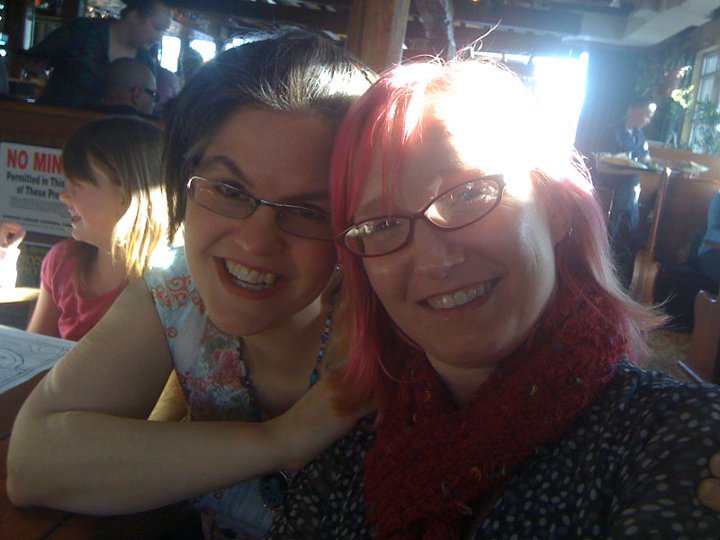
An Inkpunk is someone who will travel a thousand miles to your wedding even though you’ve never met before in real life.


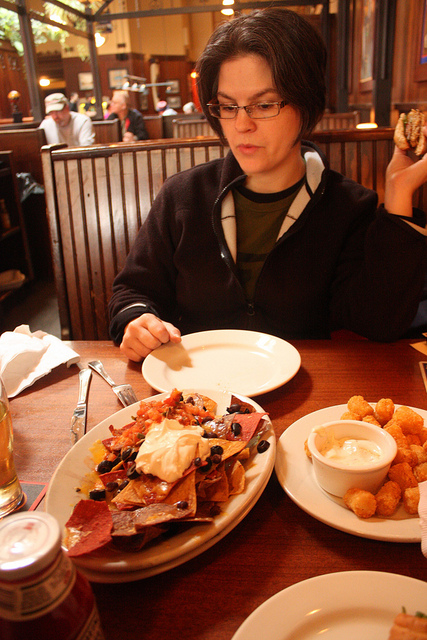
An Inkpunk is someone who will eat nachos with you just because they know you need jalapenos.


An Inkpunk is always ready to have fun. 


 An Inkpunk is someone who’s never too busy being creative to take a hug break.


Each Inkpunk is just one editor, writer, artist. We are lucky enough to have found people who inspire, encourage, and nourish us. We are a tribe.

My wish in this time of short days and long nights is you will find your tribe–those people who will light the fires within you. This world needs every light it can get.

Continue reading

Write a Bad Book

Earlier this year, I finished my third novel. After feedback from different beta readers, I’ve decided I need to start over from scratch, keeping the same premise and main characters, but making a lot of major changes. Am I discouraged? Hell, yeah. Do I want to just be done with it and be published already? Oh goodness, yes. Does the thought of writing a whole new novel make me want to vomit? Absolutely, but I’m going to do it. Here’s why.

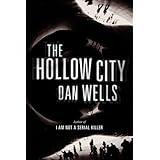
While at World Fantasy this year I interviewed Dan Wells, author of the Serial Killer novels, as well as two new books coming out next year, Partials, a YA book and The Hollow City.* His advice to aspiring writers is to “write a bad book. Give yourself the freedom to write a bad book.”

A bad book? Who wants to write a bad book? No one! But Dan has more to say on it. “Writing is for some reason the only art form in which we expect our very first effort to be successful. No painter expects his first painting to end up in a museum, no sculptor expects his first pot to sell for thousands of dollars, and yet writers, we always think here’s my first novel, I’m done, give me a contract and make me famous.”

It’s hard for new writers to accept the idea of producing something that could only be for practice. All those hours, all that blood, sweat and tears that goes into writing a comprehensive novel, just to put it aside? Dan puts it into perspective for us. “Of course it’s not going to be good, it’s your first one. Write a bad book, and then write another bad book and write another bad book and eventually they’ll be really good because you’ll be getting lots and lots of practice.”

This has taught me that as writers we need to be patient with ourselves. We have to write the first bad book to get past it and get better. We need to give ourselves time to learn, grow and improve without piling on the pressure of getting published as soon as possible. It will happen when we’re ready and we will get ready by putting in the time to write bad books.

I’m now up to three bad books written. I’m going to write a fourth and see how that goes. How many bad books have you written?


*you can listen to the episode with Dan Wells here: www.adventuresinscifipublishing.com

Continue reading

Guest Post: Critiques and Friends, A Compatible Mix? By Jacob Ruby.

Jacob Ruby is the primary pseudonym of Bear Weiter—an artist by education and a 3D illustrator/animator by trade, who spends most of his time forging his thoughts into twisted stories. As Jacob, his work has appeared in a number of magazines and anthologies including Rigor Amortis, SNM Horror Magazine, and Bonded by Blood IV, as well as the upcoming anthologies IN SITU, Fish, and Slices of Flesh. He’s nearing completion on his first novel, a young adult horror story tentatively called The Arrival (though other titles have seeped up recently). He also writes lighter stories under a different pen name (which he hasn’t publicly revealed, yet). You can find more information about his writing at www.jacobruby.com, on Twitter @JacobRuby, on Google+  or his professional site: Wombat Studios. It should be noted that even with all of the names (Bear is not his legal name), he has yet to be diagnosed with DID.
*********

Critiques and Friends—A Compatible Mix?

I had meant to make this about both writing and art, and I think most aspects fit for both (thus my sometimes vague wording when describing the created “piece” to be reviewed), but there are some differences. The biggest one is that someone viewing and critiquing a piece of art doesn’t have the same tainted view for subsequent viewings as a reader does with a written work. It’s just a different process—viewing versus reading. However, having gone through brutal critiques for drawing, painting, sculpture, and writing I will say there are more similarities than differences.

Friends can be a great source of praise. Every time I sell a story (and announce it) I get a lot of “likes” and congratulatory comments. Post a cool drawing? “Looks great!” We share via Twitter and Facebook, Google+, Flickr, Tumblr, and YouTube, connecting with friends everywhere we go and receiving their support from multiple services.

Praise is good. Those glowing reviews, gold stars, the prized spot on the fridge door—it makes you feel better about yourself and encourages you to keep doing what you’ve been doing. We all want it, and we beam when we get it.

As writers and artists, however, we need more than glowing praise and unwavering support. If all you ever heard was encouragement your creativity would stagnate. Real feedback is critical to the creative process. No one, not even the best in our industry, spin gold on a first try. But a critique, especially from friends, can be a difficult experience. As humans, we tend to avoid pain. And for the writer going through a critical analysis, it’s agonizing: your personal creative efforts are shredded right before your eyes, all your missteps and failings are highlighted. It can sometimes feel extremely personal*, and often can be.

Is constructive criticism something you can take from a friend? Are friends capable of anything more than praise? Can we really expect these same people to provide real critiques when we need it? I think so—if we’re honest with them, and ourselves.

First, know where you sit with your creation—are you sharing a first draft**, a second draft, or a well-polished version? Its stage will greatly impact the feedback you receive.

Second, know what you’re trying to get from the act of sharing—are you seeking out big-picture thoughts (general feedback), do you need full critiques (tear into it), or are you simply sharing as a friend (pat me on the back please)? Know your needs—and convey it to your readers.

They need to know what your expectations are. Feedback can be difficult—for both the giver and receiver—and it’s your job to make it as easy as possible. If not, this friendly exchange risks hurt feelings and can turn down-right bloody.

If you’re sharing a piece as a friendly reading, let them know if you’re open to input. Personally, I am almost always open to what someone thinks, even when I consider it finished. I may not change anything but at a minimum that feedback could be used with future works—and it may be the gem that makes a good story great. But if you really don’t want feedback it probably doesn’t hurt to say “I’m not looking for a critique, just sharing what I’ve done.”

If instead you’re looking for big-picture feedback, or you’re having a specific issue and you hope a reader can help with that, be clear with the work’s stage and your needs. You may still get additional notes but hopefully the focus will be on what you requested.

Recently I read an early draft of a novel—by an Ink Punk, incidentally—and she very clearly pointed out the novel’s condition and what she hoped to gain from my input. I still ended up flagging a few other items along the way (I just couldn’t help myself) but overall I focused on the big picture items. Had I not had her expectations laid out I may have been more tentative in my approach, or more harsh.

Additionally, a friend of mine completed his first novel a couple of months ago. He did do some cleanup work on it but overall it was still a first draft. He shared this with another friend, one who has been a great cheerleader for both of us, and I expressed concern that it might be too early. The reader, however, came back with all kinds of notes—many pages worth—all very helpful for the writer’s second draft efforts. Communication of the novel’s early stage and what the writer needed in the way of feedback (as well as the reader doing a great job) made for a very productive critique.

Now, if you’re seeking the full critique, you really are opening your soul for rending—especially so if your work is not ready for it. This is a brutal process, and rightfully so—every aspect of your work will be considered, evaluated, and scrutinized. And you’ve asked for it. This is the equivalent of asking if your jeans make you look fat—your partner may say “of course not,” a friend (while being supportive) might suggest a better pair of jeans, but the real friend will tell you to cut out the frappuccinos. Yes, of course you love that clever little bit you wrote, but when it needs cutting it should be pointed out.

When it’s needed—and when it’s asked for—a real friend will tell you when you have a booger in your nose, point out the spinach in your teeth, help clean out the bird crap in your hair, and they’ll help you rip apart the shitty, unusable parts of a story. If they’re really good they will even make you feel okay about it. Just remember, you asked for this.

As I said earlier, this process is not easy for either party—those providing the critique also risk hurting the feelings of a friend. You wouldn’t want to tell a friend their baby is ugly, and likewise it’s difficult to point out what’s ugly in their creation. But when they do ask for it (and I think it’s only good to do so when they do indeed ask) you do a disservice to them by being polite. Structuring a critique in such as way as to not be hurtful is fine—start on those elements that work well and be mindful of word choices—but if you sugarcoat the negative feedback to the point that it’s not conveyed, you aren’t helping the creator.

Finally, both people in the exchange should respect the other’s role and involvement. Just like there’s significant time put into the creative process there is also time and effort put into critiquing something—a short story can easily take a few hours to read and mark up fully, and a long novel is a serious time commitment. As the writer, you should respect the reader’s efforts even when you disagree with their thoughts. Remember, they’re trying hard to give you useful feedback while not hurting your feelings—or friendship.

I believe praise is great and I strive to support my friends in their creative endeavors. When I read their work and I haven’t been asked for my feedback I’m generally quite positive—especially so when commenting publicly. This is what friends do for each other.

But just like a good friend is willing to help wash out the bird crap in your hair, they should also be willing to tear apart your work—and help put it back together again.

Just don’t ask me to help you with that booger—you’re on your own there.


*I have said many times—and stand by it—that your creations are not you; no matter how harsh a critique or review is, it is on your creation and not on yourself or even your abilities. Some people may try to make it personal but that should be their problem, not yours.


**I’m sure all of us have shared a first draft, but generally it is inadvisable. When your work is rough the feedback can only focus on big-picture items and may bog down on poor writing. Additionally, after one reading it’s harder—though not impossible—for the same person to provide well-rounded feedback on later drafts. Of course there are always exceptions—the above anecdotes are good examples.

Continue reading

,

I nominate thee!

It’s award season again! Wait, didn’t I write a post that started out that way like, last week or something?

Well, yes I did write that post, but it wasn’t last week, it was over 6 months ago, and can be found here. I do recommend (re-)reading it, because I’ve been reading like a hurricane this year, and I still am nowhere near up to snuff on the eligible work. So, I’ll wait while you go salve that guilty anguish for not reading All The Things.

Done? Okay. So, here’s the spiel: Awards are great. They make the authors, editors and publishers feel Really Awesome about all that hard work they did. They are a way to recognize powerful, influential works of speculative fiction. They can help drive sales.

But awards are kind of like voting for political candidates: the person who had the best publicity has the best chance of winning any public-opinion vote. The voter might not have much choice in a juried award. The book you will swear up and down is The Best Book Ever might not even make it onto the ballot. And, if you are anything like me, you get your ballot all filled out, sent in and written off, and the moment the ‘undo’ function (you do have that enabled, right?) disappears from Gmail’s screen, you remember the five books you should have nominated/voted for.

In short, awards can be a little frustrating. It’s tempting to think that your vote doesn’t count, that popular opinion will always win out over taste, whatever. After all, Twilight, right?

However, to drag out an old, half-dead horse: every vote counts. Seriously. Even if you aren’t sure if you’ve made the right choices. Even if your choices don’t so much as make the ballot.

It’s even more fun as an author, editor or publisher. Each award has specific rules for submissions, nominations and eligibility. Where possible, I note this in the listings, but be sure to read the guidelines for yourself. Always make sure you have the rights to post or submit a piece, and if you aren’t sure, check with your agent, publisher or editor.

I also recommend that professionals figure out what work is eligible for what awards, and post a list to their personal blog. Link this on social media a couple of times. Don’t push it in people’s faces, but let us know. It can be a little awkward, tooting your own horn like that, but it really helps those of us who are trying to remember who has eligible stuff. I also recommend pinning this post to the top of your site or blog, if possible, so that it is immediately accessible for anyone who has 20 minutes left before ballot deadline. Not that any of us would cut it so close, of course…

But, yeah. It isn’t as easy as walking to your local polling place. There are a lot of choices, a lot of rules, a lot of processes. What’s a reader/writer/editor to do?

While there are too many awards to look at all of them, here are some things to know about the major SF ones:

Hugo
Definition: Best science-fiction of the year
Who decides: Members of WorldCon, somewhere around 5000 people.
Categories: Fiction, screenplays, art, professional
Eligibility: Anything published/produced in previous calendar year. Check website for details.
Nominations: WorldCon members. A low-cost voting membership can be purchased.
Voting: WorldCon members.
Deadlines: Membership must be purchased by Jan. 31
Notes: Presented at this year’s WorldCon. Electronic voting packets of short-listed material are sent out once short-list is decided.
Link

John Campbell Award for Best New Writer
Definition: Any author whose work has first appeared professionally in the last 2 calendar years.
Notes: It is not a Hugo category, but is lumped with it for voting and presentation purposes.

World Fantasy Award
Definition: The best fantasy of the year
Who decides: Special jury
Categories: Fiction, art, editorial, professional
Eligibility: Fantasy published in previous year by living people
Nominations: Members of current/last World Fantasy Convention can nominate.
Voting: Juried. No open vote.
Restrictions: Nominations must be for living people. No zombies!
Notes: Presented at this year’s World Fantasy Convention
Link

Nebula Award
Definition: Best speculative fiction of the year
Who decides: SFWA members
Categories: Fiction, screenplays, professional, YA
Eligibility: All SF published in the previous year, regardless of SFWA eligibility
Nominations: SFWA Active and Associate members
Voting: SFWA Active and Associate members
Deadlines: Nominations close Feb. 15
Restrictions: Anyone can be nominated, but only SFWA members may vote.
Notes: The Nebulas are presented at the Nebula Awards weekend, which anyone may attend, SFWA member or not. Workshops, panels and special activities are run by SFWA for anyone interested in attending.
Additionally, SFWA has a forum where eligible works may be posted. Check the link for rules.
Link

Lambda Award
Definition: Best LGBTQ fiction of the previous year
Who decides: Jury
Categories: 22 categories. Please check website!
Eligibility: All published LGBTQ works of previous year. Self-published work also accepted.
Nominations: Authors/publishers must submit their work for consideration
Deadlines: Submissions open Sep. 1-December 1.
Restrictions: Must have physical printing. Work published only in digital format not accepted.
Notes: Sorry, I’m a little behind on this one. Remember it for next year!
Link

Carl Brandon Parallax Award
Definition: SF created by self-identified person of color
Carl Brandon Kindred Award
Definition: SF dealing with race or ethnicity by author of any racial or ethnic group
Who decides: Jury
Nominations: There is a nomination form on the website.
Deadlines: Nominate by Feb. 29
Notes: Two separate awards administrated by same group.
Link

James Tiptree, Jr. Award
Definition: SF exploring and expanding gender roles
Who decides: Jury
Nominations: Form can be found website
Deadlines: December 1
Notes: Sorry again, guys…
Link

Bram Stoker Awards
Definition: Superior achievement in horror
Who decides: Members of the Horror Writer’s Association
Eligibility: Any work of horror first published in English in the previous year.
Nominations: HWA members and jury.
Voting: HWA Active members
Notes: Here, have the link to the Etiquette of submitting your work: Etiquette
Link

Shirley Jackson Award
Definition: Outstanding achievement in the literature of psychological suspense, horror and the dark fantastic.
Who decides: Jury
Categories: Fiction, Collection and Anthology
Nominations: Only publishers may nominate
Link

Note: “Fiction” denotes range from short story to novella. Check specific sites for details.

So, go forth and make thine voices heard!

Continue reading

prev posts prev posts