Awards Season Round-up

With the Hugo & Nebula nominations in full swing, it seemed like a good idea to dedicate a little space here on Inkpunks to our awards-eligible work from 2011. Many of us have already posted these on our own websites, but having it all in one place helps us keep it straight!

We hope you’ll see something on here that you’d like to read. And if you like it enough, to nominate for an award.

(Some of this is excerpted from our individual blogs, so excuse the cribbing!)

Galen Dara

Galen’s graphic-novel collaboration with John Remy, “Traitors & Tyrants,” in the collection Mormons and Monsters is eligible for the Hugo for Best Graphic story.

Morgan Dempsey

Morgan is in her first year of eligibility for the John W. Campbell award for Best New Writer.

Nebula and Hugo: The Memory Gatherer (link) (short story)
Hugo: The Automatic City (link) (short story)

Erika Holt

“Just Dance” Tesseracts Sixteen: A Case of Quite Curious Tales, EDGE
“The Deal” Evolve Two: Vampire Stories of the Future Undead, EDGE

Adam Israel

December 2011 – “My City of Ruins” — Finding Home: Community in Apocalyptic Worlds
September 2011 – “History of the Flesh” – Crimson Pact 2
April 2011 – “Dog Days” – Crossed Genres
April 2011 – “Indigo’s Gambit” – Extinct Doesn’t Mean Forever

John Remy

John’s story, Semele’s Daughter, from Broken Time Blues: Fantastic Tales in the Roaring 20s, is available for a limited time online at his website.

Andrew Penn Romine

For Hugo & Nebula: “The Parting Glass,” Lightspeed Magazine, December 2011 (short story)
For Hugo: “Nor the Moonlight,” Broken Time Blues: Fantastic Tales in the Roaring 20s,Edge/Absolute XPress (2011) (short story)
For Hugo: “How the Goddess Came to Spring Flowering Alley,” Crossed Genres May 2011 (short story)

2011 is also Andrew’s first year of eligibility for the John Campbell Award for Best New Writer.

Wendy N. Wagner

Wendy is in her second year of eligibility for the John W. Campbell award for Best New Writer.

She has several short stories that are eligible for the Hugo/Nebula Short Story award:

“Cold Iron and Green Vines,” Beneath Ceaseless Skies. (May 2011)
“A Tiny Grayness in the Dark,” Subversion. Bart R. Lieb, ed. Crossed Genres. (December 2011)
“Curvature of the Witch House,” Innsmouth Magazine. (Oct 2011)
“The Last Doll War,” Three-Lobed Burning Eye. (Sept 2011)
“Solitary Instinct,” Beast Within 2. Jennifer Brozek, ed. Graveside Tales. (July 2011)
“Blue Locks,” Scape. (October 2011)
“Curvature of the Witch House,” “The Last Doll War,” and “Solitary Instinct” all qualify for the Bram Stoker Short Story award, as well.

Sandra Wickham

Short Stories:

“Outwitted,” Evolve Two: Vampire Stories of the Future Undead, EDGE
“I Can’t Imagine” Crossed Genres May 2011

Continue reading

, ,

Voices of Insecurity

Do you struggle to fight off voices of insecurity as you write?

From my conversations with fellow writers and creatives, I know I’m not alone in this. These whispers of inadequacy can stop the flow of words and ideas into our first drafts and can undermine our effort to editing and revise and polish are stories. They can make it harder to distinguish between helpful and harmful critiques. If we heed them, they may keep us from ever submitting stories, or submitting them to the best possible markets.

I’m fighting those voices, that inner-critic in a big way as I write this post. I think to myself, this post sucks. There’s nothing here that anyone cares about, that will help other writers. You’re being too personal, and not professional enough. You’re too wordy. etc., etc., etc.

If I reach back far enough, I can trace much of this inner critic to paternally and religiously-induced guilt and perfectionism that I’ve internalized over the decades. I remember, in particular, my dad encouraging me to write an autobiography when I was nine. When I finally presented to him the first few pages, he seemed disappointed, and said nothing to praise my efforts. The project died. I had a similar experience when I presented one of my first sketching experiences. “The nose is too long, out of proportion,” he said.

I’ve had to work hard to not pass this on to my children. I think I’ve been successful there. Just recently, I’ve had the absolute delight to hear about the from my teenage son about his progress on his novel. I get updates every week, and I’m glad that he considers me a safe place to share his thoughts. At some point, he’ll need an editor, as we all do. But right now, his ideas are flowing like a fast mountain stream, and I refuse to stop that clear current.

I’m trying to extend the same sense of nurturing to the creative-child within me. To this end, I’ve done the following:

1) I connect with writers and artists and readers who sustain and support me as a creative. When they offer criticism, it’s to improve me as an artist and to build on my existing strengths, and not to tear me down, or to create me in their image. Social media and conventions are great for this.

2) I tend to minimize my interactions with those who drain my creative energy. Perhaps this is selfish and uncharitable, but I know the limits of my emotional reserves and I protect what I have.

3) I try to diminish my sense of perfectionism. I remind myself that the greatest paintings, sculptures, films and architectural marvels began as messy thumbnail sketches and studies. The words I put down now don’t have to be the ones I submit to editors.

4) I do my best to try nurture and support other creatives. It’s one of the main reasons I’m an Inkpunk.

So, those are a few of my strategies. I’d love to hear from you all. What are the critical voices in your past or in your present life that undermine your creativity? What strategies do you have to silence or subvert them?

Continue reading

Go to a Workshop? No Thanks

All month long we’ve been discussing workshops. Which ones are out there, what they have to offer, how to get to them, and how to work around the inability to attend one. I’m going to offer a different perspective: not wanting to go to a workshop, ever.

It happens invariably at every convention where SFF writers gather together: someone asks me about Clarion. Or Taos. Or Viable Paradise. Or any of the other workshops that we’ve discussed here at Inkpunks this past month. The conversation usually goes something like this:

Well-Meaning Person: Have you ever been to [workshop]?

Me: Nope.

WMP: Oh, you should totally apply! I had such a great experience! And it really improved me as a writer!

Me: Actually, I don’t really want to go to [workshop].

WMP: WHAT? Allow me to launch into a ten-minute impassioned speech which I’m sure will convince you to change your mind!

Me: *sigh*

These encounters have decreased, mostly because I’ve learned to keep my mouth shut on the subject, but also because my friends have learned and don’t pester me, and sometimes step in on my behalf and tell the Well-Meaning Person not to worry about it, she’s gotten this speech before.

So, why don’t I want to go to a workshop? It seems counter-intuitive. I like writing, so wouldn’t be awesome to go somewhere and live with other writers for a week, two weeks, six weeks, what have you, and do nothing but write, and learn about writing from super-awesome professionals in the industry whose work I adore?

Well, sure. If that was all a workshop had to offer.

The thing is, I know how I work, and I know how a workshop works, and I know the two don’t mesh. I’m not particularly public about my writing, until I feel it’s up to a certain level. I’m not the kind of person who can just throw a rough draft out there and see what happens with it. It’s incredibly difficult for me to send work to someone if I’m not happy with it, unless I’ve hit that point of “something is wrong but I can no longer see it” (and even then it’s only to very trusted people, and even then I’d rather let the thing sit for a month or two than bother someone else with it). So the type of environment where I’m just blasting through stories, trying to get something written every week, is not going to be ideal for me.

But not all workshops are like that. Some are geared towards people with full novels who send out their MS three months before the big show, then spend an intensive week or two working on the thing, with insight from others. Surely I could swing that, right?

Well, no, because critiques.

There are many a brave person who can sit in a circle, and stare at a group, and let that group go one by one and tear their story to shreds, and they sit there, placidly, and write all of it down. I am not that person. For me to honestly absorb critique, to get something out of it and work through it, I have to be able to take it in a dose, and then set it aside for some time. Then when I’m ready to deal, go be somewhere quiet with it, and parse through it, and figure out what rings true and what falls short for me. Maybe how I work will change, but for right now, that’s how I roll, and it’s done all right thus far, I think. And from everything I’ve heard about workshops, there isn’t a hell of a lot of space to do this.

Workshops are just like any other advice or tool out there which pertains to your craft: you have to know what works for you, and you have to know what doesn’t work for you. And when you come up against something which you know will have a negative impact on your craft, turn it down and walk away. And frankly, workshops are not really the place for a little introverted creator like me.

Now a week-long retreat where I simply get to write, uninterrupted, and share a common living space with other writers where we chillax and shoot the shit, and when I want to I can shut my door and be alone and write? That sounds like my cuppa. Let me know when they organize that one.

Continue reading

Guest post from Jeff Duntemann: Taos Toolbox

We asked Taos Toolbox 2011 graduate and veteran SFF writer Jeff Duntemann to tell us about the workshop experience at Taos Toolbox. Many thanks to Jeff for his contribution!

Taos Toolbox 2012
Where: Taos Ski Valley, New Mexico
When: June 10-23, 2012
How much: $3100 if application is received by February 1; $3300 thereafter
Application fee: $35. Applications close when class is full.


I am not a new writer. No indeed; I will turn 60 this summer, and I’ve recently retired from a successful dual career in computer programming and technical publishing to see if I can approach a fiction career as systematically as I approached my nonfiction career.

That, in a nutshell, is what the Taos Toolbox workshop is about: to systematize the craft of fiction according to the approach you’ve already learned. The workshop’s two instructors represent the two broad approaches to fiction: Workshop organizer Walter Jon Williams is the epitome of an analytical writer, and Nancy Kress is the epitome of an intuitive writer. Walter begins with a plan and the words follow; Nancy begins with the words and the plan soon falls into place. Both are legends, which suggests that both approaches work well. The challenge is on the students’ side, to recognize which approach we’ve come to use and then learn to make the most of it.

Toolbox follows the Milford model, which I first experienced when I attended Clarion East in 1973. The first part of the day is lecture, the second part group critique, and what’s left is divided between reading manuscripts for upcoming critique and writing new material. Oh yeah; sometimes there’s a little time for sleep.

Heh. Make no mistake: The Toolbox experience is intense. Over the two-week period we read and critiqued just under 200,000 words of student fiction. During one breathtaking morning Walter dissected the entire length of Samuel Delany’s novel Nova. (We had some warning on that one, and I read it before I got there.) I wrote 10,000 new words during the workshop, and took notes on the remainder of my novel that I am still working through six months later. This was no lazy-hazy touchy-feely gathering of aesthetes among the pines. As my roommate Jim Strickland put it, Toolbox is a 500-level graduate course in the art of the novel crammed into twelve days. The smoke is still pouring out of my ears.

Walter and Nancy are both superb teachers and are not to be missed. I was startled, though, at how much I learned from my thirteen student colleagues, not solely through their critique of my own work, but also by seeing how they themselves create and manage the many moving parts in a novel-length story. Walter chose a pretty diverse group for the 2011 workshop, and our interests ranged from paranormal urban fantasy to steampunk to weird westerns to things that simply defy description. (Flying, talking giant squid? Sperm that crosses the time barrier? All in a day’s workshop.) The cliquishness and mean-spirited infighting that spoiled my Clarion experience a little were simply not there. I might describe my colleagues as un-seasoned professionals, trying hard to master that seasoning but always as professionals. There was not a poseur in the bunch, and while we’ve been in only sparse touch since the workshop, I am proud to call them all friends.

This leads to a very important caveat: Toolbox requires a certain minimum level of expertise in the fundamentals of writing. It’s not for absolute newcomers. The discussion is about world building, plot, dramatic tension, pace, reveals, nuances of characterization, and other high-level concepts that must be in every writer’s toolbox. You need to know how to create complete sentences and coherent paragraphs before you get there; nay, long before you get there.

Other odd notes: The ski-resort environment is drop-dead gorgeous, the catered dinners stunning. There is a hot tub. Sea-levelers take note: At 10,000 feet you chase oxygen molecules like fireflies. Plan a little time to acclimate. Oh, and there are bears…

Was it worth it? Of course. I’ve always written fiction intuitively, often with no more than a few hundred “back of the envelope” words to frame the concept at the outset. I’ll never use an approach as analytical as Walter’s, but listening closely to Nancy taught me that intuition can be harvested most successfully when it is carefully primed, and only lightly supervised while it works. (I edit too much; such habits are dangerous.) I have a hunch, still unproven, that the more analytical techniques Walter described might be capable of resurrecting some long-aborted tales gathering dust in my trunk. Intuition is necessary but may not always be sufficient. At this point, I probably know enough to find out.

So. Prepare to work. Prepare to listen. Prepare to be surprised. (Prepare to sleep for three days when you get home.) It worked for me. It should work for you as well.


Jeff Duntemann retired from the technical publishing industry in 2007, having been a partner and co-owner of Coriolis Group Books and later Paraglyph Press. He has sold both SF and technical nonfiction into paying markets since 1974, and has had two stories on the final Hugo ballot. His dozen-odd technical books include Assembly Language Step By Step and Jeff Duntemann’s Drive-By Wi-Fi Guide. His first novel, The Cunning Blood, was published in 2005. Jeff’s other interests include astronomy, vintage technology (steampunk/dieselpunk) amateur radio (as K7JPD) and kites. He lives in Colorado Springs with his wife Carol, an engine lathe, four bichon frise dogs, twelve computers, over a thousand vacuum tubes, and three thousand books.

Continue reading

Guest post from Stina Leicht: Armadillocon Writer’s Workshop

We asked novelist Stina Leicht to tell us about her favorite regional workshop, held every year at ArmadilloCon. Many thanks to Stina for her contribution!

Where: Austin, TX
When: July 27, 2012
How much: $75 (includes lunch and convention membership)
Apply by: June 18, 2012


Held once a year in Austin, Texas, the Armadillocon Writer’s Workshop is one of the best workshops available for the price. This year it will be held on Friday, July 27th and will run from 8:45am to 4:00pm. The cost is $75 and includes lunch as well as a full weekend membership to Texas’s finest literary Science Fiction and Fantasy convention: Armadillocon. The workshop is perfect for beginners and intermediate writing students interested in traditional publishing. Professionally published authors, editors and critics volunteer their time to participate every year. Topics discussed include the basics of writing, manuscript formating, how to get started as well as more advanced topics such as why agents are necessary and how to find one that is right for you. It is not a good fit for those more interested in self-publishing, nor is it designed for previously published authors.

Before the workshop, students are required to submit a 5,000 word sample of their writing. Short stories are strongly recommended, but novel exerpts are accepted as well. Two weeks before the workshop, students are assigned critique groups of no more than five students. Two industry professionals are also assigned to the group. Student manuscripts are distributed to the students withing each group as well as the instructors. Students are required to read and then write a critique of their group’s manuscripts before the workshop meets.

We start the workshop proper with instructor introductions and a writing-associated game. Then the first half of the workshop is run like a normal set of convention panels. Instructors discuss suggested topics (which change every year) and students are allowed questions at the end each session. At lunchtime, students break up into their respective critique groups, eat lunch with their instructors and then launch into Millford Style critique sessions. (See Millford Rules http://en.wikipedia.org/wiki/Milford_Writer’s_Workshop .) This usually takes a few hours. At 3:30pm the groups all gather in the central meeting room and a wrap-up talk is given before the students are released to attend the convention.

In the past, our instructors have included well-known authors such as Sharon Shinn, Charles de Lint, Martha Wells, Rachel Caine, Scott Lynch, and Paolo Bacigalupi. We’ve also been lucky to have amazing editor instructors: Jim Minz, Sheila Williams, Chris Roberson, Anne Sowards, James Frenkel, and Lou Anders. As you can see, it’s a tremendous opportunity. New writers come from all over the country to participate.

The workshop membership is limited to forty-five students. To sign up, go to the Armadillocon 34 website at http://www.fact.org/dillo/workshop.shtml. Information regarding this year’s instructors, workshop requirements as well as step by step sign up instructions will be provided there soon. Hope to see y’all there.

For the record, I was an Armadillocon student for three years, and I feel that associating with established professionals early in my career was very helpful. It gave me not only the rare opportunity to have my manuscripts critiqued by big names, but it also provided solid, realistic, truthful information about publishing. That’s why I’ve been running the Armadillocon Writer’s Workshop for going on five years now. I think it’s pretty amazing.


Stina Leicht is originally from Missouri where she attended Catholic school, climbed trees, fought pirates and rescued her sister’s dolls from terrible fates. Currently, she lives in central Texas with her husband, and far too many books and cds. In the course of her research, she has driven in rally races, taken Irish language lessons and studied Northern Irish politics. Her first novel, Of Blood and Honey, was released by Night Shade Books in 2011. Her second novel, And Blue Skies from Pain (the sequel to Of Blood and Honey) is scheduled for release in March of 2012. Her blog can be found at www.csleicht.com.

Continue reading

The Clarion Writers’ Workshop

As best I can remember, my journey to Clarion began in 1989, with a classified ad in the the back of Asimov’s magazine. Fast forward through fifteen years or so of life and career. I’d retired from writing a tech column online to take some creative writing classes at my local community college and was starting to pursue my dream of writing fiction.

The regulars on a tech forum I frequented ran a secret santa gift exchange. Maggie, the then-wife of the person who received my name, was also interested in writing, and sent me “Storyteller: Writing Lessons and More from 27 Years of the Clarion Writers’ Workshop” by Kate Wilhelm. My interest in the workshop was rekindled; I applied in 2007 and again in 2010, when I was accepted.

Clarion is not without controversy. Ask a room full of writers if you should go to six-week workshop and you’re bound to get mixed opinions: go, don’t go, it’s the best experience in the world, it will ruin your life and you’ll never be able to write again. Sorting out who’s wrong and who’s right is complicated, especially when they’re all right.

I’m a bad traditional student. I don’t do well being lectured to and being assigned tedious homework. I floundered in high school and dropped out of college during my first semester. I taught myself most of what I know about software engineering. I read dozens of books about writing and, more importantly, written hundreds of thousands of words in practice. I studied the history and format of the workshop, and read both sides of the debate of its value. If I was going to apply, it was going to be a well-informed action.

There’s no question that going to Clarion is hard. Six weeks away from home cascades into questions of finance, career, and family.

I’d been in the process of preparing my paperwork for immigration to Canada when I was accepted to Clarion. Shortly after that, I was kicked out of Canada after a work trip to Detroit and separated from my wife. The six weeks at Clarion overlapped with that, which was a blessing and a curse. It was time I would probably still have been barred from home but I felt doubly guilty for the separation.

The workshop fee stopped me from applying more than once, but it’s a problem to be solved after you’re accepted (no rejecting yourself). I didn’t have that kind of savings, especially while paying alimony and being underwater on a house I couldn’t sell. I received some scholarship money and I am eternally grateful to the donors who sponsor them. I lucked out with my taxes that year. Because of the alimony I’d been paying post-taxes, I received a larger than expected tax return.

Time away from work was the issue I was most scared of. I’m a bit of a workaholic. I’d skipped vacations for three years prior to my acceptance but my job at the time balked at giving the time to me, despite several months notice. I’d counted on the paid time off but ended up with a partial sabbatical and advance to cover the extra time off. I didn’t get final approval until the day before I left for the workshop. Because of the alimony obligation, I would have had to back out of Clarion and forfeit my workshop fee without that approval.

For all of that stress, the anxiety of separation and uncertainty over money and job, it was worth it for me. Clarion is an intense experience. It’s not just the hard work or spending six weeks with people who you’ve just met. You’re pushing yourself each and every day, being inspired by your classmates, making new friends, and discovering new things about yourself.

Clarion isn’t for everyone. You get from it what you give to it. You’ll work hard and you’ll play hard (I might hold the record for the only student to get a concussion). I think of it as tearing you apart to find your weaknesses and putting you back together again. You’re still you, but the way you look at the world has changed.

Did Clarion worked for me? Yes, because I made it work for me. I would have had the same successes without attending, but it would have taken me longer. A lot longer, maybe. Clarion was the leap of faith I need to take in myself and for that it was worth everything.

Clarion isn’t just a workshop; it’s a community within a community. Seventeen classmates, friends who shared the journey applying. And Maggie, who so thoughtfully sent me the book that restarted my journey towards Clarion? She herself attended Clarion West in 2008. Thank you.

Continue reading

Guest post from Cory Skerry: Viable Paradise

We asked alum and staff member  Cory Skerry to tell us more about what to expect from the workshop experience at Viable Paradise. Many thanks to Cory for his contribution!

Location: Martha’s Vineyard, MA
Workshop Schedule: October 7 – October 12
Tuition: $1100
Housing: $175/night + tax or $155/night + tax
Application Fee: $25.00 (non-refundable)
Application Deadline: June 15, 2011


Stockholm Syndrome is a phenomenon in which hostages display loyalty to their captors, even once they’re free and could conceivably call the police or exact bloody revenge.

Loyalty to Captors

After Viable Paradise in 2010, I hugged all the instructors as if they hadn’t just dissected my brain and put all the parts back together in a different order before supergluing it back into my skull. Elizabeth Bear calls this useful torture “intense neural reprogramming.” The other survivors and I reluctantly departed the island, and in the next year, amassed a pile of short story sales to markets including (but not limited to) Lightspeed, Beneath Ceaseless Skies, and Strange Horizons.

Bear Stitched Victim

Viable Paradise is a one week workshop (which is why they call it Viable) and it’s held on Martha’s Vineyard (which is why they call it Paradise). For many people, one week is easier to manage than two, three, or six. The workshop is a good excuse to visit the island during October, the most beautiful season. There’s autumn foliage, beaches made of more shells than gravel, and if the weather is right, at night you can sneak down to the water and watch the bioluminescent jellyfish flashing in the tide.
Jellyfish

I think the biggest reason I loved VP, even though I barely got four hours of sleep each night, was that it never shot me or handcuffed me to the radiator. I admit, however, that there were additional factors.

Students get eight instructors, and instead of one (or two) per week, they’re all there simultaneously. You’ll have face time with all of them, at varying levels of intimacy, and you get to listen and participate as they discuss issues of craft and business. The focus is mostly on craft, a tidal wave of knowledge about craft, but around it you’ll experience eddies of contract advice and career strategy, insider views on the current state of publishing, and suggestions on how to nurture your creativity and keep it safe from the vitriol of your internal editor. The instructors hardly ever beat you. They do make you write, finish, and share a story in two days, however, which is one of the reasons people are surprised when they hear the students didn’t revolt and feed their captors to the jellyfish.

Keeping Editor at Bay

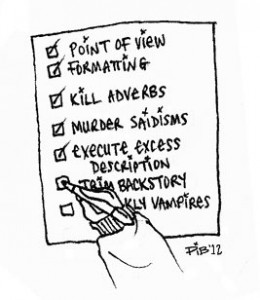
I’d recommend Viable Paradise to people who are at least getting personalized rejections, because your $1100 tuition covers not just many super-delicious meals, but also an intermediate-to-advanced curriculum. It’s okay if it’s your first workshop, but it’s foolish to have Patrick Nielsen Hayden explain to you how you should have formatted your manuscript or why he stopped reading at the second paragraph when you could have him explain how you could strengthen the suspense or deepen characterization. I waited an agonizing four years to apply to VP, learning the basics for free online and at smaller, less expensive workshops, and I’m glad I did. Both short story authors and novelists are encouraged to apply, though it’s good to remember that your application submission is the story you’ll be working on while you’re there—so make it a project you’re willing to set aside for several months, or at least one you won’t be tired of revisiting. And of course writers who want to network but haven’t quite figured out how will gain entry into the legion of Veeps who maintain a friendly presence at just about every major genre convention in North America.
List of Basics

It’s hard to say who shouldn’t apply, but in my experience (which includes my year as a student and my year as a staffer), hubris led to disappointment. If you think you don’t have anything to learn, submit to markets, not workshops! Also, if you’re not especially keen on being published, VP may be too focused on commercial prospects. The main goal here is for your dayjob to become your hobby, something you might keep for the medical benefits and because you like your red stapler.

Medical Came In Handy

You have from January 1, 2012 to June 15, 2012 to put together a submission packet containing $25, 8,000 words of your best work, and an introductory letter explaining your background and what you hope to get out of the imprisonment. The letter is less important than the submission, and I’m under the impression that while name-dropping won’t disqualify you, they seriously don’t care if George R. R. Martin says you’re the most amazing writer who ever watched his pets while he was on vacation. Like most workshops, science fiction stories often get more attention because there are less of them. If you apply early, I unofficially estimate it will help your chances of getting in, because the readers have more time to consider your work. Toward the end, they get slammed with the deadline-flirters and aren’t in nearly as patient of a mood.

Walking a Turtle

If you get accepted, I’ll see you in October! If one of the instructors goes crazy and lunges at you over a refusal to quit split infinitiving at them, it’s my duty to throw my body in front of you to protect you from their sharp talons. You’ll laugh, you hopefully won’t cry, and I know you don’t believe me now, but when concerned maids call the police in an effort to save you, you’ll help fight off the S.W.A.T.
Hold Yourself Hostage


Cory Skerry lives in the Northwest U.S. and works at an upscale adult boutique. In his free time, he writes stories, draws comics, copy edits for Shimmer Magazine, and goes hiking with his two sweet, goofy pit bulls. He took a break to be the class clown at Viable Paradise in 2010. When he grows up, he’d like science to make him into a giant octopus. For more, check out http://plunderpuss.net.

Continue reading
A deep breath and a jump.

Last year I saw a tweet by Irene Gallo promoting the Illustration Masters Class and it put a little hook in me that I couldn’t shake. I had been thinking about ways to level up my art making and this resonated in an intriguing way.

But that was last year, and while I *talked* about going to the workshop, it was still sort of an idyllic, safely-in-the-future idea.

It is no longer safely-in-the-future. There are only a few seats left. Am I doing this or not?? “Intriguing” quickly became downright terrifying.  Only a week long, the IMC does not require nearly the time and money that other workshops do. But still, it made me pause. What would this mean for my partner and child? Can we manage this?

Don Pizzaro, Myke Cole, and Wendy Wagner have all recently blogged about ways to improve your craft WITHOUT going to workshops, and those posts resonate with me. I’m a bit of a homebody. To a very large degree I learn and experience the world through my laptop. Therefore, it is MUCH MORE COMFORTABLE for me to think of using a small self-selected community to get feed-back from, or working through my bad habits from the safety of home, or using online (and local) resources to improve my craft… SO MUCH MORE COMFORTABLE than the thought of flying to a campus across the country and putting myself into a group of strangers. (Little introverted wires in my brain keep zapping me with momentary panic at the thought of it). (Also, a higher degree of nervousness about sucking… That too.)

There are quite a few non-workshop things I could do that would be very valuable for my artistic progression. They are relatively easy and cost efficient while still providing valuable experience… But, see… I’ve had that list of easy cost-efficient things in mind for a while now and I have yet to implement them. I think this might be a point where I need to face the uncomfortable and scary in order move on.

Last night, my partner and I talked about the details of me attending the IMC. We looked at the account, we looked at the calendar. Everything was lined up, I was good to go.

But I still found myself unable to click the “pay now” button that would reserve one of those last spots for me. Several times this morning I had all the info lined up and ready, only to shut the laptop and walk away.  Fretting. (Yes, embarrassing.  But I’m probably not the only one who’s ever done this.)

~~~~

Well, I just clicked the button. Between starting this post and finishing it I registered for the Illustration Master Class. Ironically, once I actually clicked the button, the jitters went away.

Now, I am just relieved and exited 🙂
(Well, until it comes time to start shipping my art supplies cross country. There are probably still plenty of jitters to be had.)

Anyhow, more details to come about what sort of training and experiences happen at the IMC, but for now a teaser: Daniel Dos Santos at work. IMC instructor and seriously amazing illustrator:

Continue reading

, ,

Guest Post: Autodidactic Asphyxiation. By Don Pizarro

Don Pizarro’s writing has appeared here and there: the ‘zines Reflection’s Edge, Everyday Weirdness, and Crossed Genres, the anthologies Rigor Amortis and Cthulhurotica, a spot in McSweeney’s Internet Tendency, a contest in Fantasy Magazine, and other places.  His current project is Bibleotheca Fantastica, an upcoming Dagan Books anthology, which he is co-editing with Claude Lalumière.

Don can be found on Twitter and at his blog warm fuzzy freudian slippers.  Come say hi.

********

It’s a dream of mine to graduate from Clarion, Odyssey, or any of the other big science fiction, fantasy, and horror workshops out there.  I’d give almost anything to go.  Anything, that is, short of six straight weeks away from a steady paycheck and a couple of grand in tuition, room, and board.  It’s just not something I can afford to do right now, and according to the anecdata, I’m not the only writer in this pickle.

Maybe I can’t go to a “Big Workshop” now, but I’ve known for awhile that I can take a peek behind the curtain.  And so can you.  Writer Warren Ellis famously talks about how all he and his cohort had to learn the art of writing comics was a single page of Judge Dredd script from a 2000AD Summer Special.  These days though, there’s such an embarrassment of riches for the aspiring writer–enough to choke on!

I’m not talking about all the various respected online workshops. I’m not talking about the high-quality online classes taught by your favorite writers.  I’m not even talking about the nigh-infinite amount of fine writing and writing-related websites, such as this one.

I’m talking about the pages upon pages of the experiences and reflections of Clarion, Clarion West, and Clarion South graduates. (And that’s if you didn’t get enough from Andy and John’s last post.)

Not enough for you?  How about the same with Viable Paradise?

Still not enough?  How about being an aural fly on the wall at past Odyssey lectures?  Heck, Uncle Orson himself keeps some very useful material on his website, and it stands to reason that at least some of it is being discussed at the Boot Camp.

And if that’s still not enough, well… Google is your friend.

I’m fighting myself to not list my own archive of links to the Writing Wisdom of the Masters.  Not because I’m being a greedy bastard, but because I don’t have the space here.  And, because I really don’t have to.  If you’ve found your way to this site, you’re almost certainly Interweb-savvy enough to find your way to just about any writer whose brain you’ve ever wanted to pick.  Interviews, teaching, preaching, anecdotes, stuff that you wouldn’t otherwise get unless you were sitting down with them at meals between workshop sessions–it’s all out there, waiting for you to find!

Granted, autodidactic asphyxiation can work the other way too.  Because poring through the resources I’ve listed, and everything you can find online, won’t give you the chance to sit down with folks at meals between workshop sessions. It won’t give you two, four, or six straight weeks of living and breathing The Craft.  There’s no camaraderie to be had from squirt-gun battles in the hallways, and there’s exactly zero chance of having the experience of writing a story, having it workshopped, and then immediately selling it to an editor of a major magazine.

Yes, I’ve counted the cost, and I know exactly what I’d be missing if I never make it to Clarion or Odyssey or Viable Paradise.  Maybe I’ll get there one day.  In the meantime though, all I can do is to keep learning and to keep writing.

That keeps me busy–and content–enough for now.

Continue reading

,

Some Inkpunks went to Clarion West…

Collaborative post by Andy and John

The Clarion West workshop is held for six weeks every summer in Seattle, Washington. Applications are currently open until March 1st. Today on the Inkpunks, Andrew Penn Romine and John Nakamura Remy, who met at the 2010 workshop, relay their own experiences at Clarion West.

While Clarion West is similar to its sibling workshop in San Diego (which will be covered in a post by Clarion graduate and fellow Inkpunk Adam Israel soon), the workshops have their differences. At Clarion West, the workshop is held in the same huge house that you stay in. There is a chef on the premises. Stepping out of your room for a late night snack can turn into a 45-minute discussion on Doctor Who’s companions, Ted Chiang worship and existential angst. The University District is only a few blocks away and has dozens of writerly escapes, including indie cafes with free wifi, ice cream shops and cocktail bars for stress relief and group excursions, and the cathedral-like Suzallo library on the UW campus for the day your story is due.

Seattle is a mecca for writers and friends of the speculative fiction community. Not only will you have an opportunity to meet many famous SF writers at the Locus Awards and the weekly parties and readings, but some drop by the Clarion West house as volunteers, or for informative chats and games of “Thing.”  It’s an incredibly supportive community, and every week you’ll have the opportunity to speak with award-winning authors and editors who aren’t on the instructor roster.

Finally, there are the real treasures of Clarion West: the workshop administrators, Leslie Howle and Neile Graham. They are the brains and heart and soul of the workshop. They’ve been anchoring Clarion West for a long time, and they know how to help you through the long nights of the soul, the insecurities, and the occasional interpersonal friction. Leslie and Neile have developed the uncanny ability to predict your collective rising and falling of spirits, and step in at the right times to provide support. They are on call 24/7 for advice or if you need a shoulder to cry on. They’re dedicated to making the workshop the best it can be for you, even long after the workshop is over.

One word of warning for any workshop, including Clarion West: the instructors you’re most excited about meeting may not be the ones that influence you the most profoundly. Remain open to the unexpected.

One more piece of advice: if you’re going to apply for one of the Clarion workshops, you should apply for both. There are only 18 slots per workshop, and many many more applicants than there are openings. You will likely have as powerful an experience at one as at the other. Why not maximize your chances?

What was our individual experience like?

Andy:

I can honestly say attending the 2010 Clarion West workshop changed my life. This is not hyperbole. A workshop like Clarion West is a transformative experience. It’s forty days in the wilderness, or forty nights on a mountain top. You won’t be the same person when you come back down. In six weeks, I learned more about myself and my capabilities as a writer than I’d learned in the previous eight or so years playing around on my own.

But is it right for you?

I’ve blogged extensively about my Clarion West experience before, and if you’re thinking about applying, you may find it helpful. A quick search on the internet will find a lot of other blog entries about the workshop, too. Read them and see if you think the workshop is right for you.

It may not be. It’s expensive, intense, and not without risk. Not every aspiring writer needs a workshop experience to grow, especially not one lasting six weeks! But for me, Clarion West was a catalyst for one of the most productive, creative periods of my life (so far!). I thrived in the workshop environment. The friends I made there and in the writing community since have reaffirmed my decision to be a writer. I was at a point with my writing where I sorely needed that confidence boost. Unexpected connections formed from those relationships, too — I’m an Booze Nerd and an Inkpunk now. I’m co-authoring this post with a dear friend whom I met at Clarion West.

So you’re interested in workshops. Should you apply to Clarion West? The short answer is yes. The more complicated answer is yes, if you think you’re ready, and even if you think you’re not. Yes, if time and money are on your side. Yes, because there are scholarships available. 🙂

John:

A couple of weeks after my post-workshop life-reentry, I wrote a tongue-in-cheek “Official” Breakdown of hours for a typical week at our workshop. The excerpt below may provide you a secret glimpse of a week in the life of a Clarion West attendee.

 10 hrs: Reading 60-80000 words of colleagues’ writing.
.25 hrs: Hyperventilating due to impostor syndrome after reading colleagues’ finely crafted, immediately publishable stories when your own is the verbal equivalent of a hanging turd or vomit spurt.
 15 hrs: Re-reading 60-80000 words & prepping critiques.
 15 hrs: In-class critiques.
 .5 hrs: OMFG I’m in a one-on-one with [famous author or editor].
.07 hrs: Half-hearted attempt to exercise:  .07 hrs
  3 hrs: Eating Korean food at cheap eatery near the University.
  7 hrs: Going to get ice cream.
5.5 hrs: Chatting in hallway, on way to bathroom.
1.5 hrs: Mighty-O Vegan Donut Run.
.75 hrs:Bathroom.
 :O hrs: Sleep:  HHAHAHHAHAHAHHA! ha.
2.5 hrs: Bouldering with Kij Johnson.
1.5 hrs: Napping at Greg Bear’s feet while he tells us how we probably won’t get a lakeside house like his.
  3 hrs: Mustering the courage to talk to Nicola Griffith.
 .1 hrs: Speaking with Nicola Griffith.
 11 hrs: Stalking Staring at Ted Chiang at parties/readings/workshop visits.
 11 hrs: Making scary doll heads for Ellen Datlow.
 24 hrs: Writing (on day story is due).
  2 hrs: Writing (on other days).
 92 hrs: Thinking about writing (on other days).
  9 hrs: Writing magnetic poetry on house fridge.
.01 hrs: Time elapsed between turning story in and beginning critiques for next day.

Apply!
And Good Luck!

Continue reading


prev posts prev posts