On the Benefits of Being Prepared

Before I launch into this post, I want to tell you all: I have an agent.

Of course when I received the offer I was the consummate professional. You know me. Cool-headed, even-tempered, never one to get carried away. I thanked him for the offer and politely accepted and was the very picture of calm. Sedate. Demure.

Yep.

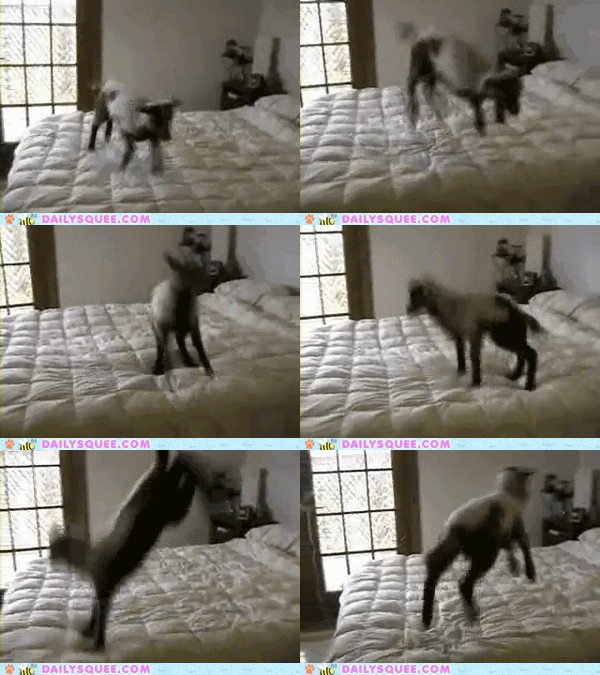
… oh who am I kidding, this was totally my reaction:

Anyway. This post actually spawned out of a conversation I had with my friend Alex while he was visiting me two weeks ago, about hard work and luck and the life of a creative type. It just happened to nest with Recent Awesome Events. Serendipitous timing.

So I’m the kind of person who researches everything before she dives into something. Before I bought my first home, I spent six months simply looking at listings and figuring out what sort of things fit in what sort of price range before I even made a peep about the whole mess. Before I went for my master’s, I researched everything I had to get in order to get into a school, what to expect in the process of getting a degree, how to finagle work into paying for it, et cetera. Publishing was no different. I don’t jump into things lightly.

There are times when the research really pays off. I was able to narrow down my list of things I wanted in a first home to what was absolutely non-negotiable and what I might be able to bend on. I monitored my finances closely, talked to my online broker France, and figured out exactly what I could afford. I learned all about loans, most of which I have now forgotten. As a result, I got a decent condo at a decent price.

And there are times when it looks on the surface that the research didn’t pay off. Getting an agent was sort of like that.

If you recall a post I made awhile back about writing queries, you know I’ve done a fair bit of homework on the subject. I also have a massive spreadsheet of agents who, according to Publishers Marketplace, represent either YA or scifi (or sometimes, happily, both). For each of these agents I searched for their results on Absolute Write’s Beware and Background Checks forum, I checked Writer Beware, I checked Preditors and Editors, I looked at their client lists, I dug at the internet to see if they’d done any interviews, or what current and former clients have had to say about them. I kept my ear to the ground at conventions and noted any idle gossip. I did my homework.

However, in this instance, I met my fabulous new agent at a convention, we hit it off, he didn’t hate my novel, and here we are. And from here, it might be really easy to think that all this work I did, researching, learning, listening, taking extensive (extensive) notes, was all for nothing.

I don’t think it was.

The thing is, I was prepared to do all of the things authors do along the journey to publication. I’d polished my manuscript as far as I possibly could. (No surprise, though, that I still have to work on it.) I was nearing a final draft of my query letter, and beginning the high-level outline that would become my synopsis. I had a pithy little logline for my book that I could toss down at a moment’s notice. I was ready to do all the things that one must do as a professional person.

When I was prepared to do these things, that meant I had one less thing to fret over. (And rest assured: I am quite good at finding things to fret about.) As a result, when a big huge pile of luck was dropped in my lap, I was able to take advantage of it and not just let it slip by.

There are a lot of creative types who get their break in the way that they’re “supposed” to get their break. They work hard, they talk to the right people, they correctly format their submissions and patiently wait to be discovered, and in the meanwhile they continue to work at their craft, improving as they go. And there are a lot of creative types who get their break in a different way. But most of those lucky creative types didn’t do the basics differently. They work hard, they talk to the right people, they do all the things required of a professional. And that means that when luck came along, they already had a foundation to stand on.

As the saying goes, fortune favors the prepared mind, and I think it’s one hundred percent true. I was very lucky, but I followed that luck up with hard work, which I already had been doing thus far and was used to and knew how to keep up a steady pace of productivity. I had a novel I’d been polishing which obviously had something about it, since people are willing to take a chance on me and try to help me along with it. I’m not exactly a suit-and-tie professional, but I dress well enough and can speak without spitting on people (mostly) and can generally carry my half of the conversation. (Though, once again, while writing this blog post about being totally pro, I have a stain on my clothes, because that’s how I roll.) I knew enough industry stuff not to sound like a complete idiot. And even though I feel criminally under-read, I’ve still read enough that I can hold a conversation about books.

So while some people might see a happy little serendipity story about some housewife who banged out a novel in six months and became a multi-millionaire (billionaire?), remember the story of that single mother who slaved over her book for six months and waited three releases before seeing her work pay off. And remember the stories we don’t hear, of the people who came up to the edge of their lucky break but were not ready to take advantage of it.

It may seem on the surface that creatives who attain any success get there by stupid luck. And yeah, there certainly is a bit of luck involved. But it’s incredibly difficult to take full advantage of that luck without a bunch of hard work to back it up. So don’t worry that the work you’re putting into this now will be all for nothing later. No work you do, so long as you are sincerely trying to improve at your craft, will ever be wasted.

Anyway. I have an agent. And I’m pretty stoked. So I’m going to go celebrate.

Continue reading

Guest Post by Jesse Bullington: I Have No Idea What The Hell I’m Doing

Today’s guest post is by Jesse Bullington, author of the novels The Sad Tales of the Brothers Grossbart and The Enterprise of Death, as well as numerous short stories. Jesse offers a surprising admission about his own writing career — and  provides some encouragement to those of us who are still trying to figure things out…

I have no idea what the hell I’m doing, outside of working to be a better writer. Here as virtually everywhere else. I started this column with a step-by-step synopsis of my writing career, thinking that it might be encouraging to show that even the most clueless, flailing attempts can result in some measure of success, but 1300 words later I can see that it can all be distilled down to that simple admission: beyond the actual writing itself, I have no idea what the hell I’m doing.

I never have, and still don’t. I have two novels out through Orbit, with a third being released later this year, but yeah: I got nuthin’ in the way of a gameplan. I don’t have any savvy career advice. I’m awkward at best when it comes to self-promotion. I’ve gotten by on the strength of my writing, but even that isn’t enough—I’ve required, and, thank all the happenstances of chance, received numerous injections of luck to reach the shaky prominence in my career where I currently crouch, trembling, waiting to topple back down.

I’m okay with that, though. There are plenty of people out there who do know what they’re about, or at least fake it well enough, that you’re spoiled for choice when it comes to picking up useful information. Off the top of my head, Nick Mamatas and Jeff VanderMeer are a couple of fonts that I’ve drunk from and found mostly giardia-free, so if you’re looking for horse-sense from old hands you could do worse than hearing them out. It’s okay to spit out whatever you find distasteful, though, so long as you swish it around long enough to make sure you’re not just unaccustomed to the taste of something new.

I don’t know what the hell I’m doing, other than writing exactly what I want to and somehow managing to sell it. Sometimes. Six years passed between my first pro sale and my second. The first sale was a short story I wrote expressly for an anthology, the second was a novel I wrote expressly for the enjoyment of my friends that was eventually picked up by a major publisher. I still get rejected much more often than I get accepted, even when invited for projects, even when I’m friends with the editor, even when I think the story is a surefire bull’s eye. The only constant is that with every single project I work on I try to write something that I would love to read, rather than what I think an editor or reader might want. The notion of “building a brand” strikes me as incredibly icky and insincere.

I may not know what the hell I’m doing outside of the actual writing, but yeah, when I’m deep in it, head down, fingers sore, all that uncertainty melts away…at least until revision time. But is that really surprising or fresh? That a writer is most comfortable writing, rather than worrying about where to submit it, how to market it, etc? Do we really need another blog post acknowledging that there’s no wrong or right way to write, so long as the results speak for themselves?

I don’t know about that, either. What I do know, then, outside of the obvious “write moar/angst less” school of writerly advice: don’t be a bitter asshole in the face of rejection and failure, and don’t be a smug asshole when you succeed. I’ve been both varieties in my day, and nothing much good comes of it. Hell, just don’t be an asshole, period…or at least, try not to, even when you feel justified. Things are hard enough without your compounding things by being a dickbag, so drop the drama and get back to writing.

Sage advice? Maybe not, but like I’ve been saying: I don’t know what the hell I’m doing, beyond trying to improve as a writer. It’s okay if you don’t, either.

 Jesse Bullington is the author of the novels The Sad Tale of the Brothers Grossbart, The Enterprise of Death, and the forthcoming The Folly of  the World. His short fiction, articles, and reviews have appeared in numerous publications, and he can be found online at www.jessebullington.com.

Continue reading


On giving up

We’ve all been there: the hill is so steep, and we can’t even see the top. We have no idea when that first sale is coming, and even if we’ve made the first–as I well know–that does not mean the second or third will follow any time soon. There are days when we feel like we’ve been slogging too damn long, with too little progress. Our friends, who love us, tell us that we can do it–they believe in us! But sometimes that just isn’t enough to make us believe in ourselves.

It’s a dark, heavy place. I’ve spent days, weeks, months there. Every word typed feels like I’m just treading water, churning sludge that I’ll never break free of. It’s tiring. It’s too hard. It’s too long. I’m too far away. I want to give up.

Over the years I’ve developed a strategy for coping with this: I do it. I give up.

Fuck it. I QUIT.

Try it for a second. Just quit writing.

How long do you last before you know it’s a lie? Is it a few minutes, while you try to imagine what you’ll do with your nights, and it doesn’t include making stuff up and writing it down? Does your throat itch, thinking about the stories you’re not going to even try to tell? How are you ever going to read a book again, knowing that you won’t get to contribute to that pool of human experience, that sense of wonder?

Bullshit. You couldn’t stay quit if you tried. You’re a writer.

You’d be a miserable, wretched shell of a human being. This is the only thing you’ve ever wanted, the thing that gives meaning to your life. Yeah, you feel like shit now, like you’ll never be as good as Who-the-hell-ever, and you’ll never be as lauded as That Guy, but that’s not what we got into this for in the first place. Sure, we daydreamed. We’ve all stood behind that podium in our minds. But that’s not the same thing as our purpose.

There is a splinter in your soul that will not allow you to not write.

So go ahead. Give up. Quit. I dare you.

And I’ll see you back here soon. I can’t wait to see what you write next…after you’ve given up.

Continue reading

The Persistence of Recordkeeping

I screwed up earlier this week. I submitted a story to a pro market, and verified its status the next morning. Imagine my dismay when I saw, in the list of previously rejected stories, the same one I’d just sent them.

I did what needed to be done, promptly sending a withdrawal and apology to the editor. My next step was figuring out how I made the mistake in the first place, which led to writing this post.

I’m a pretty avid supporter and user of Duotrope. It’s the first place I go to look for markets and where I primarily track my submissions but, as it turns out, with some omissions. On top of that, I was using a mix of spreadsheets but those were entirely current, either.

Numbers (or Excel) worked well as an offline solution, but was getting cluttered. I decided to switch to Google Docs and create multiple spreadsheets — one per story — to track submissions. It was an interesting experiment, but only added to the confusion (not to mention a duplication of effort).

Disheartened, I started re-examining the problem. The spreadsheet(s) I had only tracked the most basic information: title, market, dates submitted and responded, status and comments. That’s not enough, though. I also keep a list of stories written and their status and was duplicating information between the two lists. There’s also tracking what rights were sold for acceptances, which I wasn’t tracking. Ugh.

With only a half dozen stories sold, reprints aren’t something I’m worrying about yet but I’ll need to be. I also need to know which rights I’ve sold — print vs. Electronic vs. Audio. A story sold once is a story that can be sold twice.

Databases, which I’m all too familiar with, seem like overkill. Any solution needs to be simple or I’m just going to get frustrated building it or using it. I know some people are happy using a simple document ala Word or a notebook (one page per story) but that lacks the ability to quickly search for specific information. Back to a spreadsheet I went.

Using one document to track them all, containing three spreadsheets:

  • Index
  • History
  • Rights

The index is just that, a list of relevant details (title, log line, genre, themes, status, and notes) of each story I’ve written. I’ve color coded the status so I can quickly see if it’s in need of revision, rewriting, ready for submission, etc.

History is where I’m tracking the lifecycle of a story, from draft to submission. In one glance, I can see where a story has been and where it’s at. If I decide to trunk a story, or bring on a collaborator, I know exactly when that took place.

Another benefit I’m finding is that an occasional comment from an editor might have been filed away and forgotten, with months between rejections. Seeing them together on one page with other responses, patterns start to emerge that might have seen me make revisions to one or two stories before sending them back out.

In Rights, I’m recording the title, market, and which rights I’ve sold, along with the effective dates, how much I’ve been paid, when I was paid, and when rights revert back. If, at some point in the future, an editor asks me if I have any reprints to sell them, it’s a simple matter of filtering by date. Also, when it comes time to do taxes and I’m wondering how much money I’ve made from writing, I have that recorded, too.

A sample spreadsheet, with totally fake data (although I kind of want to write  The Bromantics, now) is available here.

There is no perfect solution to this problem, I think, because it’s different for every person. Reading Jennifer Brozek’s guest post about managing her freelance schedule, for example, gave me the idea to use color coding. It’s an adaptation of process, find what works and abandoning what doesn’t.

The more you write, the longer your inventory becomes and managing that isn’t going to become easier. I wish I’d done a better job of record keeping at the start, not just so I wasn’t spending hours trying to fix the mess I have now but so I had more accurate notes, like when I finished drafts or made revisions.

I’m curious what you’re using to track their submissions (non-fiction, short fiction, or novels), and how happy you are with that process. I’d love to hear your thoughts in the comments.

Continue reading

Guest post by Jake Kerr: Behind The Scenes of “The Old Equations”

This week’s guest post comes from Jake Kerr, whose very first sale–the novelette “The Old Equations”–was just nominated for a Nebula award. Many thanks to Jake for giving us this peek at what was a very dramatic and grueling editing process, and congratulations on his nomination!


Warning: Lots of spoilers in this. I recommend you go read the story here first. Then you’ll understand a lot of the references.

Recently on Twitter, there was a discussion about the author/editor relationship and how important both pieces are to a fully realized story. I noted that this was certainly true of my Nebula-nominated story “The Old Equations,” which required an enormous amount of revision between being sold and publication. Author Jason Sanford said others might be interested in that story, so here it is.

After selling the story to Lightspeed, John Joseph Adams sent me an edited manuscript with very light line edits, mostly consisting of a few corrected typos. However, he did mention that he thought the story would be clearer if there was an introductory element or preface that explained the alternate history.

This sounds like a pretty minor request, but it was not. The reason being that I had written the story with the structure of “dawning reader comprehension” in mind. The characters and the readers both slowly understand what is happening as the story moves along. If I did my job right, there is an identical “a ha!” moment where the readers and the characters understand the tragedy that is unfolding at the same time.

John was recommending that I discard that narrative plan and move to one of dramatic irony, where the reader is told right up front what is going on, and then he or she watches the characters slowly understand and then come to grips with what is happening. My instincts told me that my approach was more emotionally resonant, but my critical eye was telling me that John was right–I was asking too much of the reader. I should note that John never presented this as “do this or else.” His approach was to recommend something as an idea, and then open things up for discussion. I fully expect that if I had put my foot down on a change, he would have given in.

As it turns out, I decided that John’s recommendation was the correct one, and I worked on an introduction that was an excerpt from an interview that relayed the alternate history. I liked the interview approach because dialog allowed me to do a bit more in providing casual commentary around the alternate history context. In short, it was less dry and more rich than something like an encyclopedia entry. John wanted the encyclopedia entry.

Again, I understood what he wanted, which was clarity above all else. I thought about it, and again realized that he was right. This wasn’t the story proper; it was a scene-setting introductory piece. I wrote up what I considered a compromise–an excerpt from a physics textbook introduction. This was a little more casual than an encyclopedia entry but still formal. John liked it.

At this point, I felt that we had a finished product. Boy, was I wrong.

Shortly afterward, John emailed me with a problem. He had sent the piece off to Doctor Mike Brotherton, the astrophysicist who runs the Launch Pad science workshop for writers, and Brotherton had a major critique: I got the science of time dilation completely wrong.

Originally, the story featured an astronaut named James departing for a ten year mission, but due to him approaching the speed of light, while he would come back in 10 years, his wife back home on earth would be 30 years older. The essence of the plot was that his life was moving at a constant rate for him, but those people on Earth would be aging three times faster. Brotherton broke the news to me that the reality is actually the opposite: the trip from the astronaut’s point of view goes faster, while it is unchanged for those back home.

This was a catastrophic error. The entire plot of the story hinged on a wide gap between the astronaut’s age and his wife’s age when he returns to Earth, and that age gap had to be both tragic and survivable. Additionally, the structure of the piece was such that it is told in epistolary format of messages sent back and forth, with a time dilation gap between them. As I originally wrote it, the constant difference in time dilation meant that each message was a factor of three apart. I had plot points based on time such as new years and birthdays that were based on this schedule.

In short, everything was wrong.

I had to find a way to fix the science, and, assuming I found a solution, then I had to find a way to make the science work within the requirements of the story, and then I had to rewrite the entire story with a new timeline. As the scope of the challenge ahead of me became clear, John sent me a note basically saying he loved the story so much he would run it with the bad science and that if I couldn’t make it work, that was okay. I said I’d work directly with Brotherton on it and see if I could save it.

At this point, the editing process became a three way interaction between John, Mike, and myself. Mike outlined the new rules I had to work under, and then I examined the scenarios. If the destination was 15 light years round trip, then James would get back quickly. I hated that because the sense of aloneness I wanted at the end would be lost. Even 20 years seemed rather weak to me. Still, I didn’t have many options, and I rather sadly settled on 20 light years as the round trip duration. The good news for that distance being that Gliese 581 d is about that far and was recently in the news as a habitable planet.

The 20 light years timing framework meant that James would be away for roughly five years. That was long enough that I thought it would cause readers to really grasp that he would still be gone a long time, even if it was 15 years shorter than he expected, and the 15 year difference between James and his wife Kate’s ages would still be significant, even if it wasn’t psychologically quite as dramatic for the reader as a 20 year difference.

So I sent this solution off to John, feeling rather depressed because I felt a lot of tension in the piece had been lost due to the science.

John came back with a second setback. None of the other editors believed that a 20 year mission apart would be remotely realistic. The female editors were emphatic–ten years would be about the maximum they would agree to for their husbands to go off, even on a groundbreaking historical world-changing mission.

I honestly felt my story was dead.

Ten light years was too short to make the story work and yet anything longer would have been too unrealistic to suspend disbelief. At this point, Professor Mike Brotherton stepped in. In a depressing email to Mike I outlined the issue, and he wrote back a truly elegant solution. He posited that since this was an alternate history where Einstein was discredited anyway, we could make it so that the scientists hadn’t discovered that the speed of light was an upper limit.

Since the scientists would assume that they could send an astronaut out at faster than light speed, they wouldn’t even have a concept of “light years.” To them it’s a longer distance that they would be able to reach in a reasonable amount of time by just having the pilot travel faster.

In other words, with constant acceleration, the scientists could plan a mission to a planet twenty light years away while assuming it would only take ten years round trip due to faster-than-light travel.

I loved this solution. It took my unsolvable problem and fixed it using another “cold equation.” After Mike gave me the calculations using John’s planet choice, I worked this new story framework out in my head. The trip would be 20 light years in length, which everyone in the story assumed would take only 10 years for both husband and wife. In reality, with time dilation and the cap of the speed of light, it would bring the astronaut home in about 8-10 years, while due to the normal flow of time it would be forty years for his wife. I even added a bit in the story where the astronaut discusses his body augmentation, which Mike recommended to make the toleration of the G forces due to the constant acceleration more realistic.

So my original idea of a 10 year/30 year split for the round trip was now a 9 year/40 year split. I told John with some amount of glee, “That’s even more tragic!”

This solution, elegant as it may have been, created a huge structural problem for me in the story. Since James is traveling at a constant rate of acceleration, his time dilation would no longer be a consistent 1:3. It would start out with he and Earth being barely out of sync–a few hours or so at his first communication linkup, and then that gap would increase at a faster and faster rate. By the end of the story his wife, Kate, is already over a year ahead of him in space-time.

I tried to figure the math out for myself, but eventually I sent Mike Brotherton a spreadsheet with dates down the left hand side that indicated Earth’s time point-of-view, and I asked him to fill in how out-of-sync the time would be for the astronaut in the right hand column. Being the awesome guy he is, Mike filled out the spreadsheet.

I remember very clearly flying from Los Angeles to Dallas and spending the entire three hour flight working on my original timeline and adapting it to these new dates. I had to match up things like the date of James’ father’s death, new year celebrations, birthdays, and a number of other emotionally charged moments in time that now existed in a different time frame and perspective.

I also had to make every single one of the out of sync time stamps scientifically accurate. Yes, I’m sure that few of the readers very much care, but every single time stamp in this story is accurate to the day based on the formula of acceleration, distance, and resulting time dilation that Mike put together for me.

That was the easy part.

With all of the science, the timeline, and the groundwork in place, I had to completely rewrite my story from scratch. The original story had a three month gap between Earth and the ship during the first communication link (remember my mistake of 1:3?). Now it was only a few hours. That required not just a change in timeline and timestamps but entirely changing the emotions and responses of the characters to the changed circumstances. I doubt there was a single scene in the entire 9,000 word piece that I didn’t need to substantially rewrite, from the scientists’ (revised for accuracy) explanation of time dilation to General Marsden’s (now more profoundly sad) statement that he’d be waiting for James, even though he’d be over 100 years old when James would return.

With every change I worried that I was destroying the emotion that everyone identified with in the original version. Would adapting to this new time frame and changing the interactions of the characters somehow lessen the tension or the feelings involved? These are the things writers worry over as they edit a piece with an editor, and I had to do this for every single scene. Luckily, I had sent the edits off to John, and the response from him and the other editors was very positive. At that point, the editor’s role is as cheerleader, and it can be a quite important role, because, frankly, I needed it at that point.

All told, after I finished my final revisions and sold the story to Lightspeed (you know, the point where us writers all assume we’re “done”), I probably had to do another twenty-plus hours of plotting and rewriting. Heck, it could have been even more.

There is no doubt in my mind that the editing of “The Old Equations” is way outside the norm, but I think its lessons are relevant–the editor identified a problem, and then did his best to provide the author with the resources to fix it. At that point it was up to the author to fix it. The fact that I worked hard, Mike worked hard, and John worked hard to do just that illustrates to me the perfect editor/author relationship–one where publishing a finished story as good as it can be is the only goal that matters.


Jake Kerr got his start in writing during the grunge rock era, spending those years kicking around Los Angeles as a columnist for music publications. He not only wrote about rock music, he sat on panels with Stone Temple Pilots lead singer Scott Weiland, slept in Henry Rollins tour bus, and experienced the hedonism of a Van Halen tour–among other things he’d prefer not to mention.

Looking for a bit more sanity, he and his family moved to Dallas, where Kerr transitioned his writing and career toward digital media. Working for a digital services company, he couldn’t keep his fingers from the keyboard, ending up writing articles for publications like Venturebeat and Mashable.

Through it all, however, Kerr never could shake the writing that inspired him from my youth–the soaring imagination of Edgar Rice Burroughs, the reality-bending novels of Philip K. Dick, the stories from Stephen King that kept him up at night. Having always dreamt of creating stories like these, he finally turned his writing from journalism to fiction a couple years ago. His first published story, “The Old Equations,” has been nominated for the Nebula award for best novelette.

Continue reading
Where’s Your Head At?

Ready, set, WRITE! Right?

When you sit down to your writing session, do you jump right in and start typing furiously? Or do you sit down, check emails, check Facebook, send a few tweets, visit a couple blogs, then get up to make a snack, clean your desk, then sit back down only to repeat the process of checking emails, Facebook, Twitter until you realize you’ve lost all of your writing time?

When it’s something tough, like opening a vein and writing, I can be a super duper procrastinator.  (Wendy did a great post HERE for all us procrastinators and we have lots of posts on organizing your time and improving  production levels!) Part of the problem for me is getting into the right mindset to be able to get the words out.

It’s often hard to leave the real world behind and enter the writing zone. I decided to begin a pre-writing ritual to bring my focus in faster, rather than procrastinating online or by cleaning my office or any of those other things that keep us from getting in the mindset for writing.

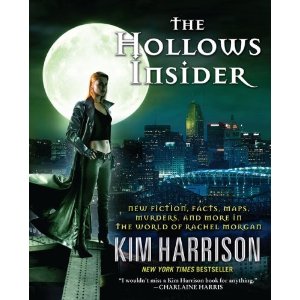
One thing I’ve started doing is picking up Kim Harrison’s The Hollows Insider I received at Christmas. It’s a companion book to Harrison’s long running series.  “The Hollows Insider is the Hollows world guide, the definitive source for all things Hollows, with spells, character descriptions, species descriptions, interoffice memos, murder and mayhem.” I absolutely love it and gets my head in the “write” mindset. This is what I want, this is what I am writing, a fun urban fantasy. I would love to follow in Harrison’s footsteps and write a long running series, with short stories, graphic novels and a companion book that fans will love. I read a few pages (because it’s the kind of book you can do that with) and it not only brings my focus to where it should be, it also lights a fire of motivation in me to get working.

The second thing I do is send an email to a friend in the writing world, just to say “hi, how is your writing going?” It makes me feel great to reach out to friends in the community and is a way of giving myself permission to let go of the real world and to devote my time to writing. Not that I think all my writing friends don’t live in the real world, but you get my meaning. It doesn’t take a lot of time and is a quick way to tell myself my friends are writing, I am a writer, I must also write. An extra bonus is I can read replies on a writing break or before my next writing session.

I asked my fellow Inkpunks if they have any pre-writing rituals. Music was a popular answer, Adam, Christie and Morgan mentioned they use music to get them in the right mood for their writing session. Morgan says, “for me it’s just finding the right song to loop forever and a nice pot of tea.”

When Christie starts a new story, she says she opens “three or four instances of Notepad, which for some reason feels less permanent than Word. ” She then writes a different story opening in each, picks the best one and deletes the rest.  She then comes up with a list of words she wants to use “to evoke the right feel for the story. “ Isn’t that a great idea? It could apply after you’ve started the story as well. If you’re writing a short story or a novel, there will be certain words that reflect the themes, tone or style of what you’re writing. Reviewing those before writing would be an excellent way to zoom your brain right to the heart of the matter.

John has a an inspiration board that he spends time reflecting on before writing. It contains his “Clarion acceptance letter and pictures of Neil Gaiman and a sheet of paper with encouragement and autographs from many of [his] author-heroes.” Beneath his board he also has a creative altar space with his “Daruma goal-dolls (a Japanese tradition), a pair of brass goggles, and little gifts and cards” from his friends and family. Isn’t that a fantastic idea? I am going to do this too. Combining writing with getting to be crafty is right up my alley.

Warning! Be careful your pre-writing rituals don’t take over as your procrastination tools! Galen spends time cleaning off her work space of paper, pens and paints, but, she cautions this kind of ritual, saying, “sometimes this becomes obviously avoidance if I get to where I’m deep-cleaning and completely re-arranging my studio instead of making art, but usually it just has the benefit of re-connecting to and organizing my tools.”

What if you’re short on time? Andy says he needs to write in short spurts when he can. “I don’t make any time for ritual,” he says, “because I need to be able to dive in whenever I have five or 10 minutes. I’m afraid to depend on having just the right space, or drink, or pen or even notebook because all I really need is my heart and brain.” I have heard writers say this before, that they got so caught up in their rituals, they couldn’t write if things weren’t “just so.”

I hope that I can condition myself to sit and write on cue. Right now, it takes a bit of encouragement. The important thing is, to find what works for you.

Ladies and Gentlemen, start your writing engines! What do you do to get your head in the game?

Continue reading

Guest post: Anatomy of a Murder, By Lee Moyer

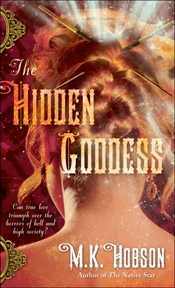
How important is the cover of a book to it’s success? In this post Lee Moyer gives an insightful breakdown of composition, color and typography on two different book covers to reveal a possible reason for why one sold so well and the other didn’t. Originally posted to his personal blog, Lee has graciously permitted me to share it here.

Anatomy of a Murder*

Lee Moyer performs an autopsy.

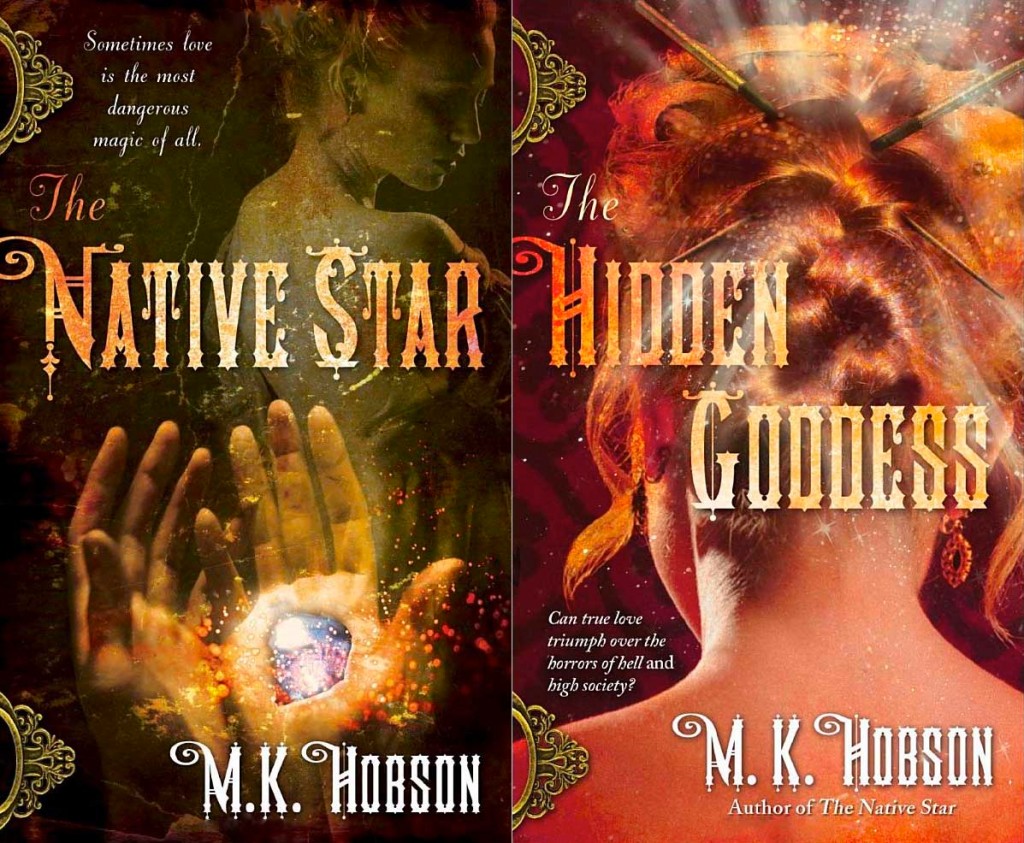
The delightful MK Hobson’s first novel was The Native Star. It was a wonderful book and it was, accordingly, nominated for a Nebula award in the same year that two of Portland’s other great writers, Mary Robinette Kowal and Felicity Shoulders, were.

But when it came time for the second book, The Foreign Anodyne, things got dodgy. The book didn’t sell nearly as well, and who was to blame? Why the author of course! How could the “failure” of the second book be laid at any other doorstep?

Well, this post will present a small case study** of the two covers, and attempt to discover where it all went wrong. First, I’ll talk about why The Native Star‘s cover design worked.

The Intentional: Great font choices. The bold display font is wonderful – evocative of period and magical. Yummy. The smaller font is elegant and well placed – the whole piece flowing well from top left to bottom right.

The blurb is a statement using ‘love’ and ‘dangerous magic’.

The partial cameos on the left side seem to form hinges, and while the design is not holistic enough to wrap them around the spine, it looks from the front cover that they might.

The choice of stock art is good. The viewer does not understand what the true narrative is, but feels that there is one. Is the man in the foreground giving some woman a gift? Is she disrobing? Is she worried? Interested? We don’t know, but we have enough clues to conjecture ~ and that’s fun.

There is an distressed and torn texture overlaid on the picture. This serves to unite the disparate elements in a way that makes them properly “period”. Further, there are color complements in the form of the deep red notes on the largely weathered green cover. And a proper little touch of blue that completes the composition admirably.

The Accidental: The hand in this piece is supposed to be that of our heroine. The fact that it is the hand of a man, modified slightly at the author’s request, is, I believe, a net gain for the piece. It makes the viewer imposed narrative stronger, and more romantic. The rendering of the jewel in the hand is, if you’ll pardon the expression, ham-fisted. I can’t tell what it is really. I guessed a jewel, but with the rendering one would be as safe to think it’s a tunnel to another universe. And while I would personally hate to have created such a questionable form, I feel that it probably works better than a fully representative version would have. As a title, the words The Native Star are graphic and legible. The letterforms move and flow nicely, one to another. They look and feel nice.

In summation: This cover works and got enough readers in the door to make the book a success. Huzzah!

And now, book two ~ The Foreign Anodyne.

What? The Foreign Anodyne? But it says The Hidden Goddess I hear you cry!

Sadly, almost everything I praise the first cover for above is reversed with this cover. And that’s especially odd given its obvious similarities. How can an attempt to move all the elements from cover 1 to cover 2 be bad? Well, that’s why I’m writing about them. It’s so rare to see such a clear case of sequelitis. Where the book is a sequel, it is by no means a rewarmed version of The Native Star. But the cover is a badly reheated version of its cover.

What it gets right: It keeps the cameo hinges and the bold display font. But even those small victories might be Pyrrhic…

What it gets wrong: Everything. We might argue that The Hidden Goddess is a better title than the vastly more mysterious The Foreign Anodyne, but I’ll call it a draw. Until of course I consider the typography. Since we know that the font will remain the same, there’s no excuse for making the author change her title to something that will look repetitive and illegible ~ 4 Ds, 2 Ss, 2 Es, and a tall I and and O? In a font where Os and Ds look the same? And while the G is a bigger display cap, the rest of the word looks ODD. Or indeed ODDEST. A font that was brilliant when it read The Native Star looks… boring. If, however, it read “The Foreign Anodyne”, it would again look spectacular. No sets of double letters, and while you may not know what an Anodyne is, it would look so good that it might not matter. Is it fair to insist that this sort of design choice be considered and arranged? Yes. Is that how most publishing works? Certainly not.

What else is wrong? Well, the rest of it. No color contrast or complements. No mystery. No uniting texture to suggest age. The phrase “true love” combines with an image lovable only to hair fetishists and sellers of hair sticks to make a cover devoid of narrative. The highest contrast our human brains perceive is that of black and yellow, so the black and gold of The Native Star works a treat. There is no similar contrast on The Hidden Goddess. Seeing the background through the hinge cameos creates more interest there than a focused cover wants, and keeping said cameos the same green-gold color draws even more attention to them. The partial substitution of the smaller font, and it’s poor placement is similarly problematic. There is no flow, grace, narrative, mystery or focus to this cover. Hints of period are all well and good, but when the only image looks like an undisguised photo from a contemporary bridal magazine…. well, it’s bound to be a problem.

So, what’s the possible solution? Well, I am pleased to say that I’ll be doing Mary’s next two covers as she takes her writing directly to the people, without walking the curious labyrinth that is traditional publishing. She talks about that here.

As usual, I’ll be putting my money where my big mouth is, and am fully prepared to be held to the same high standards I espouse so freely. And, as ever, I am interested in your thoughts.

Cheers!

Lee

* It turns out that it wasn’t murder per se. More an accidental suicide by the publisher….

**Humorously, Case Study is the name of the neighborhood coffee bar where of the writers I mention herein hang out and work.

********

Lee Moyer is a painter, illustrator, and designer with an impressive repertoire of work and experience under his belt. Originally trained in watercolor and oils, he currently works digitally to create art for games (both video and board), posters, book covers, comics, etc. Recently he created artwork for the documentary Lovecraft: Fear of the Unknown and brought into being a calendar full of Literary Pin-ups. If you’re interested, SciFi Art has an exceptional interview with Lee delving into his process and inspirations. You can see more of his art at LeeMoyer.com

Continue reading

, , , , ,

Guest Post: Managing Your Schedule as a Busy Freelancer

Today successful freelance editor and author Jennifer Brozek provides practical tips and advice for effectively managing your schedule. Thanks so much, Jennifer!


When it comes to being a freelance author (or freelance anything, really), managing your schedule comes down to two questions: “How do I keep up with the multiple contracts I’m doing at once?” and “When do I accept or decline a contract?” These two questions are intimately entwined and they both come down to awareness: awareness of dates and awareness of skill.

How do I keep up with the multiple contracts I’m doing at once?

I have been a freelance author for more than a decade and a full-time freelancer for six years now. I think I have a pretty good handle on things—at least on how I run my schedule for myself. This is only one example of how a person can keep organized from the 50,000 foot perspective.

I use two pieces of technology: a Word document and a digital scratchpad on my desktop.

In my digital scratchpad, I keep a list of running, monthly due dates: sending in the HWA calendar article, sending out my monthly roundup to my Googlegroup, and other such things. Also, I keep notes like “TEoP!”  as a reminder that while I don’t have a due date, I do have a project to finish up. The scratchpad is shorthand for the much more detailed organizational document.

In the Word document, I keep an overall numbered queue—much like an Agile scrum feature priority list. However, this queue is ordered based on due dates. I use font size and color to help me keep track of the urgency of the contract. Above that queue, I have my task list for the week like so:

TO DO

1. Colonial Gothic: Popham
2. Pays-the-bills work
3. Inkpunks article (Feb 14)
4. Monologue for Amber (Feb 18)

QUEUE

1. CONTRACTED: Battletech Story
2. Inkpunks article (Feb 14)
3. CONTRACTED: Colonial Gothic (Feb 31)
4. .
5. Industry Talks to editor (Mar 15)
6. If I Die Before I Wake to alpha readers (Mar 31)
7. CONTRACTED: Novel rough draft to editor (Mar 31)
8.
9. Norwescon (Apr 4-8)
10. SFWA article (June)

As you can see, in my “To Do” list, I use the colors red, green, and black. For me, green means I’m not getting paid for the job but I want to do it anyway. I made the choice to do the writing because I wanted to and “want to” writing keeps me sane. The red means that it must be done this week. No choice in the matter. The black represents an ongoing project that I am working on but is not in an urgent state. It keeps me working on it and aware of what is going on. For me, my weekly “To Do” list keeps my running queue from overwhelming me with a sense of how much I have agreed to do and gives me a sense of accomplishment as tasks drop from the list.

In my “Queue” list, I use four colors: red, green, blue, and black. Red is a contract. I have signed a contract, money has been paid (or will be paid). Green is writing I agreed to do with no contract but does have a due date. Black is for projects in progress. Blue is for something I have agreed to write that does not have a specific due date but that I have set for a specific month to write.

You will notice that I have a blank spot between months in my queue. This keeps me up-to-date on how many words are due in a specific month. You will also note that I added a convention to my queue. This is important because I am aware that I lose writing time before, during, and after a convention. This awareness of projects and due dates is vital when maintaining a freelancer project schedule.

Two of the items in my queue are larger than the rest. This is a visual reminder that they are active projects that need my attention. Note that they are behind the Battletech contract. This is because the Battletech contract is in “downtime” and is not active but once it gets back from the editor, it will ramp right back up to the top with a due date. It is best to keep track of projects on hold because they all tend to come out of hibernation at the same time.

Finally, note that while I have “Monologue for Amber” in my weekly “To Do” list, I do not have it in my queue. This is because it was asked of me in the same week I decided to write it despite having a farther out due date than this particular article. I did that because I knew I could knock out a creepy, messed up monologue for Amber quicker than I could write this article. Thus, it was added to my weekly list and knocked off.

All this brings us to the next part of the question:

When do I accept or decline a contract?

When you keep a running queue—however you do it: Google calendar, Outlook, a waterfall project planner or a simple document like mine—it gives you the awareness of your schedule and monthly word count to make an informed decision.

Looking at the queue above, I know I could accept a small contract in the third week of February because it is pretty open but not the last week because that is when I’m pushing to finish Colonial Gothic: Popham (if it is not already done). Also, I absolutely cannot accept any contracts between March 15th and April 15th because of two large projects due and a convention which messes up my writing productivity.

Except, knowing me, and knowing my tendencies, I could actually accept a small contract between March 15 and March 31 because I know how I work. I know what I can do. But, this contract would have to be really special: either for a friend or for someone I really want to work with or in a project universe I just can’t resist.

I can make that decision if it comes up because I know what is due when. I also know what my average daily output is. That word “average” is important because life happens and I cannot count on writing to my top range every day. My average daily output is about 1500 words. But I can write up to 5000 words a day depending on the project.

Thus, my cardinal rule: If I do not believe I can make the deadline by writing my average daily output between now and the due date, I regretfully decline the contract as is. Though, if it is one I really want to do, I will ask about extending the deadline by the amount I need. It never hurts to ask.

Working For Yourself

There is one final component to managing a freelancer schedule. It is most important aspect of maintaining an accurate schedule. You are your own boss. You succeed or fail on your own merits. This requires discipline from you and the ability to put aside other things until you get your writing done for the day. It also requires the discipline of keeping up your schedule in whatever way works best for you. Finally, it requires you to be honest with yourself on whether or not you have the discipline to get the jobs done on time.

Freelancing is a hard business and it takes a strength of will to sit down and meet your writing goals every single day (or whatever schedule you make for yourself). You are your own boss. For me, that means choosing which 60-70 hours of the week I work. Writing is work and I love it to pieces. But it is still work.

If you are struggling to meet your personal or professional writing goals, sit down and look at your schedule. See where you are failing to be honest with yourself. Sometimes, the best thing a professional author can do is to say “no” to a contract. Figure out what you can realistically manage in a week and a month. Then apply that to your writing. Make your schedule and stick with it.

Good luck. You can do it.


Jennifer Brozek is an award winning editor and author. 

Winner of the 2009 Australian Shadows Award for best edited publication, Jennifer has edited seven anthologies with more on the way. Author of In a Gilded Light and The Little Finance Book That Could, she has more than forty-five published short stories, and is an assistant editor for the award winning Apex Publications house.


Jennifer also is a freelance author for numerous RPG companies. Winner of both the Origins and the ENnie award, her contributions to RPG sourcebooks include Dragonlance, Colonial Gothic, Shadowrun, Serenity, Savage Worlds, and White Wolf SAS. 


When she is not writing her heart out, she is gallivanting around the Pacific Northwest in its wonderfully mercurial weather. Jennifer is an active member of SFWA and HWA.


Continue reading

Focus and the Distracted Writer

I just spent the last month revising two very different short stories, both aimed at markets with looming deadlines. Coming off the post-holiday distractions, I was confident that neither story would take much work (I was wrong) and a whole month seemed like plenty of time to get my work done (I was right, but it wasn’t as much time as it seemed!) But I took a deep breath and dove in. I got done most of what I wanted to accomplish last month and feel pretty good about it.

Like most of you, I always have at least five or six projects in the hopper at once, and figuring out which one to work on can make me cross-eyed. I love them all and want to give them my full attention, but that just isn’t possible. Setting up five computers on my desk to work on them all at once is also impractical.

So here are five coping strategies I employed to get my work done this month. Of course, what worked for me may not work for you, but I hope you’ll find some of these things useful.

1) Prioritize. External deadlines are helpful, here: market’s got a short reading period, anthology is about to close, etc. If you’ve got a story almost ready to go, spend a little time polishing and get it out there!
Sometimes, though, you’re not gunning for any particular timeframe, and you’re neck-deep in a story you love and keep tinkering. I suggest you give yourself an internal deadline so you aren’t tempting to noodle with the story endlessly. You need to move on to your other projects.
As above, I like to polish up the ones that are close and send them out so they can be earning inks, rejections, and maybe even acceptances while I work on the stuff that’s less developed.

2) Keep Notes. Exciting ideas flit across my brain, and my inner cat wants to go pouncing after every bright flash of color. Old toys? Boring. Bring on the new shiny.
This is why I keep lots of analog and digital notes (mostly I use either my favorite Moleskine or Evernote). New story ideas are always going to crowd in and tempt you away from what you should be working on. Some of these great ideas will tell you they are better than anything you’ve ever thought of before! Nod politely, make a note or two, and tell them you’ll talk again later. If they’re really that good, you won’t forget them.
It’s worth mentioning that the project you may be struggling with at the moment probably started out as one of those distracting ideas. Keep that in mind.

3) Keep a Daily Task List. Gasp! This sounds like organizing! For some people, this sort of thing comes naturally. My wife, for one. She makes lists like no one I’ve ever seen, and stays on top of her projects. Her culinary training is especially useful here, with its time-critical production lists.
I took a page from her, and kept a daily tally of the things I needed to complete: Scene A, Scene B. 300 new words, etc. Your own deadlines (see #1 above) will obviously help you set your priorities, here.
Your list doesn’t have to be complicated. There are all manner of to-do apps and methods. A list on a simple sticky note will suffice. Be sure to cross off each step as you complete it, too. It’s very satisfying.

4) Routine. The real key to success at anything is to dedicate that hour or two (or more!) to practice. For best results, pick a time that works for you and stick with it. For me, getting up and writing an hour or two before work is when I get my best work done.
Sometimes it’s helpful to have an extra incentive to cement that routine. I got several different varieties of loose-leaf tea for Christmas and spent my January mornings sipping them while I worked. There might be other incentives for you: playlists of inspiring music, a piece of pie, a chance to wear your super-writer’s cape…

5) Sleep and exercise. I can’t stress these enough. It’s important to get your rest. I sometimes have bouts of insomnia, or a run of busy nights when I just can’t make it to bed before midnight — but I know that regardless, I have to get up at 6am or so and get my work done. But more than that, I just don’t get my best work done when I’m tired all the time. It can also be tempting to forego sleep for work. As deadlines loom, this may even become necessary. But I’d advise delaying this step as long as you can.
Exercise is just as important. I’ve discovered biking, and I’m fortunate enough to be able to commute to work by bike. I don’t get to ride in every day, but even regular walking is enough to keep the blood flowing and the mind sharp.

I’d love to hear some of the ways you keep your focus when the going gets rough.

Continue reading


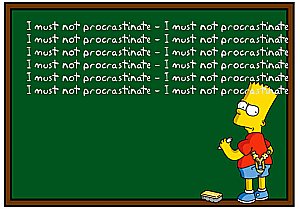
Better Procrastination as a Writer

Procrastinating is a skill, like writing, that you can perfect with practice and that you’ll find advice about on the Internet. In fact, the two crafts mirror and complement each other. Here’s some advice about incorporating procrastination into your writing habits–based on much real life experience!

Set a goal

Your first step in a writing project is probably to establish the size and scope of your project and create a rough time goal. Unless you’re Jack Kerouac, a novel is probably a much larger time commitment than a flash piece. In the realm of procrastination, making a snack is a much smaller time filler than making a sweater. Try to make a realistic evaluation of the time you’ll need to complete your masterpiece. Will it push back the real work you need to do in a satisfying matter? Will it leave you clawing the boundaries of your deadlines with trembling fingers? Maybe making one snack-sized sandwich is too small a goal. Why not make all your lunches for the week?

Gather your tools

In your writing projects, you’ll invariably needs some tools before you can start building your word mansion. It’s important to gather your equipment, possibly even giving it a test-drive before you get started. You should make sure that the hard drives or flash drives you plan to use as an auxiliary backup are in good working order, and you should confirm that there’s space enough in your Dropbox for all your files. If you’re a pen-and-paper user, now’s the time to go to the office supply store and try out some new pens! In the world of procrastination, the masters recommend that you don’t shirk this stage of development. Take as long as you need to work through the tool-gathering phase–you don’t want to jump back into your real work a second too soon.

Do some research

As a writer, it’s important your readers can believe what you say. How confident are you in your worldbuilding abilities? If you’re writing a piece set in the real world, it’s critical you get your facts straight. And if you’re writing a piece set in a secondary world, it’s important that your world be believable. Maybe you should base that secondary world on real biological, geological, chemical, and literary facts! And of course, it’s important to double-check that none of the things you thought you “made up” were actually lifted by mistake from other texts. This is a great time to visit Wikipedia and re-read your favorite books in your favorite genres. All the great procrastinators know that Wikipedia–or better yet, Encyclopedia Brittanica–is good for endless time wasting.

Make an outline

If you’re writing a short project, you might not create a serious outline; you probably just make some notes and hope for the best. If you’re writing a novel, you’ll probably need to create a more concrete scaffolding to support your draft-making. If you’re not sure about how to start making an outline, I recommend doing some research and picking up a few helpful tools from the office supply store.

Reality check

Before you’re ready to start laying down the words, you should check in with yourself. Is this project really the right project for you, right now? Will it advance your career? Will it help you grow as a writer? And if it’s a project for a market with a lot of exposure, perhaps you should consider if you’re really ready? This is a great time to make sure your webpage is updated and that all your contact information is right on all your social media sites. In fact, you might want to take this time to get new headshots.

Begin drafting

This is where the work gets serious. The only way to get that project written is by some serious butt-in-chair time. In case you didn’t hear this yet, sitting down is extremely unhealthy. Before you ruin your metabolism and put yourself at risk for cancer and heart disease, perhaps you should install a standing desk. You should probably research that.

Interlude

As we all know, a project isn’t ready to be revised until it’s had a chance to rest, untouched and away from your eyes. This is a great time to start a new project, like watching Lost from beginning to end–or better yet, The Simpsons. Remember, the longer you wait, the better your revision will turn out!

Revision

Revision sucks. You’ll need lots of moral support to get through it, so if you haven’t opened a Twitter account yet, you probably better get started. You can start by following me (the info’s on my “About” page), and I’ll send you lots of comforting tweets while I put off revising my own magnum opus. There are also a lot of really helpful blogs about revision online. You should probably do some research on the process before you begin.

Submission

Begin by researching the markets. If you were writing a short story for a particular call-for-submissions, you probably missed the deadline applying all your new skills in procrastination, so now you’ll need to find the perfect home for your mushroom-fighting-wereoctopus flash. Never fear, Duotrope will help you out–just don’t forget to make a donation while you’re there. And remember: the best part of the submissions process is that the editorial staff will take the procrastination out of your hands! Just don’t send your story someplace with a quick turnaround, like Clarkesworld or Lightspeed.

 But really

We all have free time in our lives. We can choose to spend that time working on our writing or we can choose to do other things. Sometimes, you really need to do something besides write. We really do need to chat with our friends, update our websites, and do research on important things, like which car to buy or what school to send the kid. Even a lot of the dumb stuff I mentioned above is actually a necessary part of the writing process (especially the part about watching The Simpsons). It’s when we let those activities crowd out our writing moments and suck dry our creativity that they begin to be a problem.

What we have to remember is to use our time wisely and to cut ourselves a little slack. Procrastination is supposed to be fun!

But so is writing!

Continue reading

prev posts prev posts