The Deep End: My Plunge Into the SFF Community

Maybe I’m feeling sentimental these days, but I’ve been thinking a lot about how freaking awesome the SFF community is, and how lucky I am to be a part of it. Okay, I know there are times when it’s not, and there’ve been lots of posts and discussion about that, but today I want to focus on the good; on the great. Because, on the whole, the community has been great to me, and great for me.

My first experience with genre-types came in the form of books. I’m not talking novels, but “how-to” books written by industry heavyweights such Stephen King, whose On Writing is both an entertaining and educational read for beginners and old-hats alike. Often before writing sessions I would browse a few pages from one of these books, pulling inspiration and motivation from the passion evident there to feed my output for the day.

I moved on to classes, figuring I needed some interaction with actual, you know, people. After having taken a number of creative writing courses through the Continuing Education program at the university, I decided it was time to find a genre-focused writing group, if such a thing existed. Don’t get me wrong: the literary writers I learned from were wonderful, but the word “plot” was literally never mentioned and ohmygod I could only handle so many stories about dysfunctional farm families. A link on the Alberta Writers Guild website directed me to the Imaginative Fiction Writers Association (side note: I’m not sure what un-imaginative fiction might be like, but I imagine it’s not good…).  I’ve posted about this wondrous group before, but in a nutshell it’s a place where local genre writers can go to learn All The Things about writing and the business of writing.

And here I will admit to failing the test to gain admittance to my first meeting. You see, IFWA didn’t mention on their website (at the time) that one was supposed to enter through the unmarked, sometimes locked back door of the bookstore (though in hindsight that seems entirely appropriate). I showed up and, silly me, tried to go in the front door, which was also locked. I rattled it to no avail, and shuffled back home.

Undeterred and armed with email instructions from the president, I returned, successfully gained access, then sat terrified as the group conducted a reading-out-loud exercise. What. The. Hell. Thankfully there wasn’t time for everyone (not even close) and it stopped well short of me. I didn’t go back for probably six or seven months just to make sure that god-awful exercise was over.

However, at that meeting I learned about the World Fantasy Convention happening in Calgary in October 2008, which would be my first ever convention. I plotted out a rigorous schedule of panels to attend, scribbled notes diligently, and went home feeling smug about all the wisdom I’d absorbed.

Oh, there were…parties? Oops. I guess I might’ve found that out if I’d talked to anyone.

I went back to IFWA and over time, gained enough confidence to participate in a meaningful way: critiquing stories, submitting my stories for critique, etc. I attended my first “fan” convention, Con-Version, which was…interesting.

Then came World Fantasy 2009, which was the single biggest turning point for me. I went on my own, not knowing anyone but determined to meet people this time. Not necessarily Important People—I didn’t have anything to pitch or any particular agenda—but just other writers like me. When a pink-haired lady stepped on to the elevator I was pretty sure she must be a convention attendee, and introduced myself. That was Christie Yant, who’d arranged through Twitter to meet a bunch of other folks and kindly invited me along. From there I met Sandra Wickham (a fellow Canadian), John Remy, Robert Jackson Bennett, and Morgan Dempsey. We were all at the aspiring, or just newly published phase (well, except Robert, the prodigy, who had his first novel out through Orbit), and just hung out together and had fun for the entire weekend.

In the wake of that amazing convention I did my best to stay in touch with everyone by email. But…they weren’t really email types, preferring Twitter instead.

I remember looking in on Twitter occasionally like a sad, lonely child with her nose pressed against the window watching other kids play outside. I was hesitant to sign up—I only knew five people on all of Twitter and everyone else seemed to have hundreds of followers. And what would I possibly say? But…these folks were too great to resist, and I created an account. My first direct message was from John Remy, welcoming me and saying it “made his day” to see me on Twitter. Aw.

From there I met a whole litany of other great folks, including anthologist Jennifer Brozek, who I interned for and who taught me a lot, and Jaym Gates, who I co-edited an entire anthology with before we ever met in person. (Me, an editor? How did that happen?) And of course more Inkpunky-types and all-around wonderful people: Wendy Wagner, Andy Romine, Adam Israel, and Galen Dara. Now I’d estimate that probably 90% of my Twitter feed is made up of writers, editors, publishers, and/or agents. And ask my local writing peeps: I’m always yammering on to anyone who’ll listen about how awesome the SFF community is on Twitter and encouraging others to join.

There have been other conventions: Orycon, World Horror, V-Con, Keycon, When Words Collide, World Con, and of course more World Fantasy Conventions; countless IFWA meetings and events; sundry workshops taught by amazing mentors like Robert J. Sawyer; various retreats, readings, etc. My sense of community—it just keeps growing.

So, what’s been great, if it’s not already obvious? For one thing I’ve learned tons. My writing’s gotten better (first, second, third, and fourth sales!) and my knowledge of the industry has grown by leaps and bounds, as has my familiarity with the SFF and horror genres in general (though I still have a ways to go). I’ve gained opportunities: editing anthologies, assistant editing for a pro-paying horror magazine (woooo!), and getting invitations to submit to various markets.

But you know what means the most? The support. If I tweet about a rejection, numerous people will respond to console and commiserate with me; if I tweet about an acceptance, probably even more people will chime in to congratulate me or retweet my good news.

And when I separated from my husband last summer, and during some other hard times that followed, I could absolutely count on my friends in the SFF community to be there—as much as my family and maybe even more so than many of my old friends. Emails and direct messages just to check in; post-cards with cheery notes; Gmail chats and Google+ hangouts; a mix-tape (sob); tight hugs when I was/am lucky enough to see them in person. Acceptance, understanding, advice, encouragement, and compassion.

Turns out I’m not alone in this business of writing, or in life, and that is a great feeling.

Thanks, my people.

Continue reading

Revision: Art or Craft?

Do you see your writing as more of an art, or a craft? Is your ability to tell stories something inherent and intuitive, or is each sentence the product of conscious, deliberate, meticulous crafting? (In D&D terms, are you more sorcerer or wizard?)

I think I’m a mix of both. Some aspects of writing flow from me, others resist me with the force of a child throwing a tantrum. For example, once the main characters’ voices and motives click for me, I can generate a solid two to four thousand word first draft in a day. But my stories stall on revision. It can take me months to tinker with those good first efforts.

I decided recently that I need to approach revision less as an accomplished artist, and more as an apprentice craftsperson. Apprentices need more structure and a lot of practice before they can internalize the skills of their profession and wield them in the fluid, natural way that is reserved for the master craftsperson.

So, to enforce discipline in my revision, I’m making myself to go through three phases of revision for my short stories:

1. Story Level:

I review the story at a high level, while considering questions along these lines:

  • Point of View: Did I choose a PoV that works for the story I’m trying to tell?
  • Plot: Is my plot clear? Does it have any holes?
  • Characters: Do I have too many characters given the length of my story? (a common problem for me)
  • Voice: Does the voice sound right for the story? I’ll often read it aloud to test this.

2. Scene Level:

After I’m sure that my overall story is pretty stable, I begin looking at scenes. Respecting scenes was the main craft lesson I learned from six intense weeks and over a dozen fine teachers and speakers at Clarion West. Scenes are the fundamental building blocks for my stories. Especially in a short piece, I only have a handful of scenes, and I want each one to count.

  • Reverse outline: The first thing I do is to break down my story into its component scenes. I note what each scene accomplishes.
  • Contribution: Does each scene advance the story? Do they have sufficient tension or character development? It might be worth deleting or combining scenes if they do too little, or separating them if too much is going on.
  • Other questions: Why should the reader care? Are their senses fully engaged?

3. Sentence Level:

This is one of my final passes. At this level, I’m thinking a lot more about the language.

  • Economy: Reducing redundancy, filtering words.
  • Rhythm: Read aloud–do the phrases sounds pleasing to the ear? Are they fun to say?
  • Clarity and precision: This is where I’ll try to remove awkward clauses, and fix unclear pronouns and dangling modifiers.
  • Strength and precision: Insert strong verbs and precise descriptions, replace cliches with my own constructions.

I want to make it clear that I’m *not* prescribing this to anyone. I don’t even force myself to follow this strictly. For example, I’m always working on the sentence level. It’s a tool, meant to help me grow as a writer, to practice at an area that I’m weaker until I can internalize these things.

I’m convinced that if I consistently and consciously work persevere through revision steps, that eventually they’ll come naturally to me. I can remember when inline skating and speaking Japanese felt very labored and clumsy to me, but hours of street hockey left me a competent skater, and after years of living and studying in Japan I could think as easily in Japanese as in English.

I have some questions for you. No pressure to answer all or any of them! But I’d love to hear any feedback you have to offer. One of the great things about being a writing apprentice is that I have the example of all of you masters to follow.

  1. Are you more of an artist or a craftsperson? Or are there better terms for how you approach the craft of writing?
  2. Does my approach for improving my revision skills seem restrictive or otherwise problematic to you?
  3. What do you look for when you revise, at each of these levels?

Continue reading

Stay in School

It’s the time of year when everyone is getting ready to head to Clarion and Launchpad and conventions. It’s busy and social, signings will abound, and you might even meet some of the authors who have shaped your life.

And that is one of the things that makes our genre so incredible.

But hey, there’s something that’s even more incredible: the people in your critique group or the signing line? Those are the future game-changers, the authors who will, some day, shape the lives of another generation. It’s like being in school, if school was taught by your hero, and you got to take all the coolest classes. You get to be in on the ground floor. You get to say ‘oh man, I knew that guy before he was cool’.

As writers and fans, it’s easy to gravitate toward the big names. King, Card, Gaiman, and others have priceless advice on writing. They are known as experts for a reason. But they are very busy, and very far removed from where the new writer is standing. Studying them is certainly worthwhile, and necessary.

But the people around you will, in the end, probably teach you more. They are going through the same thing you are. Instead of looking back on the hazy early years, they are going through the same gauntlets. When you need a comforting shoulder to cry on, or have hit that point where you can’t work on your novel for one more minute, your peers are the people you’ll turn to, because they’re right there with you.

It’s a lesson I’ve been lucky to learn the easy way. When I went to Dragon*Con the first year, I sort of fluttered at the edges of those Names. Obviously inundated with people, there was no way they’d remember my name. (A point driven home with great humility when one later hired me and had never heard of me…despite actually having had discussions on Twitter and at the con.)

Toward the end of it, I ended up sitting with the editor of a small press, and one of his authors. I picked up an incredible amount of industry knowledge from them, got involved in one of their projects, and generally built an actual relationship with them. They were still many years ahead of me in experience, but they remembered the kind of stuff I was going through, and they were happy to share their knowledge.

You meet people through your immediate network, too. The person in the elevator with you might be the tie to your first big sale, your agent, or a much-needed client. Yes, that sounds mercenary, and there’s a line between networking and preying that everyone needs to understand and pay attention to.

So, by all means, go to the panels and workshops by Chuck Pahlaniuk and Connie Willis. They are the living embodiment of what you are trying to become. They are the world’s coolest teachers, and you’re in the world’s coolest school. But in between the big conventions and signing lines, check out your local conventions and writer’s groups. Walk up to the person sitting alone at the bar and ask if you can share their table. Strike up a conversation with the person next to you on the panel, or in the elevator, or at the book launch.

Say hi to your genre. The people around you are your future colleagues, friends and support network. Get to know them, because they are your number one resource.

Continue reading

Writing Synopses and Getting Over Yourself

I’m a fairly new writer with very little experience, if I’m going to be completely honest, so this opinion may change in the future, but: I think I’m an outliner.

It makes sense. Before I decided to really give writing a go, professionally, I spent six months simply reading about publishing. Everything I could get my hands on, all day, erryday. I learned all the details I could, because before I dive into something I prepare. At work, when I code, I don’t just dive in and code. I circle the problem, eye it from every angle, think about the best way to solve it, read up on relevant libraries to find the best function with the best implementation and the least amount of code to get what I need done. I spent a year just browsing properties before I even thought about finding a realtor.

In retrospect, it was silly to think I might be a pantser.

One of the things I had to work on in my novel was funneling my too-large cast into a smaller pile. Cut the people who don’t matter. If someone has a name, make sure they’re important. But now I have to make sure that, at the end of the day, I have a cohesive book on my hands. So I’m compiling all the details into a synopsis.

Synopses are not easy. But I found a way to make them easier to start: write them as if you are speaking them. Simply narrate the story on paper, just like you would relate it to a friend. I started trying to write a more-formalized synopsis, like the kinds I read online when I googled “synopsis example.” But between being focused on getting the details of the plot down, figuring out what’s important to put in there versus what would just make it too damn long, and giving it some form of cohesion, writing in a voice that wasn’t naturally mine was just one more thing to add to the pile. And since this was a synopsis for myself (and my two wonderful friends who are ever so patient with me) I didn’t have to sound formal.

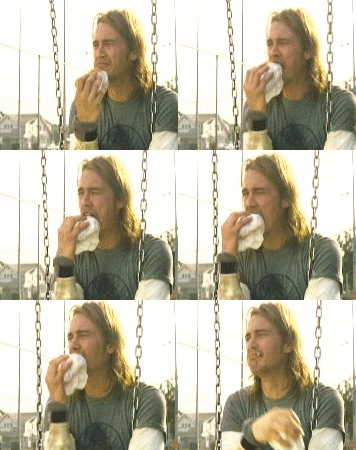
I won’t lie. It wasn’t easy to let go of what the final product “should” be and just putting down what was in my head already. There was a little bit of this:

Then I got hungry and it looked a little like this:

But it’s cool, I got my shit under control, and I wrote some shit down. And once I finally let go and got over myself, I wrote my entire synopsis, in one night. Just like I speak. Except perhaps slightly more manic.

For example:

So now he’s all woe and angst, wangst, and she’s like, hey asshole, weren’t we onto something? I kept being onto something while you were out being Ranger Rick. And he’s like, I don’t understand that reference.

… actually no, that’s pretty accurately how I talk when I get going.

But yeah. I got past thinking it had to look like a final product, and clung to the fact that this can, indeed be a rough draft. It doesn’t have to be flawless. It doesn’t have to be polished. If details don’t work out, that’s okay. That’s the point of the synopsis anyway, to find out what details just aren’t working out. It’s very freeing to allow yourself to write however you want. And it’s productive, especially for writing-output that doesn’t need to be in a specific voice.

An entire novel synopsis, in one sitting.

The joy of a synopsis is that you, and someone else, can get a high-level view of your book, and find the plot issues. Like “You have two villains, but one of them isn’t really necessary, so just cut that one person.” And “But wait, you say this here, and that there, and these two things totally contradict one another.” You get a level of beta reading without having to write the novel out, and without having to tear up swaths of a novel to fix the issues. High reward for relatively low cost.

And you can use synopses even if you’re a pantser. I’m using this synopsis as an after-the-fact editing tool. Thing’s written, now I’m fixing it.

So yay, I think this novel is kind of coming together. Sort of. Maybe. One step at a time, I’m going to pull this thing into a readable condition that other people might want to someday spend money-dollars on, hopefully. And it’s hard. There’s a lot of self-doubt. A lot of crying under a desk with a bottle of whiskey. It’s challenging to see the end-goal so far off, and to keep running at the horizon without gaining any ground. But books are built one word a a time, right? So you just gotta…

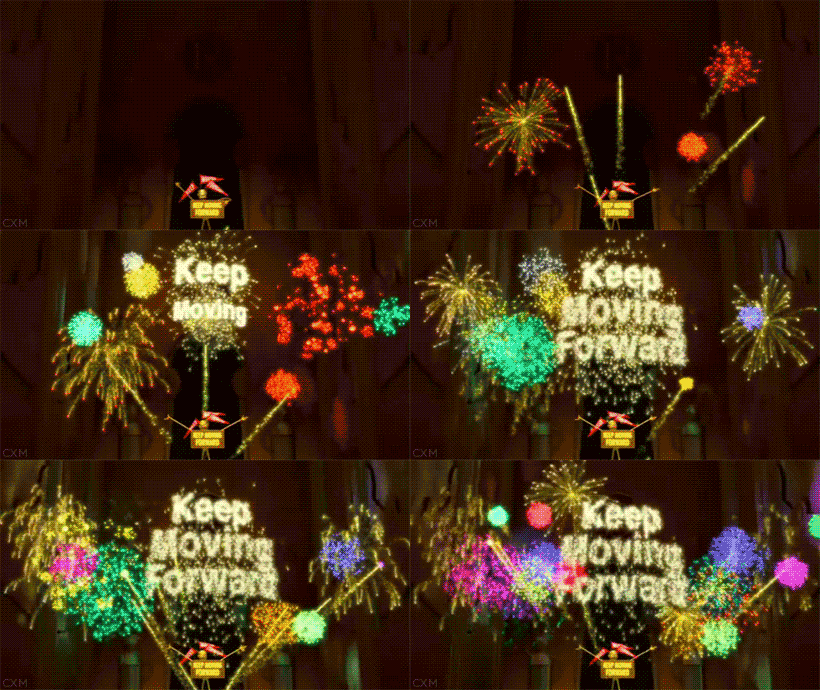
… keep moving forward.

Continue reading

Getting unstuck

I’ve been going to writing workshops since 2004, and at this point it’s pretty rare for me to hear of a tool I haven’t heard of before. That doesn’t mean I don’t need to be reminded, and often! I love being reminded, because frankly there are just so many tools and I’m too new at this still to have internalized even a fraction of them. What I’m getting at is that I just don’t have a lot of lightbulb moments in workshops anymore. But a couple of weeks ago, I did.

Recently I got to go to a workshop called Paradise Lost, run by Sean Patrick Kelley for graduates of Viable Paradise and Taos Toolbox. The resident pros were editor John Joseph Adams, and authors Jay Lake and the legendary Steven Brust.

Steven Brust is a character. I mean, you can tell by the hat. He’s also incredibly enthusiastic about helping new writers. Any time there was a lull in conversation he would jump in and say “Okay, who has a problem? Let me have it. I want to help. Let’s figure it out.”

His first lecture was the lightbulb lecture for me: it was about Getting Unstuck. Holy crap, did I need that.

Advice to turn off my inner editor, write a shitty first draft, use placeholders–they’re all good, but they mostly don’t work for me anymore. I had a really good conversation with Jay Lake about my enstuckedness, and he tried to help me get to the root of what I was stuck on in the first place. I think it was that conversation combined with Steve’s lecture that helped me finally identify it.

The problem with shitty first drafts, inner editors in cages, using placeholders, pushing forward etc. is that at this point I’m not okay with writing crap. LOOK I KNOW WE’RE SUPPOSED TO. And I’m not saying I don’t. I do. I absolutely do and will continue to. I guess a better way of saying it is that I’m not okay with writing filler, of writing contentless content. It can be bad prose, that’s fine, but whatever comes out of my fingers needs to matter to what I’m writing, and those tools all leave me writing contentless content just to put words down (the NaNoWriMo* approach). What Brust’s lecture did was provide me with tools to help me write cool shit that matters when I’m stuck. Because if it’s not cool, I frankly don’t want to write it.

It would be uncool to transcribe his lecture here, but I’ll tell you one thing that I thought was just freaking awesome. When Steve gets stuck he plays games with the prose. There’s one book, he said, in which he included a bad Hamlet pun in every chapter, just to give himself something to write toward. In other cases he goes back and looks for something that he may have accidentally repeated, and then he goes and makes it a theme. You remember the whole “the curtains are blue” thing? If he finds that he’s accidentally made two sets of curtains blue, he then makes more shit blue and invents a theme that wasn’t actually there. The end result is that he has a good time, he adds cool stuff for the dedicated reader to find, and most importantly, he gets unstuck.

LIGHTBULB.

The thing that really struck me about Steve is that he seems to be having an immense amount of fun being a writer. That was inspiring. I will write no matter what because I am simply compelled to do so, but if I can be compelled, get unstuck, and also have fun?

Best of all possible worlds.

* I’m not dissing NaNoWriMo! I love it. I was a Municipal Liason for three years. My current novel is a rewrite of my 2005 NaNovel. I’m just saying, that approach doesn’t generally work for me anymore. YMMV. 


Continue reading

Guest post from Carol Penn-Romine: Sorbet for the Creative Palate

This week’s guest post comes from food writer and all-around rock star Carol Penn-Romine. Thanks so much for your contribution, Carol!


Last Sunday was Freaky Friday at our house. My husband Andy, a.k.a. Ink Gorilla, entertainment industry professional and the resident writer of science fiction and fantasy, was in the kitchen cooking Moroccan food, baking flatbread…the whole business. I, resident chef and food writer, was in the office writing scripts for a series of web-based chat shows for the science fiction television drama Falling Skies. For us both it was weird but exhilarating.

I needed this decidedly different creative challenge, because right now my book proposal is a whiny little snot nose with head lice and outrageously bad breath that has been tugging on my skirt and demanding my attention. I’d rather be spending my time with the book itself, this golden child with the aura of angels and the breath of lilacs. Of course, it might not be as golden, angelic or lilac-ish as I think it is, but it’s eminently more appealing to me than the proposal is. A solid proposal is crucial to the book’s publication, however, so the whiny snot nose must be indulged, the little creep.

“Palate cleansing” is a good way to describe the periodic restorative breaks we all need as creative people. Cooking gave Andy a much-needed palate cleansing during work on his novel. Science fiction-focused writing allowed me a similar respite from my proposal and book.

Total immersion in what we’re creating is valuable and necessary—up to a point. But when we get so focused on our trees that we’re unable to see the forest we’re working to create, it’s easy to become overwhelmed. We find ourselves staggering backward, trying to escape what we love to do most. But we haven’t ceased to love what we do—we just need a break from it to regroup a bit. It helps to take a walk or even head for the hiking trails. Or perhaps have a swim or go biking.

But at times we need something more. One of the best ways to cleanse the creative palate is to give it a rest by taking a trip down a completely different creative avenue, especially one we feel we’re not at all proficient in. If you’re a painter, play music. If you’re a dancer, cook something. If you knit, try building a birdhouse. If you’re a writer, maybe you should tie-dye that favorite ratty-assed t-shirt you insist on writing in, or batik the curtains hanging by your desk. Or take a class in improvisational comedy, as a couple of our friends are doing.

This tactic helps even if you shift your focus from one type of writing to another. The past couple of weeks spent studying the scripts of a science fiction television show and drafting interview questions for its actors, writers and producers is quite a departure for me. Frankly, science fiction and fantasy have never been quite my cup o’ chai, and I read them more often now only because my husband writes them. And in my 15 years in Los Angeles, I’ve avoided the entertainment industry the way Superman avoids kryptonite.

But in the process of writing these scripts, I was surprised to discover that I was enjoying the show and that I cared what happened to its characters. In the meanwhile, the part of my brain that is constantly looking for clever observations and turns of phrase regarding food and culinary cultures took a vacation. I returned from my sci-fi TV adventure with a refreshed mind. Now I’m ready to have another go at my book proposal. I think I’ve gained some clarity from the mental and creative vacation. (And, interestingly, I’m eager to watch Season 2 of Falling Skies!)

There’s something about busying yourself with what you might consider a lesser creative pursuit that makes your brain function in different ways and exercises mental faculties that usually get short shrift. This is something we all intuitively know but that we still must remind ourselves of sometimes. I’m sure there must be some scientific basis for this. Maybe it’s just my own theory, but I think it’s a valid one.

It’s time to get back to that whiny little creep. I think I’m ready to face him now.

How about you?


Carol Penn-Romine is a food writer, Le Cordon Bleu-trained chef and culinary tour guide, offering food tours of Ireland through her company, Hungry Passport Culinary Adventures. Her work has appeared in Leite’s Culinaria, Gastronomica, Los Angeles Times, Cornbread Nation IV: The Best of Southern Food Writing, Farmhouse Magazine and the Christian Science Monitor. She is a past editor of Edible Los Angeles and a contributor to Edible: A Celebration of Local Foods and to a number of magazines within Edible Communities. She blogs about food and travel at www.hungrypassport.com.

Continue reading

High Fiber Serials

I’ve been to a lot of conventions and conferences in the last three years and I thought I would dig through my notes for my next Inkpunks blog topic. As I expected, I found a wealth of knowledge, if only I could read my scribbles and remember what they meant!

I did find some coherent notes on a workshop at the Surrey Writers’ Conference in 2009 called Serious Serials, presented by New York Times and USA Today Bestselling Fantasy Author, Richelle Mead. Richelle is the author of two adult series and one YA series. Her Georgina Kincaid series has six books thus far, and Dark Swan series has four books, while her YA Vampire Academy has six books and has spun off into a new YA series. Her YA has been translated into thirty languages.

Richelle definitely has the experience and knowledge about writing successful series. I will try to pass on some of the wisdom Richelle bestowed upon us that day.

Why Should You Write A Series?

Richelle advises that if you’re invested enough in the world and characters you’ve created and you want to tell a really big story, you probably would do well to make it into a series. It will also depend on whether the publisher and readers like your world and characters enough to read more. Young adult readers, Richelle tells us, fall in love with characters and want to read more, sometimes as much as they can get their hands on. It’s your job to make them fall in love with your characters.

Should You Plan It Out or Not?

You need to know your characters and world intimately in order to write a continuing series. The world you create also has to be one that you can get multiple stories out of that setting. These things would have to be planned ahead of time.

While there should be a big story that spans across each book, there also needs to be a self contained plot within each book in the series. That plot should wrap up, but the book should leave the readers wanting more. Each following book should also continue to include character development of your main characters.

Richelle recommends knowing an ending to your series and about how many books it will take to get there. Each book should progress your overall series plot. She recommends within your planning, leaving enough room in your plan for sparks that come up while you’re writing, but have enough structure to keep the plan in line.

Should You Pitch a Series?

No editor, agent or publisher wants to hear about a five to ten book series. They do like to hear that your single book is part of a proposed series, and you could have a brief outlined plan of future books, but the first book must stand alone.

Other Tips From Richelle

Richelle told us that her multiple series came about while she was waiting on the publishing industry. While her first book was going through the process from the original sale to being published, she started in on another series. While that one was then going through the process, she started a third series. Now she juggles all three (with a fourth coming soon). She recommends not waiting for that agent to get back to you, or for your book to hit the shelves. Start on something new!

Richelle also says to go ahead and write the second book in a series while shopping the first if you want to. It’s only going to give you more practice writing, and if that first book gets accepted, you’ll have another one in the making.

I hope these notes from Richelle’s workshop helped any of you thinking about making your book into a series. Whatever happens, don’t stop writing!


Continue reading

Putting the Science in Zombie Apocalypse

Kristi is an aspiring sci-fi and fantasy writer from Vancouver who also happens to be a scientist. She has a Ph.D. in Zoology from the University of British Columbia and a M.Sc. and B.Sc. in Molecular Biology and Biochemistry from Simon Fraser University. Her areas of expertise are cell biology, genetics and molecular biology.  Besides being an avid sci-fi fan, she is passionate about science literacy and introducing people to science through entertainment and fiction.  She is also a blogger for the Society for Canadian Women in Science and Technology (SCWIST). 

Putting the science in zombie apocalypse
The monsters in popular sci-fi and fantasy change at a rapid fire pace. While vampires and werewolves traditionally duke it out for the number one spot, recently the zombie has charged (mindlessly) into the schoolyard scuffle to seriously take on the top two contenders.

Let’s just say for a mindless horde it’s been a pretty spectacular effort.  Forget the schoolyard name-calling and fist fights, zombies showed up to the schoolyard ready to take on the cool kids with baseball bats and rebar.

Though zombies have always been a mainstay of modern sci-fi and fantasy, they’ve recently exploded on the fiction universe with appearances in reworked classics (Pride and Prejudice and Zombies), new novels (The new Guillermo Del Torres series, World War Z, My Life as a White Trash Zombie) video games (Left for Dead, Dead Island, Dead Space, Resident Evil), too many movies to count, and a spectacular debut into the prime time TV arena (Walking Dead anyone?).

But their recent popularity begs the question, why hasn’t the science of zombie’s caught up? As a scientist, I often get asked whether the viral zombie model would actually work and it’s a hard question to answer.  What it comes down to is that the virus model is outdated. We now know a hell of a lot more about the ways cells, viruses, genes, and diseases work.  When the whole viral zombie disease notion became popular, it was a great premise with the knowledge available at the time.  That’s a pretty big caveat, but it goes further than that.  It depends what you’re definition of a zombie is. The old Haitian/voodoo zombie has come a long way, from simple possession to a walking, rotting, infectious corpse, and the evolution doesn’t stop there.  Space zombie’s anyone?

All that stuff to think about, it’s no wonder authors shy away from the science side; and let’s face it, the scientists don’t make it easy- communication isn’t one of our strong suits. So how do we design a better sci-fi zombie? Something that gets our zombie out of this virus rut and into an identity that reflects the scientific leaps and bounds over the past 30 years? More than that though, how does an author out there approach the science design questions and reconcile it with their story?  Reading up on the history of infectious diseases and taking a first year course in cell biology seems a bit harsh and extreme for a potential two lines in a book.

Using the common zombie as a model what I want to do is show authors out there how they can work through the mechanistics of a scientific problem and apply it to any scientific question they come up against in their writing.  I think what will surprise most of you is how large of a role common sense plays.

So let’s begin. Imagine that we are presented with an eminent zombie infestation. We need to figure out how the zombie infection spreads and what we’re dealing with using the scientific method: observation and posing more questions.

1.  Memoirs of an Infection

Being a smart zombie-apocalypse savvy individual at the first sign of infection you hunkered down in a stronghold stadium with a handful of trigger happy friends and the majority of the Wal-Mart firearms section. Refugees bang on the locked and heavily barricaded doors of your stronghold, a horde of zombies hot on their trail. If you plan on letting them in you need to figure who has and doesn’t have the disease. Using the news feeds covering the disaster around the globe, you quickly realize only humans get the disease and you have to be bit. Scratches and bodily fluid splatter don’t cover it.  As you watch a newly zombified news reporter dive for his screaming anchorwoman, bit by a cameraman not five minutes before, it’s obvious that once bitten you’re time is numbered -no chance for rerolls here. A quick scan of the activity outside you’re stadium shows refugees climbing the fences and trying to fight the zombies off. Someone’s dog abandons the refugees and the zombies take no notice. The only thing stopping them is damage to the head, until then they’re biting every inch of the way.  You gulp as the first zombie grabs the chain link fence and climbs up after the screaming refugees. So much for the stupid zombie myth.

Now, without a tissue sample or time (you need to start shooting the zombies and/or refugees- I’ll let you decide what kind of a zombie survivalist you want to be) what can we deduce from our observations? Preferably in time to let some refugees in?

1. The infection is in the saliva. Only bites pass on the infection so chances are very good it’s carried in the saliva.  Even if the disease agent has orchestrated an entirely different infectious secretion (ie residual teeth or tentacles), we know it’s in the mouth. Avoid the mouth and you should be OK.  Another thought to keep in the back of your head is that the mouth is a great target to prevent spread- take out the mouth and even if the zombie is moving it can’t infect you!

2. Damn, it’s efficient. In almost every case of mainstream zombie-ism, the disease agent is one hundred percent effective.  One bite equals one disease. This is an important piece of information because it means that the agent completely bypasses our defense mechanism, the immune system. This is rare. Our immune systems can mount an attack on almost anything that can infect us.  Some diseases are better at evading it then others, but there is always a chance our immune systems will recognize and destroy the intruder in time.  That the zombie agent has a perfect record suggests it’s either incredibly sophisticated, OR it takes a sledgehammer approach.

3.Needs to eat human brains/living tissue. I think this is pretty well a unanimous expectation of zombies everywhere; they need to chase you down and try to eat you.  The reasons are usually foggy and what they are after is pretty foggy. But rest assured, you will need to run because they want to eat you.  But why the eating? No respectable infectious agent gets the host to do something for no reason.  At its most basic, the zombie needs to chase you down to pass on the infection.  But that can’t be it- stopping to eat cuts down on chasing and infection time. What the eating tells us is that the infectious agent doesn’t want to burn out it’s host out like a virus will- it’s got a vested interest in keeping it’s host alive.  The eating allows the host to refuel and keep a skeleton crew of neurons alive so the zombie can keep on chasing and chomping.

4. A hijacked nervous system.  Speaking of neurons, this infection has hijacked the entire nervous system. From a disease perspective this is really great evolution at work (there is also precedence for it in the real world). What good infectious agent wouldn’t want access to its own personal meatbag nervous system? Not only does its host carry it around from place to place, but when the infectious agent itself is hungry or otherwise in need of attention, it’s got something better than an optic fiber cable hard wired in!  Good-bye self-control, hello need for brains!

5. What is the infectious agent?: We now have a good idea what makes this disease tick so what is it? Without a tissue sample it’s impossible to tell for certain, but we CAN deduce the nature of the infection. So what are we likely dealing with? Virus or parasite*? All the observations we’ve made so far make a case for a parasite, not a virus.  Though it’s not a hard and fast rule, viruses infect to reproduce, whereas parasites infect to get a home, freeload, and live out their lives.  This is because their respective goals, or ‘business models’ are different. Although parasites and viruses both need to infect a host and use its resources’ to survive and reproduce, their global outlook is very different. A virus’s business model is based around hijacking your cellular machinery and completely depleting any and all resources it can get its grubby hands on. This goes on until the host dies or the immune system kicks the infecting virus out (OR into hibernation. Fun fact: a lot of viral infections are permanent, our immune system just gets used to them and forces them into retirement or hibernation Ex: Chicken pox, herpes, warts, and hepatitis). Success to a virus is making a gazillion infectious copies of itself whatever the cost.  Absolutely nowhere in this business model is there any accountability or design to save the host; it banks on having an inexhaustible supply of hosts available to infect in the future.

Parasites use the host as environments rather than strip mines.  A parasite needs to inhabit and use its host as a resource but it also needs the host to survive long enough to complete the parasites own life cycle (grow, reproduce etc). That doesn’t mean parasites show a lot of altruism towards their hosts but killing a host before completing the lifecycle is an automatic fail.  (After its life cycle is over it can kill the host all it wants, but not before).

So what does this mean for our zombie infestation now scaling the stadium fence outside our barricaded walls? Knowledge and a still functioning internet are powerful tools! We have a better idea what we’re dealing with and can start figuring out how to fight this parasite on a cellular level!  Now, time to call the CDC hotline and run a Google search for how to best collect tissue samples …right after we shoot some zombies…


Continue reading

Guest Post: Doing Research at the Library, Part II. By John Klima.

John Klima previously worked at Asimov’s, Analog, and Tor Books before returning to school to earn his Master’s in Library and Information Science. He now works full time as a librarian. When he is not conquering the world of indexing, John edits and publishes the Hugo Award-winning genre zine Electric Velocipede. The magazine has is also a four-time nominee for the World Fantasy Award. In 2007 Klima edited an anthology of science fiction and fantasy stories based on spelling-bee winning words called Logorrhea: Good Words Make Good Stories. In 2011, Klima edited an anthology of retellings of fairytales for Night Shade Books titled Happily Ever After. He and his family live in the Midwest. You can follow him on Twitter @EV_Mag.

********

Doing Research at the Library, Part II

Last time I talked about how you could walk into your local library and get all sorts of great research help for your writing. We went over material that the library has on its shelves–both to use in library and take home–as well as material available via databases and other electronic media. There’s also the helpful librarian who has been how to do searching that can help you find material. Their Google Fu is strong, use them.

But what happens when the material you want–let’s be honest, the material you need–isn’t available at your local public library but at a different institution altogether? Or worse yet, what if that material is in (cue ominous music)…special collections?

Interlibrary Loan

First, let’s talk about interlibrary loan (ILL). ILL is what your library will use to borrow material from another library. But what does that mean? Let’s use my library as an example. The Waukesha Public Library (WPL) is part of the Waukesha County Federated Library System (WCFLS) which includes the following communities: Big Bend, Brookfield, Butler, Delafield, Eagle, Elm Grove, Hartland, Mukwonago, Muskego, New Berlin, Oconomowoc, Pewaukee, Sussex-Lisbon, Town Hall-Merton (North Lake, WI), and Waukesha of course.

If you’re a patron of one of those libraries (i.e., any resident of Waukesha county) and what you’re looking for is held by any of those fifteen libraries, you can just place a hold on it in the online catalog and it will be sent over to your library (free of charge) for you to check out as if it was part of your library’s collection. Your library might also be a part of a larger library system; it might not. If it is, you likely have a similar system in place. One of my previous libraries was part of the Prairie Area Library System (PALS) which was almost 400 libraries strong and you could get material from any of those libraries.

But again, let’s return to the question of what to do when what you want isn’t available through local resources. The first trick is determining what you need in the first place. It may seem obvious, but your local library’s catalog will only list the books/materials that they have. How would you even know about something they didn’t have? First, many states have a searchable shared catalog of all or most of the libraries in the state. A few examples include Wisconsin’s WISCAT or Ohio’s Ohio Libraries Share More. Your librarian will know if your state has a shared catalog, or you can search for your state’s State Library (typically located in the state capital) and among their resources will be a shared state catalog if one exists. Searching these catalogs is very similar to searching your local catalog, although they can be more hit or miss and you might be better off going into an advanced search right away.

Again, your local librarian will be versed in searching these catalogs and can help you use them. After you get some instruction on how to use the state catalog, you should be able to search from home and know whether you need to request material (more to come).

If your state doesn’t have a shared catalog, or your searching in the state catalog nets you zero results, you can go and search World Cat the online catalog for the Online Computer Library Center (OCLC; formerly the Ohio College Library Center). World Cat lists the collections (mostly) of its 72,000 member libraries. The catalog is approaching two billion items in its holdings. There are libraries from 170 different countries in OCLC.

Sounds awesome, right? Well, yes and no.

First, the bad news. With 72,000 members, that’s the largest single library organization in the world. The United States has roughly 121,000 libraries alone. Many libraries who are part of OCLC do not list their collection in World Cat. There are often multiple records for the same material (not even multiple records for different editions which is frustrating enough, but multiple records for the same editions because of the way that the different libraries added the material into their catalog). It can be extremely frustrating searching in World Cat as you run into dead ends and confusing records. Of course, your local librarian can help and there are OCLC librarians who can help, too.

Now, the good news. Despite thousands and thousands of libraries not being a part of OCLC/World Cat, there is still a TON of stuff in the catalog. The membership tends to be large academic institutions who historically have large, and thorough, collections. Where your local public library may not have much in its collection as far as textbooks go, academic libraries are loaded with them. Many of these libraries also have obscure and unusual material. World Cat might be exactly what you need to find a copy of Henry Mayhew’s London Labour and the London Poor from 1861 or a collection of letters from the Revolutionary War.

How Interlibrary Loan Works

I’m sure you’re still wondering how you go about getting this material from wherever it’s located to your library, right? We’re finally getting on to what ILL is and how to use it. You can see the policies and procedures on how my library handles ILL here, but I’ll summarize them here. Please note, your library will have its own policies and procedures regarding ILL, but in general this will be the process you’ll go through.

First, you’ll place a request with a librarian, which can be done in person, over the phone, or via email. You can request books and photocopies of articles (as long as you provide the specifics) without much concern. Audiovisual material (AV) such as audio and video cassettes, DVDs, CDs, and so on can be requested but many institutions don’t lend them as they don’t travel well. Many libraries use a six to twelve month embargo on ILL, meaning that material added to the library’s collection won’t go out through ILL until six months to a year have passed. Reference material and special collections (still to come) won’t be sent via ILL (there are rare exceptions, to come).

By WI state law, ILL fees and costs cannot be passed on to the patron. That means, if the lending library charges your local library $12 for something via ILL, your library should not charge you anything in return. That said, you may find your library charges a nominal $1 fee if they are able to fill your request. It’s up to you whether you want to fight your library on this (understanding you may not live in WI and your state may have different laws). Know that if you are a pain to the library staff, it will not help you in the long run.

Material will be sent to your local library, and you must return it to that library no matter what you can normally do with library material. So, if you can normally check out a book at any library in the county and consequently return it to any library in the county, that does NOT apply for ILL. Your check-out period for an ILL (the amount of time you get to have the book) will likely be different than the typical check-out period. Most likely you will not be allowed to renew your ILL checkout, so make sure you get what you want while you have the book. And don’t try to go around your local library by contacting the lending library directly to ask for a renewal or loan extension. Then you’ll be pissing off two libraries. And yes, both libraries understand how frustrating it is to not have the material as long as you need it.

Your best option in this case is to be honest with your library. Return the material so that it can be sent back to its owning library, and let your library know that you weren’t able to finish with the material and that you want to re-request it. You can request your library purchase the material, but there could be very good reasons–such as budget or the material falls outside of the scope of the library’s collection–why your library doesn’t own it already.

What About Special Collections?

Occasionally, even ILL can’t get your material. What you want is in another library’s special collections. This can one of several things, but typically it consists of material that is either rare or fragile and the risk of sending it through the mail is too great. This can often cause your research to stop dead in its tracks.

Under rare circumstances, special collections material does get sent out. However, that tends to be material that is in good shape, not too rare, and gets sent under the condition that it does not leave the borrowing library. Sometimes you even need to view this material under the supervision of a librarian. If you’re lucky enough that something from special collections gets sent to you don’t complain if you have to look at it while a librarian sits next to you. It’s a small price to pay compared to having to travel to another state or country.

If the material can’t leave its home institution, then the only option is to travel to that library if you want to see it. That can be fine if you live near a large public institution like the UW-Madison or Texas University at Austin or UCLA. But the material you want might not be at one of those places. It might be at a private school like Princeton or Harvard where you wouldn’t have access unless you’re a current student or alumnus.

That leaves you with two options: take a trip and go to the library in person or hire someone to research the material for you. Neither one will be cheap, and I know which one I’d prefer. It could be that you’re already traveling near the holding library and you could extend your trip to include the research (all part of tax deductions, right?). It could be that the holding library is a place you’ve wanted to visit anyway and you bite the bullet and make the trip. You could even consider doing some sort of crowd-sourced funding to help out (where those people get free autographed copies of the book or something) but I would think long and hard about the necessity of the research before you went and invested a lot of money into it.

Depending on what you need, you can always try searching through places like Project Gutenberg or Google Books if the material in question is in the public domain (published before 1926). You might find that there’s an electronic copy of the book that you can download and have forever. Project Gutenberg has about 36,000 books in its collection and Google states that it has more than a million public domain titles in its collection. Even with that much material available, don’t be surprised if what you want is not available.

Continue reading

,

Capturing the Essence: Gesture Drawing for Writers

Not too long ago, I took an informal class on the art of storyboarding. (I say informal because my buddy was going to be teaching an online class and he needed some guinea pi-, er, volunteers to help him on the trial run.) I learned a hell of a lot about the underlying principles of visual storytelling, even though I studied film in school and have worked in the biz for fifteen years. There’s no way I can distill his (very thorough) seven-part class here, but there’s one thing he taught that has definite relevance to the sort of writing most of us do at Inkpunks: Capturing Ideas.

You can see the zipper on this idea...

Ideas are sneaky things, and it’s hard to predict when an award-winning* idea will jolt you from your fitful sleep, or some story insights might jump you in the shower. You may not have much time to grab the idea before it vanishes, and you can’t always know if it’s worth capturing. They are sort of like Bigfoot: they don’t stick around long, and you can never be sure they’re not just some dude in an ape suit.

Many artists use a technique called “gesture drawing” to capture the essence of a character or form in mere moments. Sometimes these quick little doodles are known as “thumbnail sketches” and may serve as blueprints for a larger work, but the artists and animators I know rely on the exercise as a way to build up their drawing skills. Rapid-fire studies of a person (especially in strenuous or dynamic poses) builds understanding of not just the underlying structure of the human body, but also how it appears in motion. There are more technical lessons, too, such as the weight and thickness of line and how the way you emphasize some details over others tells the story of that figure.

My gesture drawings

In a formal studio setting, a live model will hold a dynamic pose from several seconds up to two minutes, and the artist will draw the pose as quickly as possible. In less formal settings like sitting on the bus, or sipping a latte in a cafe, you might have only a few seconds to sketch the slouching grizzled dude with the knit cap and hollow eyes, or the harried server balancing too many dirty dishes on her tray, or the angry customer in his dripping wet trench coat yelling at the confused barista.

Note that each of those characters suggests a story, as I hinted above. What have those dude’s eyes seen to make them so empty? Why is the server in such a hurry to overburden her tray? Is the customer angry about his coffee order or did he get splashed by a passing bus?

The artists I work with take pains not just to capture a person in a given moment, but also to hint at a story, too. That seems like a lot to capture in just a few seconds (and it is!) but do this a few thousand times and it won’t seem so hard. I urge you to try it next time you’re out, especially if you’re a doodler like me. Don’t worry about proportion or even accuracy. Concentrate on the shapes, the lines—like you’re drawing a caricature, if that helps. You’re trying to capture something essential, not render a perfect drawing.

Rembrandt's gesture drawings...

Now, before you think I’ve borrowed Galen Dara’s artist bailiwick for my post today, let me tell you how I apply these same techniques to words.

After my friend’s class, I started carrying around a small notebook in pocket at all times, prepared to sketch any interesting people who came my way. I quickly found that my notebook became more of an idea book, however, with rough sketches replaced by descriptive phrases and bits of doggerel. We writers are no strangers to our journals and diaries, but the tiny pocket-sized notebook is easy to grab when you only have a few seconds to capture that funny looking businessman or bored security guard.

My recent trips to the L.A. Country Museum of Art gave me plenty of opportunities to observe not only the art installations but the people too. I just sat in the corner and scribbled quick, visceral impressions in my little notebook. It was fun!

Your pocket notebook doesn’t have to be fancy (and it probably shouldn’t be). You could even just cut some copy paper down to size and staple it together. Just mind the staples when you dig into your pocket! If you must, you can type on your smartphone, but I discourage this: they take too long to power up/unlock and sometimes get in the way of fluid, seat-of-the-pants creativity (especially if someone mentions you on Twitter while you’re writing…)

Your homework assignment, then, should you chose to accept it: carry a little notebook around in your daily life, and whenever you can, try to capture the interesting people (or things) you observe with the most essential details you can. Museums and cafes are good places to have a notebook out and not attract too much attention if you’re worried about keeping a low-profile. Don’t worry about writing award-winning prose—go as purple as you want—no one but you is going to read it. Draw a little, too! Have fun with it, push yourself, but don’t spend too long on each scribble. Do this for a week, or better yet, a month.

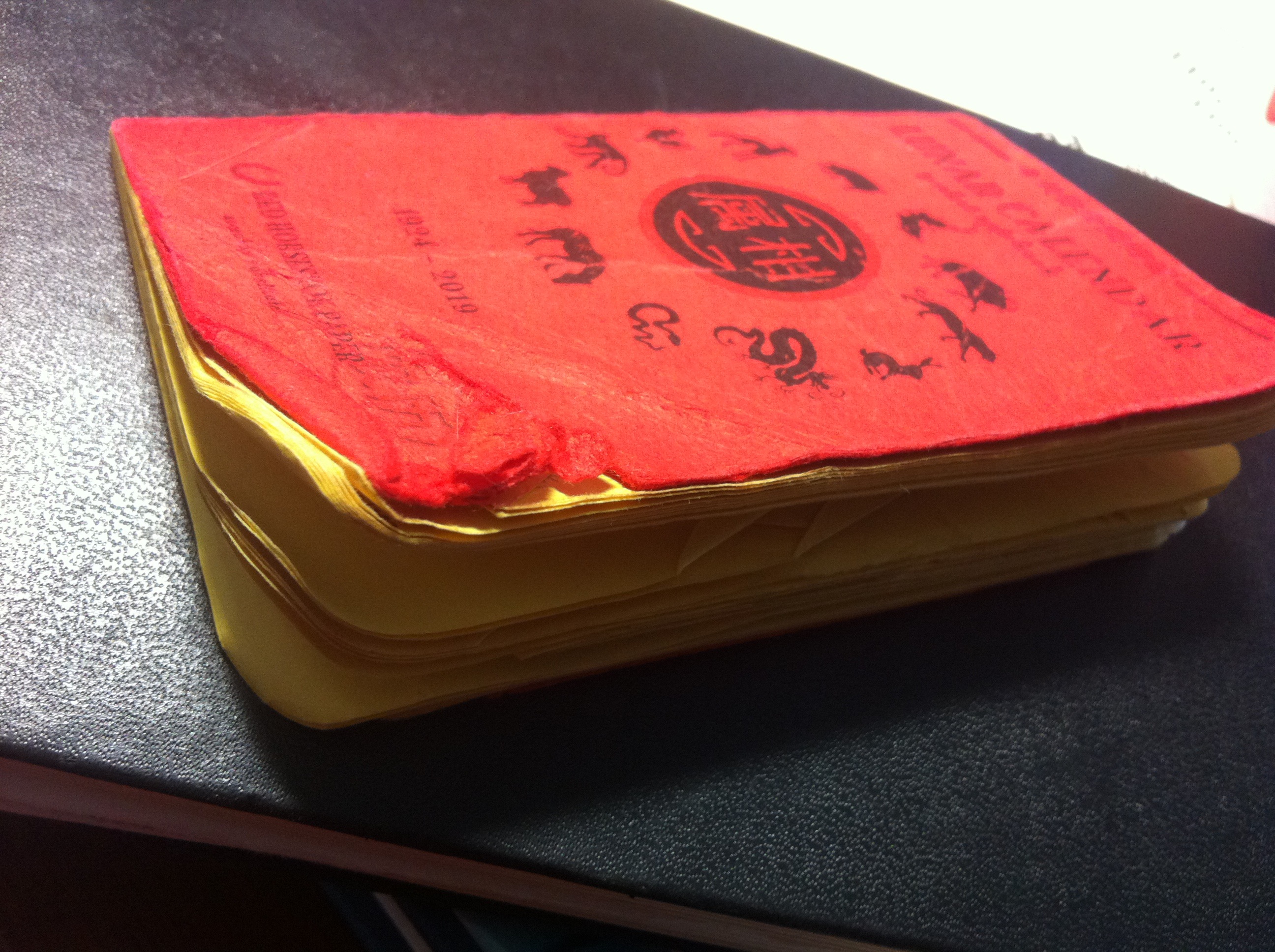
My (weary) pocket notebook

Report back here and let me know how the exercise goes.

(Waits at least a week…)

Welcome back! What did you learn with these quick studies? What details stood out on the people you observed and how did you capture them? Keep experimenting!


*Or at least it seems that good at 2 a.m. 

Continue reading

,

prev posts prev posts